


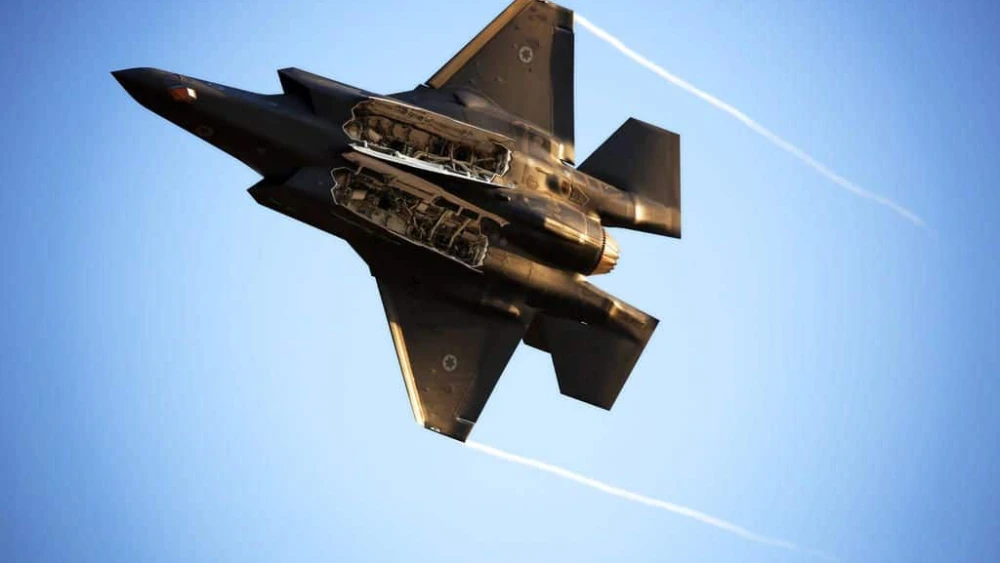
An Israel Defense Forces aircraft eliminated a terrorist of Hezbollah’s elite Radwan Force in Southern Lebanon on Monday, the military confirmed on Tuesday, sharing footage of the aerial attack.
The strike was carried out in the Majdal Zoun area, approximately three miles north of the border with the Jewish state, according to the IDF.
The Radwan Force is Hezbollah’s elite unit, aimed at infiltrating Israeli territory and capturing areas around the country’s northern frontier.
צה״ל תקף אתמול, באמצעות כלי טיס במרחב מג׳דל זון שבדרום לבנון וחיסל מחבל ב׳כוח רדואן׳ של ארגון הטרור חיזבאללה pic.twitter.com/8RLPgKMvGp
— צבא ההגנה לישראל (@idfonline) May 27, 2025
Overnight on Thursday, the IDF struck 15 Hezbollah terrorist sites across Southern Lebanon. No details about the targets were provided.
Also on Thursday, Israel Air Force fighter jets struck a “military site in the Beqaa region in southeastern Lebanon that housed Hezbollah rocket launchers and other weapons. In separate strikes, the IAF targeted additional terrorist infrastructure across the region.
The same day, an Israeli aircraft killed a Radwan Force operative in the Rab Thalathin area, which is less than a mile from Israel’s security fence.
On May 21, the IAF killed a senior Hezbollah weapons engineer in a strike in the Tyre area of southwestern Lebanon. Hussein Nazih Barji operated within the Iranian-backed terrorist organization’s Research, Development and Production Directorate, according to the IDF.
On May 20, the IDF confirmed the killing of another top Hezbollah leader in the village of Al-Mansouri, also in the Tyre District. He had been responsible for planning attacks and facilitating arms transfers.
Defense Minister Israel Katz repeatedly warned that the Nov. 26 ceasefire deal with Beirut would be void if Hezbollah refuses to withdraw from Southern Lebanon as required by the agreement.
The situation in Lebanon remains volatile following the expiration of the ceasefire on Feb. 18. The deal ended over a year of war, after Hezbollah began attacking Israel the day after the Hamas massacre on Oct. 7, 2023.
Although Jerusalem has withdrawn most of its ground forces since the war ended, it still controls five strategic positions in Southern Lebanon.
Israeli officials have stated that the IDF will retain control of these areas until the Lebanese army demonstrates it can maintain security there.



