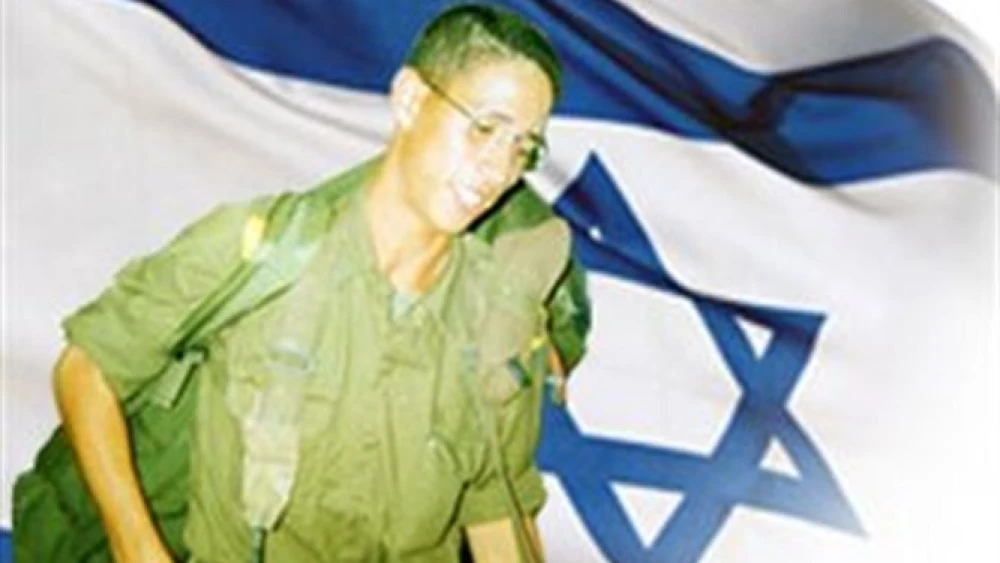
The Israel Defense Forces has resumed its search for missing Artillery Corps soldier Guy Hever, who disappeared on the morning of Aug. 17, 1997, after leaving his base on the Golan Heights.
The investigation was renewed a couple of months ago but was only revealed after the Kan public broadcaster reported on Sunday that the IDF had drained a water reservoir near where Hever was last seen.
Several articles of clothing were found at the bottom of the reservoir and sent for analysis.
“The IDF works at all times to find the missing soldiers and to bring them home to their families,” said the military in a statement. “Over the years, different steps were and are being taken to find Guy Hever, including recently. At this point, no relevant evidence has been found. The IDF has updated the family of its current actions and will continue to assist it.”
The then-20-year-old Hever left his base, located some 25 kilometers from the Syrian border, wearing his uniform and armed with a Galil assault rifle. Shortly thereafter, someone reported seeing a soldier near the shared frontier with Syria.
The IDF initially assumed that he had gone AWOL, noting that Hever was slated to face a minor disciplinary hearing for missing a unit social event, the latest in a string of infractions.
Hever’s mother, Rina, told Kan she still believes her son is alive, contrary to the prevailing assessment in the defense establishment.