Newsletter
Newsletter Support JNS

In primetime address, Netanyahu dismissed accusations of corruption

The Israeli prime minister said that he is “4,000 percent sure” that he is innocent, appearing to mock one of the probes against him, known as Case 4000.

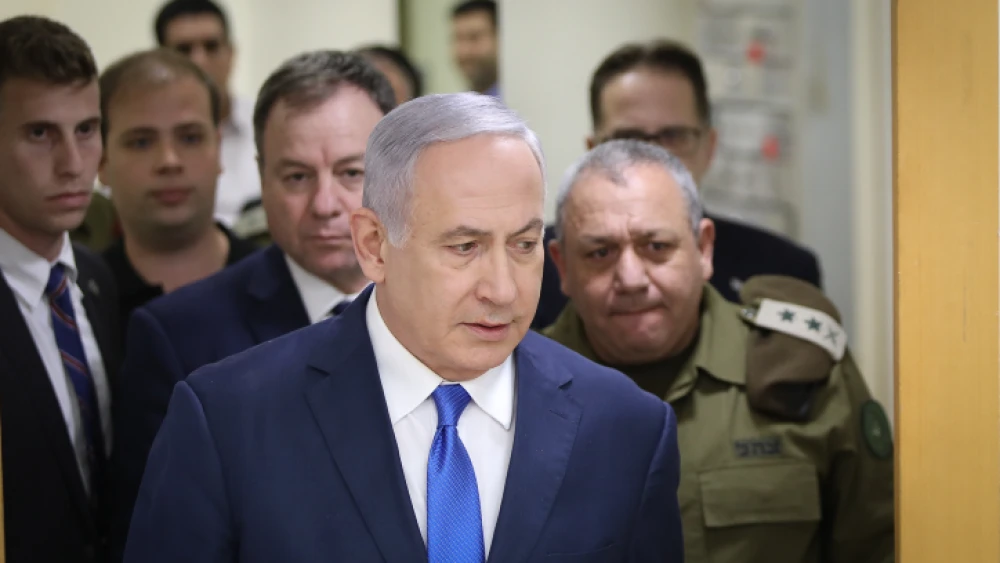
Israel Defense Forces’ Chief of Staff Gadi Eizenkot and Israeli Prime Minister Benjamin Netanyahu arrive to a press conference at the Kirya government headquarters in Tel Aviv on Dec. 4, 2018. Photo by Noam Revkin Fenton/Flash90.

Billed ahead of time by his spokesperson as “something dramatic,” Israeli Prime Minister Benjamin Netanyahu denied the series of allegations that have been leveled against him, with Israeli police recommending last month that the prime minister and his wife be indicted.

In a primetime address on Monday that ran several minutes long, Netanyahu said it would be “unjust” for him to be charged ahead of the April 9 elections.

He also offered to confront accusers on live television: “What are they afraid of? What do they have to hide?”

Netanyahu has said that he would not step down if indicted. He said on Monday that he is “4,000 percent sure” that he is innocent, appearing to mock one of the probes against him, known as Case 4000.

“Monitoring this agreement cannot be passive,” Daniel S. Mariaschin, CEO of B’nai B’rith International, told JNS.
The change will centralize all civil planning approvals for construction, preservation and infrastructure in Israeli hands.
Ambassador Yechiel Leiter said that accusations against Israel are distorted, arguing terms like “genocide” and “ethnic cleansing” have lost meaning.
Gideon Sa’ar said that Israel and the United States pushed back an immediate Iranian nuclear threat and called Hezbollah a violator of Lebanon’s sovereignty, urging disarmament.
“We are strengthening a path already built on trust, dialogue and sharing,” said Somaliland President Abdirahman Mohamed Abdullahi.
Officials, watchdogs and victims’ advocates say the Palestinian Authority continues paying stipends to convicted terrorists and their families, and criticize loopholes in international donor funding and oversight mechanisms.
