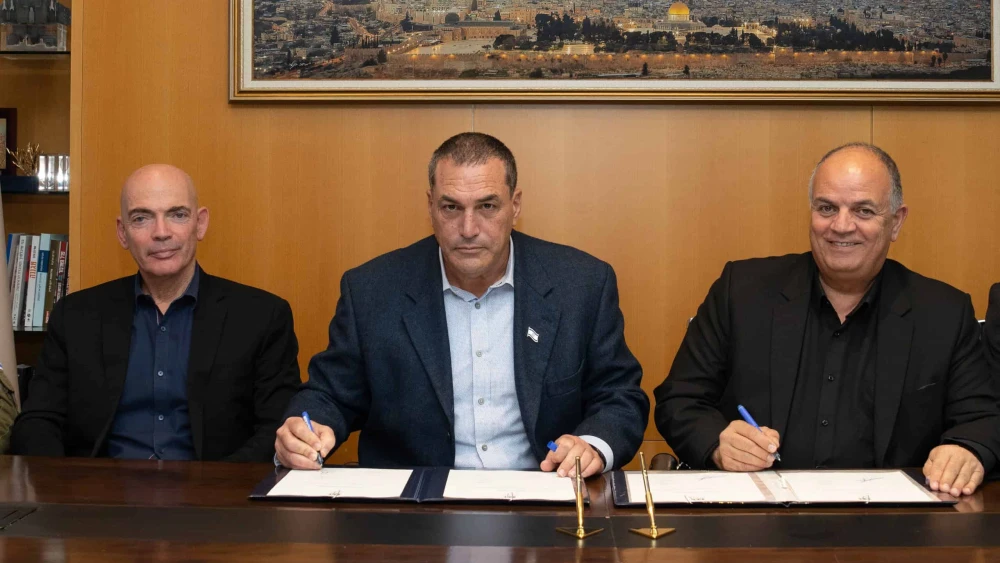
The Israeli Defense Ministry and Haifa-based Rafael Advanced Defense Systems signed a contract on Thursday to expand the production of Iron Dome interceptors, marking the first procurement under a U.S. aid package worth $8.7 billion.
The aid, approved in April 2024, includes $5.2 billion for strengthening Israel’s missile defense systems.
The Iron Dome, developed in Israel with U.S. support, has shown exceptional performance in protecting civilians from missiles.
The Defense Ministry said that the contract will enhance Israel’s defense capabilities and further solidify the strategic partnership with the U.S.
The signing ceremony took place at Defense Ministry headquarters in Tel Aviv, attended by key officials including Brig. Gen. (res.) Daniel Gold, Brig. Gen. Eyal Harel and senior leaders from Rafael. The agreement was reached after extensive negotiations led by Moshe Patel, director of the Israel Missile Defense Organization, in collaboration with the U.S. Missile Defense Agency.
“The signing of the Iron Dome contract is a central component in an unprecedented scope of effort, led by the IMOD together with Rafael and other defense industries, for force build-up and strengthening while fighting,” said Defense Ministry Director General Maj. Gen. (res.) Eyal Zamir.
“This is made possible thanks to the U.S. aid package, whose details we recently finalized in Washington, and for this, we thank the senior U.S. administration officials,” he continued.
Rafael CEO Yoav Tourgeman expressed confidence in the continued success of Iron Dome and David’s Sling systems, reiterating Rafael’s commitment to supporting Israel’s security through advanced air defense solutions.