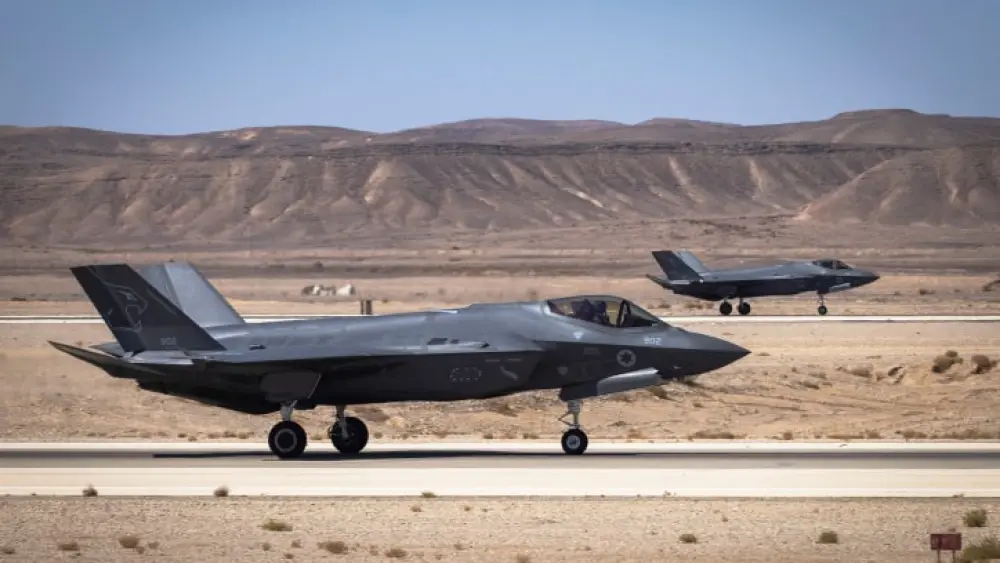
Israel has stopped warning Russian forces in Syria ahead of every airstrike it carries out in the country amid worsening ties between Moscow and Jerusalem, Bloomberg reported on Friday, citing “people familiar with the situation.”
According to the report, the Israel Defense Forces did not warn Russia ahead of an Oct. 30 strike on a military base in Daraa in southwestern Syria. Similarly, no notice was given when Israeli jets struck a Syrian base housing Hezbollah terrorists five days earlier, Bloomberg reported.
Israel has attacked hundreds of targets in Syria in recent years as part of an effort to thwart Iranian terrorism that threatens regional stability.
The armed forces of the Russian Federation are the leading international actors in the country, necessitating Israeli military cooperation with Moscow. To prevent clashes inside Syrian territory, Israel and Russia have maintained a deconfliction mechanism.
On Wednesday, Vasily Nebenzya, the permanent representative of Russia to the United Nations, told a General Assembly special session on the current war that Israel does not have the right to defend itself.
The remarks came shortly after Russia vetoed a U.S.-sponsored U.N. Security Council resolution condemning Hamas for its Oct. 7 murder rampage in southern Israel, killing more than 1,400 people on Shabbat and the Jewish holiday of Simchat Torah.
On Oct. 26, Israel condemned Russia after it hosted a delegation of Hamas terrorists in Moscow, calling it “an act of support of terrorism.”