Newsletter
Newsletter Support JNS

Multiple rounds of Israeli elections give Palestinians multimillion-dollar boon

While the majority of Palestinians who work in Israel are not eligible to vote, they nevertheless enjoy paid time off on election day. As one Palestinian in Ramallah put it, “as far as we are concerned, Israel can hold elections every month.”

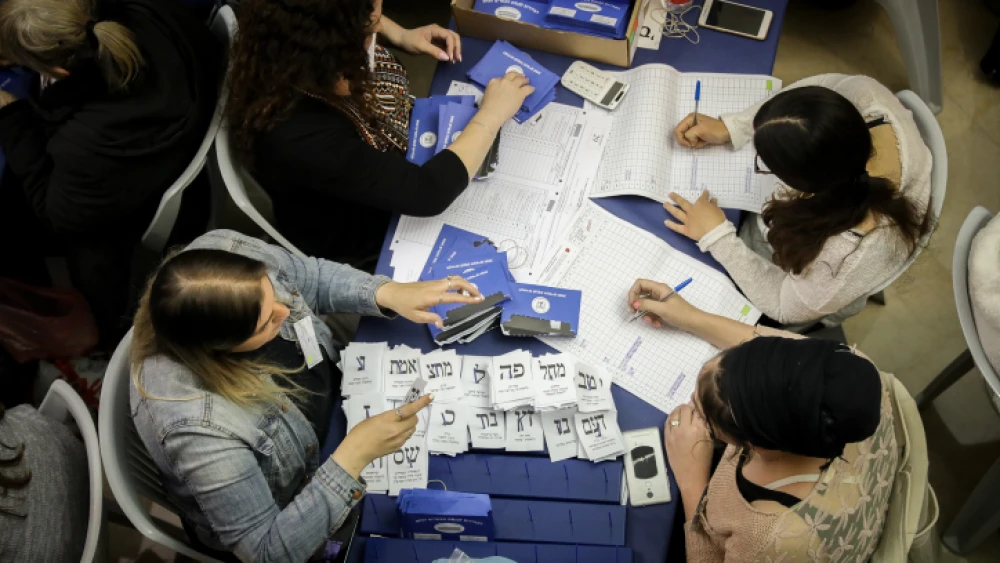
The ballots of soldiers and absentee voters are counted the day after national elections, on April 10, 2019. Photo by Noam Revkin Fenton/Flash90.

According to Israeli law, election day is a sabbatical day, and as a result, most workers are able to take the day off at their employer’s expense. Those who choose to work are paid double, as is customary on Shabbat and holidays.

It seems that now, as a result of Israel holding two elections within a six-month period, Palestinian employed in Israel are set to reap tens of millions of shekels in direct and indirect income.

According to the United Nation’s International Labor Organization, some 127,000 Palestinians are employed in the Israeli labor market. Although a majority of these workers are ineligible to vote in Israel, they will nevertheless enjoy the sabbatical day afforded to employees by Israeli law.

The average Palestinian worker in the Israeli labor market earns NIS 291.55 ($81.52) a day. In total, Palestinian workers earn NIS 37 million ($10 million) every day. Assuming the election is a sabbatical day, then in addition to the April 9 election sabbatical Israeli business will have paid Palestinian workers an extra NIS 70 million ($19.5 million).

“Business was also good on the last election day in Israel,” a Palestinian merchant in a shopping mall in Ramallah told Israeli daily Israel Hayom. “Many Palestinians who work in Israel and had a vacation day came with their family and kids, and the stores were full. As far as we are concerned, Israel can hold elections every month,” he said.

This article first appeared in Israel Hayom.

Kenneth Marcus, founder and chairman of the Brandeis Center, told JNS that “we understand that those who characterize us that way, rather than as the civil rights organization we are, generally aim to marginalize us or undermine our efforts.”
Michael Specht, Ramapo Town Council supervisor, called the incident “very disturbing.”
The head of the Iranian parliament spoke after U.S. President Donald Trump warned he will destroy the Islamic Republic’s energy sites if it doesn’t open the Strait of Hormuz within 48 hours.
“It requires one clear choice: full decommissioning by Hamas and every armed group, with no exceptions and no carve-outs,” said Nickolay Mladenov stated.
“All the casualties from Iranian attacks, without an exception, are civilians,” Israel’s foreign minister adds.
At the site of a missile impact in southern Israel, the premier accused Tehran of targeting civilians and holy sites, and urged global action to stop Iranian aggression.
