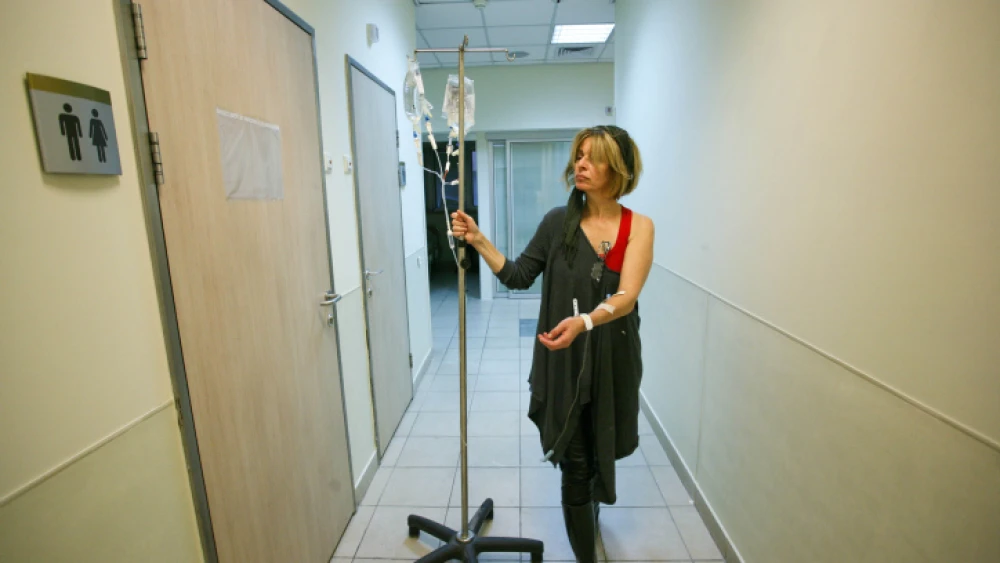
Israeli researchers have developed a treatment that may greatly enhance the efficacy of chemotherapy in breast cancer patients, Tel Aviv University reported on Tuesday.
Researchers found that they can reduce the risk of lung metastasis following chemo from 52% to 6%. (Metastasis is the process whereby cancer cells spread to other parts of the body.)
They achieved this by adding an anti-inflammatory agent to the chemotherapy
"[W]hile effectively killing cancer cells, chemotherapy also has some undesirable and even harmful side effects, including damage to healthy tissues,” said Prof. Neta Erez of the Department of Pathology at Tel Aviv University’s Sackler Faculty of Medicine, who led the study.
“The most dangerous of these is probably internal inflammations that might paradoxically help remaining cancer cells to form metastases in distant organs. The goal of our study was to discover how this happens and try to find an effective solution.”
The researchers, employing an animal model, discovered a previously unknown mechanism whereby the chemotherapy generates an inflammatory response, which sets off a chain of events that actually helps grow metastatic tumors.
“In this way, the chemotherapy, administered as a means for combating cancer, achieves the opposite result,” Erez said.
The researchers then developed a way to combat the problem: chemotherapy combined with an inflammation inhibitor.
Researchers from her group included Lea Monteran, Dr. Nour Ershaid, Yael Zait and Ye’ela Scharff, in collaboration with Prof. Iris Barshack of the Sheba Medical Center and Dr. Amir Sonnenblick of the Tel Aviv Sourasky (Ichilov) Medical Center.
The paper was published in Nature Communications. The study was funded by ERC, the Israel Cancer Association, and the Emerson Cancer Research Fund.