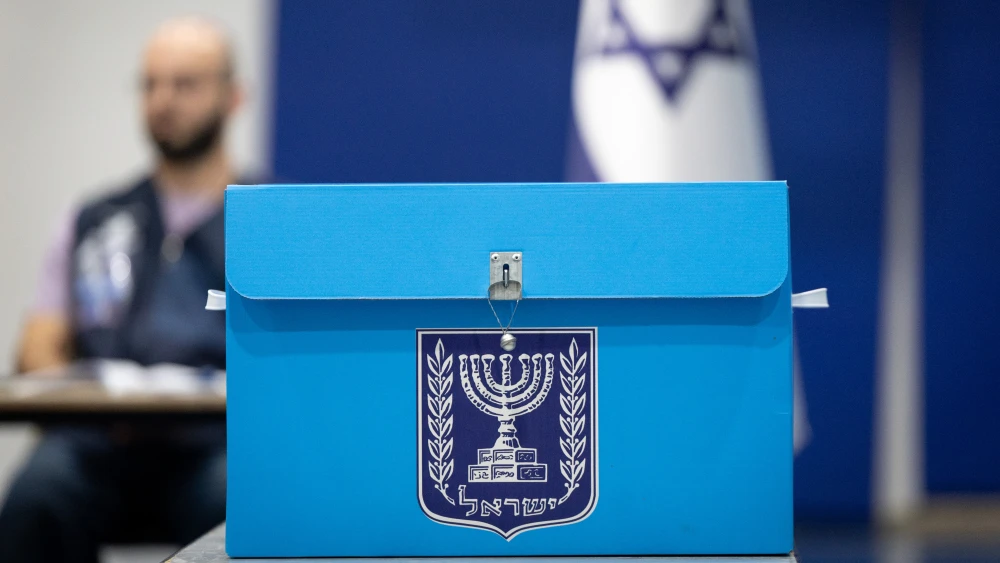

Israeli elections are exhausting. And not just by nature. Mainstream media’s coverage of the elections of the only democratic nation in the Middle East is oftentimes staggeringly flawed. Take, for example, NBC’s Richard Engel, who poses the rhetorical question, “Can Palestinians vote in Israeli elections?”
Engel spent nearly two-and-a-half minutes on a geographical tirade attempting to take a benefit of citizenship and portray it as something unfairly denied to non-citizens. He states:
Palestinians in the West Bank and the Gaza Strip … live under occupation. They are not Israeli citizens, and they do not have the right to cast ballots. … So which Palestinians can vote? Only Palestinians who are also Israeli citizens.
How does “living under occupation” turn into a right to vote? Iraqis and Afghanis lived under coalition occupation for years. Yet only Iraqi and Afghani citizens of the United States were allowed to vote in American elections. Neither the Japanese nor Germans were given a right to vote in American, British or Russian elections, either. Surely, there must be something more to the argument than this apparent double standard.
The New York Times made a similar error. The newspaper notes that “the stakes of the Israeli elections are high for Palestinians in the West Bank, but they do not have the right to vote in them.”
So, too, are the stakes of Ukrainian elections for Russian citizens, but no one has ever suggested “having stakes in the outcome” equates to “having a legal right to vote” in an election. Except for Israel, that is.
Such wording works to gloss over and distract from the fundamental issue. Palestinians are not Israeli citizens, and by and large, they do not wish to be. To grant them the vote, Israel would effectively have to annex the West Bank and Gaza Strip. Not only would this foreclose the internationally supported two-state solution framework, but—if one accepts the situation is one of “occupation” as opposed to “disputed territory—then such an act would violate international law.
On the other hand are Israeli Arabs, whom Western media outlets have increasingly chosen to refer to as “Palestinian citizens of Israel.” Following Israeli elections, Washington Post journalists decided to do just this, writing that “Tuesday’s results were a historic high-water mark for Israel’s 2 million Palestinian citizens, about a fifth of the population.” This description choice works to erase the cultural and legal distinctions between Israeli Arabs and Palestinians.
In the cultural sense, it’s a clear example of Westerners imposing Western ideas on foreign populations. As CAMERA has pointed out before, Israeli Arabs largely do not prefer to be called Palestinian, instead opting for “Arab,” “Arab-Israeli” or just “Israeli.”
CAMERA researchers have called out similar errors from CNN in the past. CAMERA’s Darcie Grunblatt noted that by referring to Israel’s entire Arab sector as Palestinian, CNN was imposing “a national identity that surveys consistently show is not primary for the overwhelming majority of Arab citizens of Israel.”
In the legal sense, Israeli Arabs vote because they are the progeny of those Arabs who chose to stay in Israel and thus became citizens when Israel declared independence in 1948. Palestinians, on the other hand, are the descendants of those who did not stay and join the nascent state of Israel, instead making way for invading Arab armies who sought to destroy the Jewish state.
Even with the view that West Bank Palestinians are now under Israeli occupation, the Fourth Geneva Convention notes that they “are not nationals” to the occupying power.
After decades of conflict, including periods of living under Jordanian or Egyptian occupation, Palestinians were finally given the opportunity to vote in elections with the formation of the Palestinian Authority, created pursuant to the Oslo Accords between Israel and the Palestine Liberation Organization.
The P.A. could hold elections. It just chooses not to, exposing the blatant corruption behind Palestinian governance. Just weeks ago, its leader Mahmoud Abbas postponed Palestinian elections yet again. They were scheduled for November (the month he turns 91), which may have seen a new leader step forward to lead the Palestinian people toward peace and prosperity. But Abbas has chosen to be the de facto dictator, governing by decree since his presidential mandate ran out in 2009.
The media should not obfuscate Palestinian responsibility to hold their own elections, while trying to paint Israel as the sole factor preventing them from happening.
The media cannot have it both ways: It can’t insist that Palestinians deserve agency while treating them as a single, undifferentiated population whose political future must be decided at Israel’s ballot box.
Palestinians in the West Bank and Gaza are not Israeli citizens, and their exclusion from Israeli elections is not a denial of democracy but a simple question of citizenship. The real democratic failure is that their own leaders continue to deny them any chance to vote in their own elections.