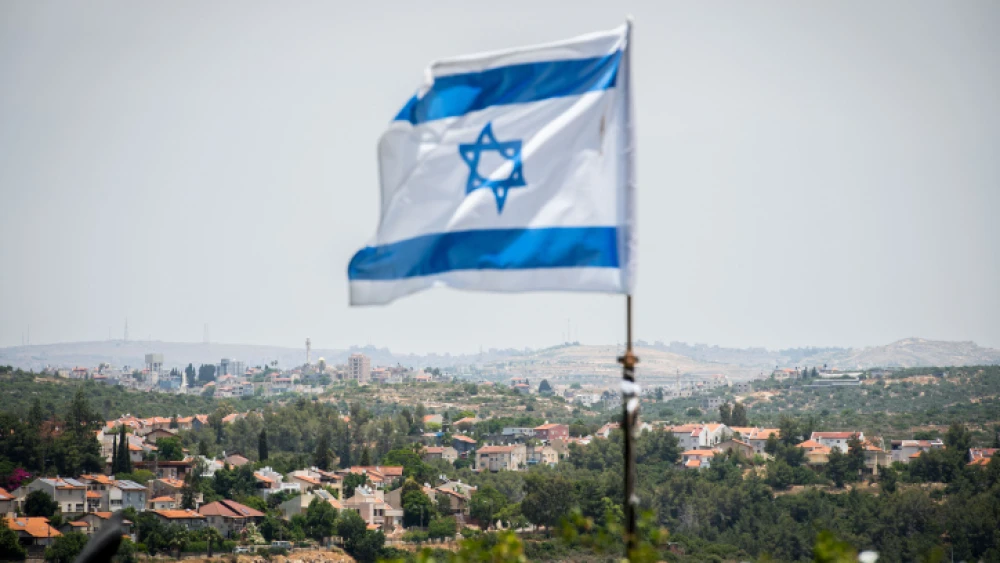
The Jewish population in Judea and Samaria has surpassed half a million people, according to a report compiled by former MK Ya’akov Katz.
There were 502,991 Jews living in Judea and Samaria as of Jan. 1, according to the document, which culled data from the Israeli Interior Ministry’s Population Registry.
That does not include the nearly 350,000 Jews living in the eastern part of Jerusalem, which the Palestinians claim despite the area being by law a part of Israel’s unified capital.
The Jewish population in Judea and Samaria is up 15.5% from January 2018, when 435,159 Jews lived in the territories captured after Arab states initiated what became known as the Six-Day War.
The report projects the Jewish population in Judea and Samaria to exceed 600,000 by 2030, 700,000 by 2035 and one million by 2047.
The 500,000-plus Jews living in Judea and Samaria account for 12% of all Jews in Israel, according to the report.
Ahead of its inauguration, Prime Minister Benjamin Netanyahu’s government published a list of policy guidelines that includes a vow to promote settlement throughout the country.
“The Jewish people has an exclusive and inalienable right to all parts of the Land of Israel. The government will promote and develop the settlement of all parts of the Land of Israel—in the Galilee, the Negev, the Golan Heights and Judea and Samaria,” a clause in the document states.