U.S. President Donald Trump suggested on Wednesday that he might not sign a peace agreement with Iran if America’s Arab partners in the region do not agree to recognize Israel.
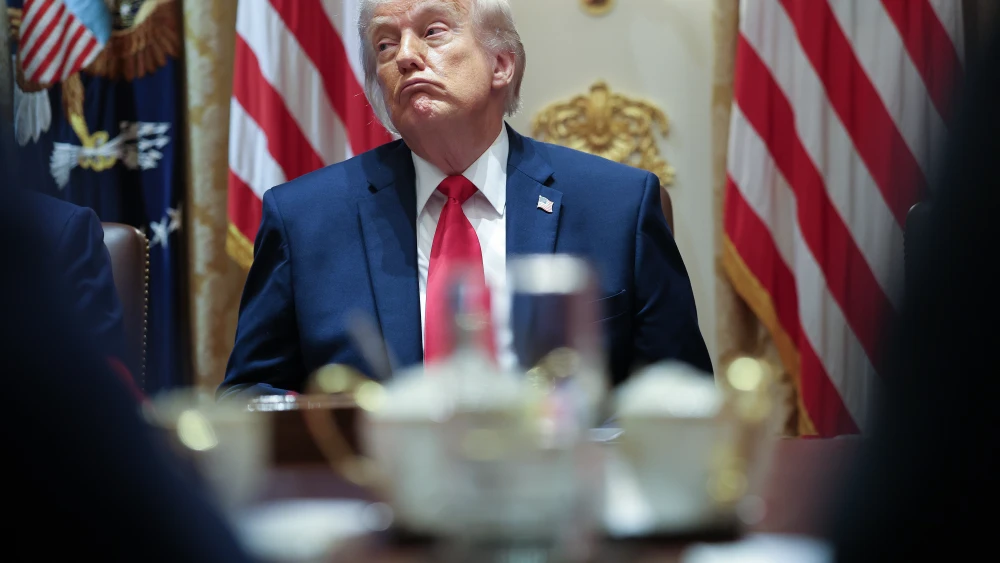
Speaking to the media at a cabinet meeting at the White House, Trump listed Saudi Arabia, Qatar and Kuwait as among the countries that should join the Abraham Accords that established diplomatic relations between Israel, the United Arab Emirates and Bahrain and were subsequently joined by Morocco.
“I think they owe that to us, to be honest,” Trump said. “I’m not sure we should make the deal if they don’t sign.”
Trump added that he would not make Arab normalization with Israel a formal condition of the talks with Iran.
“I don’t want to say that,” Trump said when asked if the two issues are contingent. “I’m not going to give you what’s contingent and what’s not.”
Trump and members of his cabinet expressed optimism about reaching a deal with Iran even as the United States and Iran have publicly disputed the potential terms of an agreement.
Earlier on Wednesday, Iranian state media published what it claimed was a draft proposal for an agreement that includes Iran managing maritime traffic through the Strait of Hormuz, which would be a substantial departure from its previous status as an international strait.
A White House media account described that proposal as “a complete fabrication.”
“We can make a good deal right now, maybe not a great deal,” Trump said at the cabinet meeting. “If it’s not a great deal, we’re not making it.”
“We’re not satisfied with it, but we will be,” he said. “Either that or we’ll have to just finish the job.”