


In its findings published on Wednesday, the State Commission of Inquiry into the 2021 Meron disaster found multiple Israeli officials responsible for the tragedy, including Prime Minister Benjamin Netanyahu.
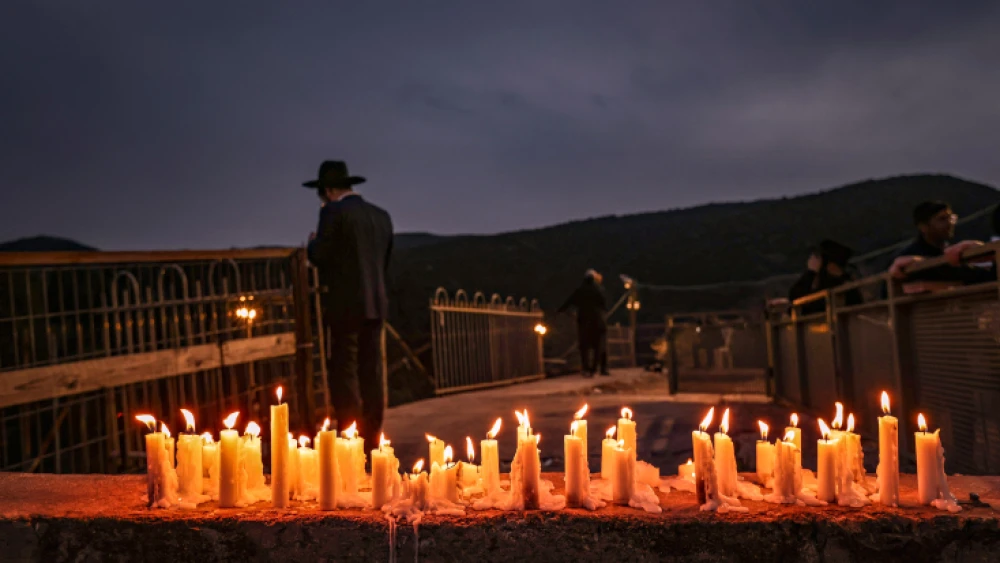
On April 30, 2021, 45 Israelis were crushed to death and another 150 were injured, 20 critically, during a 1 a.m. stampede at Mount Meron in the Upper Galilee during the Lag B’Omer holiday. It was the worst civilian disaster in Israel’s history.
The three-member commission also blamed Police Commissioner Kobi Shabtai, former Public Security Minister Amir Ohana and other lower-level officials.
The commission recommended that Shabtai step down as police commissioner, though it said the government should decide on his termination date given Israel is at war. Ohana, currently speaker of the Knesset, the report recommended, should not be allowed to serve as minister of public security in the future.
The commission decided not to make specific recommendations regarding Netanyahu given that he holds an elected position.
“The prime minister has the responsibility to proactively locate issues that require the attention of his office and, if necessary, his intervention, in particular those related to the risk to human life,” the report said.
The report, however, said that there was a “reasonable basis” to assume that Netanyahu knew about the poor condition of the facilities on Mount Meron, which is the tomb of second-century sage Rabbi Shimon bar Yochai, or Rashbi, and that the lack of upkeep “could create a risk for the multitudes of visitors to the site, especially on Lag B’Omer.”
“Even if, for the sake of caution, we assume that Netanyahu had no actual knowledge of the matter, under the circumstances he should have known it,” the report states.
Thousands of mostly Chassidic Jews stream annually to Mount Meron on Lag B’Omer, which is considered the anniversary, or Yom Hillula, of the great rabbi’s death.
The judges said both Ohana and Shabtai were aware of the potentially life-threatening overcrowding at the site, which had been going on for years, and should have addressed the dangers.
“The fact that the celebration ended in the past without loss of life did not make it a successful event,” the commissioners added.
The commission also criticized a “bad culture” within public institutions, where changes are made only for appearance’s sake.
Noting that the “writing was on the wall” before the disaster, it said that to prevent the next tragedy, “a reformed culture is needed. Officials and bodies are required that act first and foremost out of a sense of duty as public servants—to act responsibility and with professionalism.”
The commission of inquiry was established in July 2021. It was first headed by retired Supreme Court Justice Miriam Naor. When Naor died in February 2022, she was replaced by former Tel Aviv District Court President Dvora Berliner.


