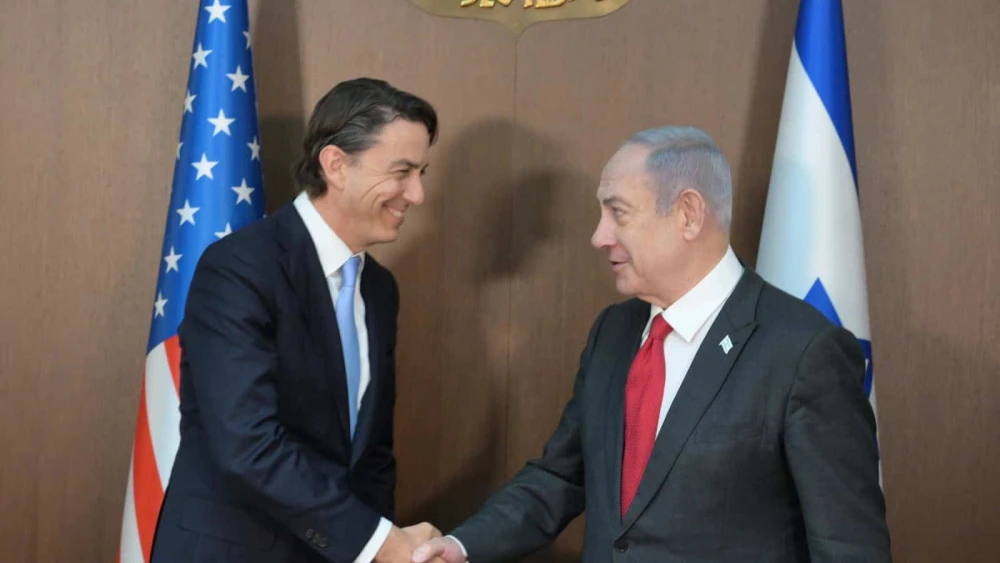
The thousands of Israelis displaced from their homes by Hezbollah’s ongoing cross-border attacks will not be able to return without military or diplomatic action against the terror group, Israeli Prime Minister Benjamin Netanyahu told U.S. presidential envoy Amos Hochstein on Monday.
Netanyahu “made it very clear that it will not be possible to return our residents without a fundamental change in the security situation in the north,” according to a readout from the Israeli Prime Minister’s Office.
While Jerusalem “appreciates and respects” the Biden administration’s support, it will “ultimately do what is necessary to safeguard its security and return the residents of the north securely to their homes,” he told Hochstein during a meeting at Israel Defense Forces headquarters in Tel Aviv.
Earlier on Monday, during a meeting with Israeli Defense Minister Yoav Gallant, Hochstein reportedly warned that a major military operation against Hezbollah in Southern Lebanon will not bring about the return of displaced residents.
Hochstein informed Gallant that the United States supports a diplomatic deal with Hezbollah, including through a truce with Hamas terrorists in Gaza, a source familiar with the conversation told local media. The U.S. envoy warned that military action would raise the risk of all-out regional war.
Gallant was said to have informed the White House envoy that only IDF military action against Hezbollah can create conditions that will allow Israel to return the evacuees to their homes safely.
Iran-backed Hezbollah has attacked Israel nearly daily since Oct. 8, firing thousands of rockets, missiles and drones. The attacks have so far killed more than 40 people and caused widespread damage. Tens of thousands of civilians remain internally displaced due to the violence.
Speaking at the start of Sunday’s weekly Cabinet meeting, Netanyahu vowed that the current circumstances in the Galilee and the Golan “will not continue.” He called for a “change in the balance of forces on our northern border” while pledging to return evacuated residents.
Netanyahu spoke days after he ordered the IDF to prepare for a broad campaign against the Iranian-backed terror army in Southern Lebanon.
The instructions were reportedly given during a security-strategic discussion on Sept. 12 with the heads of the defense establishment, including Gallant, as well as Foreign Minister Israel Katz, Finance Minister Bezalel Smotrich and Strategic Affairs Minister Ron Dermer.
Senior defense officials said during the meeting that a diplomatic resolution would not be enough to return the displaced residents of the north. A senior Netanyahu associate stressed that no date has been set for a military operation but that it could be weeks or a few months away.