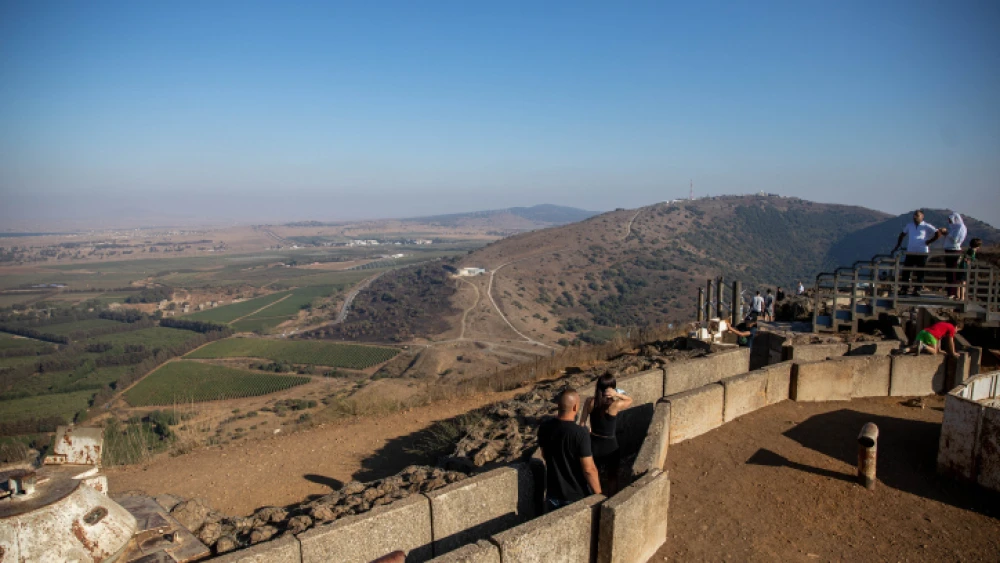
The U.S. State Department has denied that the Biden administration is planning to change its policy regarding the Golan Heights following recognition of Israel’s sovereignty of the area under the Trump administration.
“U.S. policy regarding the Golan has not changed, and reports to the contrary are false,” State Department’s Near Eastern Affairs Department wrote in a tweet on Friday.
On Thursday, The Washington Free Beacon reported that the Biden administration was “walking back” its recognition.
The story referred to comments made by U.S. Secretary of State Antony Blinken in February where he said “as a practical matter, the Golan is very important to Israel’s security,” though he stopped short of fully endorsing Israeli sovereignty over the region, saying America could revisit the status of the region in the future.
“Legal questions are something else. And over time, if the situation were to change in Syria, that’s something we’d look at. But we are nowhere near as that,” Blinken said at the time.
The report also quoted an unnamed State Department official who largely reiterated Blinken’s position from February.
Former U.S. officials and Republican congressmen, including former Secretary of State Mike Pompeo, expressed concern that the United States could rescind its recognition.
Israel gained control of the Golan Heights during the 1967 Six-Day War and extended sovereignty over the region in 1981. In 2019, the United States became the first country to recognize that.
Israeli officials have said there has been no discussion with the Biden administration over the status of Golan. “The issue of the Golan Heights hasn’t come up in talks with the Americans. It’s obvious that the Golan Heights will remain under Israeli sovereignty forever,” a high-ranking Israeli diplomatic official told Israel Hayom.
Israeli Foreign Minister Yair Lapid said rumors that the Biden administration was planning to change its policies are part of an effort to undermine U.S.-Israel relations and the new government. “The Golan Heights is a strategic asset and an integral part of the sovereign State of Israel. The United States recognized our sovereignty over the Golan Heights and its strategic importance to Israel’s security,” he said.
He added that “anyone spreading rumors about the rescinding of this recognition harms [our] security, harms the [U.S.] declaration of sovereignty and is willing (not for the first time) to cause real damage to the State of Israel and its relations with the United States—all for the sake of harming the new government.”
Lapid is scheduled to hold his first in-person meeting with Blinken on Sunday in Rome.