


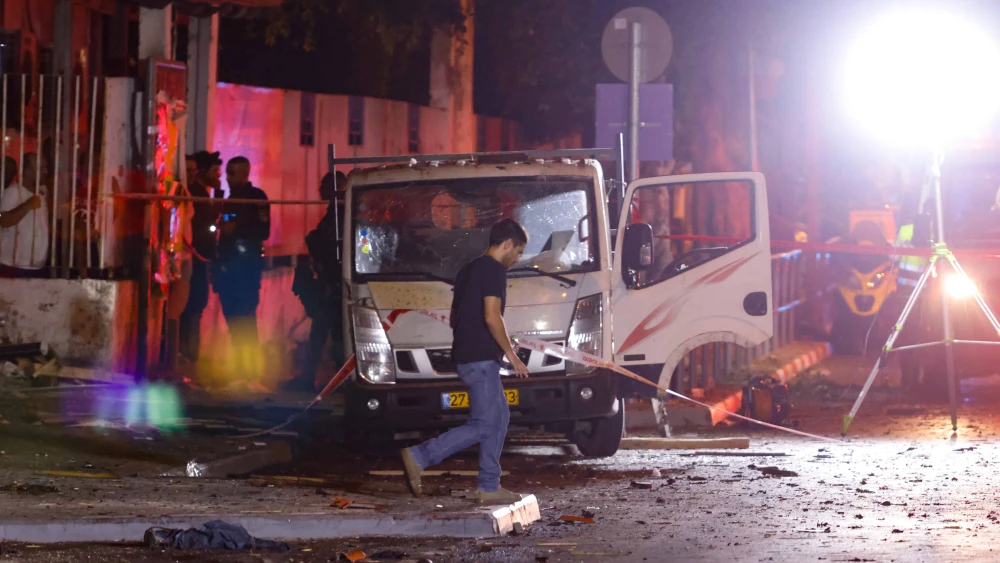
According to unconfirmed Palestinian reports, the terrorist responsible for the failed suicide bomb attack in Tel Aviv on Sunday night was Jaafar Mona, a resident of Nablus (Shechem) in central Samaria.
The reports claimed that Israeli authorities notified Mona’s family.
The 17-pound backpack explosive detonated prematurely, killing only the bomber and wounding one Israeli.
The Hamas and Islamic Jihad terrorist groups accepted responsibility for the bombing and vowed to carry out additional suicide attacks.
"ماضٍ وأعرف ما دربي وما هدفي"..
— Taqadomi (@taqadomy_ps) August 22, 2024
الاحتلال يبلغ رسميًا عائلة الشاب «جعفر منى» من مدينة نابلس أنه منفذ عملية "تل أبيب" قبل أيام. pic.twitter.com/W8nBpUSSkF
However, Israel security officials have yet to officially attribute the attack to Hamas and Islamic Jihad and are investigating whether another party might have dispatched the terrorist, according to Ynet.
As the investigation continues, Israeli security officials said that Iran or Hezbollah may have directed the attacker.
“There is an Iranian effort to activate people here,” Yigal Carmon, president of the Middle East Media Research Institute, told JNS. “This was apparently done with Iranian direction.”
In a statement on Monday, Tel Aviv District Commander Peretz Amar said that the terrorist had no prior criminal record and that the explosive device was likely homemade and faulty, Ynet reported.
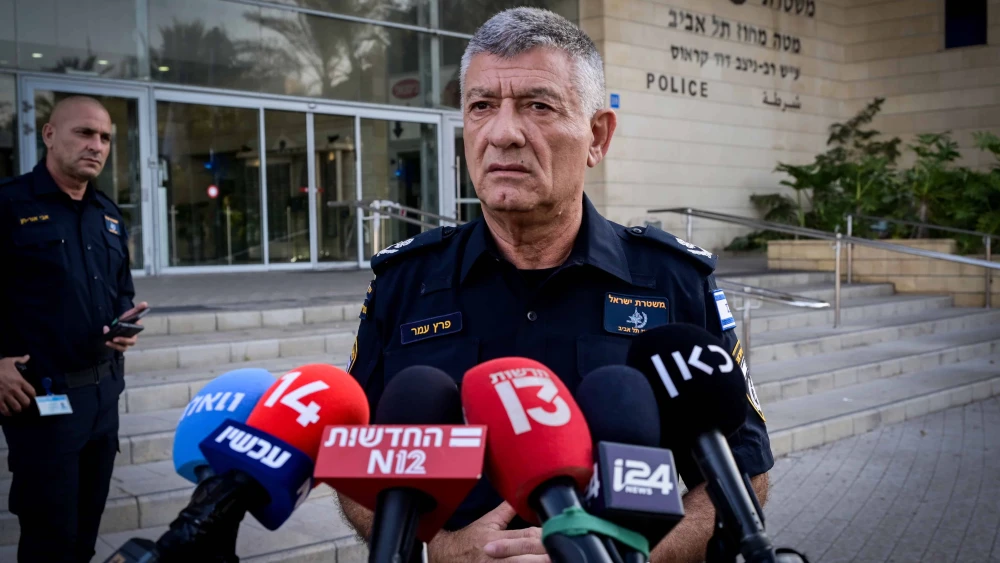
“We have identified the terrorist, who is from the Palestinian territories. He isn’t someone who is found in our registry, and the explosive device was likely manufactured where he lived,” he said.
“We suspect the terrorist was supposed to reach a certain location and apparently noticed the synagogue on his way. He decided to stop for a moment to arm the device, but apparently pressed something else and activated it,” he said.
Ayalon District Police Commander Haim Bublil told Kan News Radio on Monday that “it is possible that the assailant planned to reach the nearby synagogue or perhaps the shopping center. We have no ability to understand why [the bomb] exploded at this point in time.”
“The scene here speaks for itself. It was a powerful charge that could have caused significant damage. We are in a kind of miracle that the incident did not end in dozens of deaths,” he said.
Worshippers at the Lehi Road synagogue, named for Rabbi Shimon bar Yochai, known by the acronym Rashbi, told JNS that they were in the middle of the silent prayer of the evening service just after 8 p.m. when there was a thunderous blast, the electricity went out and the synagogue’s windows shattered.
“Our first thought was it was a missile,” Yehuda Meshulam, who directs the synagogue, which also doubles as a study hall, told JNS.
Others mentioned a drone.
Racing outside, worshippers saw a truck on fire, as the smell of smoke and ash choked the air. They lugged buckets of water to douse the flames until rescue workers arrived.
Seeing a man’s remains under the truck, some thought that it might have been an underworld bombing. “We actually calmed down because we thought it was a criminal attack and not terrorists that might be walking around,” said Meshulam.
They never expected it to be a suicide bomber—a hallmark of Palestinian terrorism two decades ago that killed hundreds of Israelis in scores of attacks nationwide.
By Monday morning, after police and security officials examined video footage from an adjacent hardware shop, it had emerged that the blast just outside the synagogue was a bungled terror attack.


