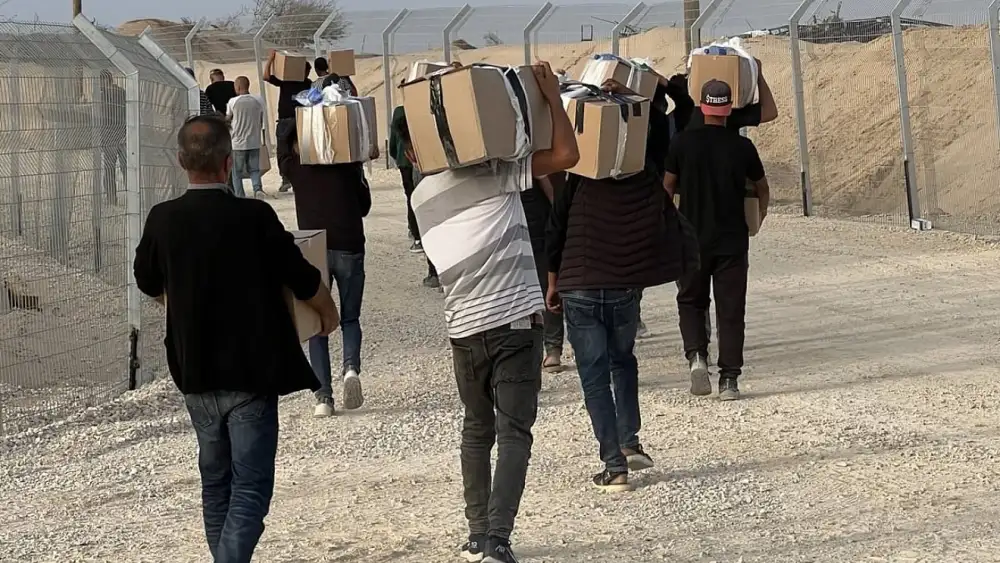
The U.S.-backed Gaza Humanitarian Foundation, which Washington says operates independently, stated that “misinformation” had circulated about its operations on Tuesday and that it delivered supplies on Wednesday “without incident.”
“The situation remains urgent. But every hour, more people are fed. More dignity is restored. More hope is delivered,” the group stated. “We are here. We are working, and we are grateful to those standing beside us to get life-saving aid directly into the hands of the people of Gaza.”
Two so-called “safe distribution sites” are operating fully, with the latter delivering about eight trucks worth of aid, the group stated.
“Across the two sites, approximately 14,550 food boxes have been distributed so far. Each box feeds 5.5 people for 3.5 days, totaling 840,262 meals,” it said, noting that the first site was restocked on Wednesday morning.
“Operations will continue scaling across all four sites, with plans to build additional sites across Gaza in the weeks ahead,” it said.
The group, which is not connected to the United Nations and which aims to deliver supplies to Gazans without Hamas appropriating them, stated that claims that it questioned or detained Palestinians are false.
“GHF has no detention or arrest authority,” it stated.
The group also said that, contrary to reports, there were no shots fired at Palestinian crowds at its first site and no casualties. It’s also inaccurate, according to the foundation, that its first such site was destroyed or overrun on Tuesday.
The Israeli army stated on Tuesday that its troops “fired warning shots in the area outside the compound” as it was overrun by Palestinians. “Control over the situation was established, food distribution operations are expected to continue as planned and the safety of IDF troops was not compromised,” the Israel Defense Forces stated.
The foundation expected that the site “may experience pressure due to acute hunger and Hamas-imposed blockades, which create dangerous conditions outside the gates,” it stated.
“According to established protocol, for a brief moment, the GHF team intentionally relaxed its security protocols to safeguard against crowd reactions to finally receiving food,” it said. “No beneficiaries were injured, no lives were lost, and all food available was distributed without interference. Order was restored without incident.”
Such responses from “stressed” people benefiting from emergency aid in a conflict zone are expected, “and we remain prepared to continue providing life-saving assistance should disruptions occur,” the group said.
It added that “there are many parties who wish to see GHF fail” and it “kindly” asked reporters “to proceed cautiously when reporting on this story.”