


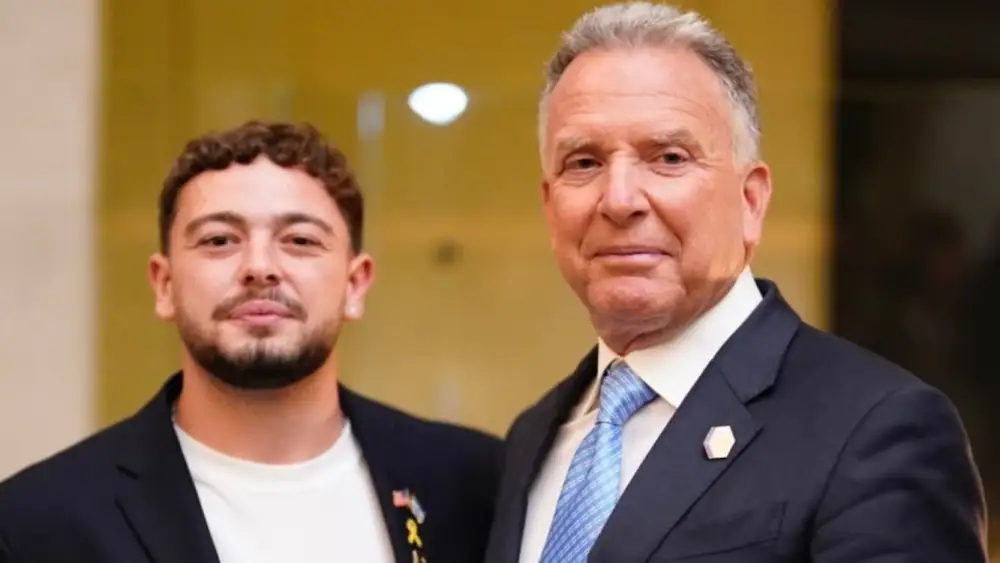
Steve Witkoff is “confident” that all of the deceased hostages, whom Hamas holds in Gaza, will return to Israel, the U.S. special envoy to the Middle East said during an event at the U.S. Holocaust Memorial Museum on Thursday.
Witkoff said at the event in Washington, which marked the second anniversary of the Oct. 7 attacks, that the Trump administration is intent on “seriously expanding” the Abraham Accords to further normalize relations between Israel and the Muslim world.
“We are deeply committed to substantially expanding the Abraham Accords, building on the foundation of trust and mutual respect that President Trump forged,” Witkoff said. “I pray that there will also be a day that we bring back the bodies—all of the bodies—of the fallen.”
“Nothing is more sacred than a family’s right to cherish their own,” he said.
The U.S. special envoy noted that all the bodies of hostages have yet to return.
“We will pursue the return of the balance of the deceased until they all go home, and I’m confident that they will,” he said to sustained applause from a crowd of about 100 that included Holocaust survivors, Jewish leaders and U.S. elected and administration officials.
Under the first phase of the Trump administration’s 20-point peace plan, Hamas is required to return the bodies of the 19 deceased hostages that remain in Gaza. Witkoff said of the subsequent phases that Hamas must “unequivocally disarm” and that it has “no future in Gaza.”
The tenor of the anniversary event in the Holocaust Museum’s Remembrance Hall was bittersweet, with speakers sharing stories of those killed on Oct. 7 and the global rise of Jew-hatred while also celebrating the American and Israeli diplomatic success in bringing home all of the living hostages and securing a ceasefire with Hamas.
Other speakers included former hostage Almog Meir Jan, former U.S. Ambassador to the European Union Stuart Eizenstat, and Rabbi Yehuda Kaploun, who is the Trump administration’s nominee to be special envoy to monitor and combat antisemitism and continues to await Senate confirmation.
Rep. Randy Fine (R-Fla.) told JNS that seeing Holocaust survivors standing alongside survivors of Oct. 7 and wounded veterans of the Israel Defense Forces was an “emotional moment.”
“What you see is sort of the passing of the torch to a new generation of survivors,” said Fine, who is Jewish. “I sometimes wonder if God made Oct. 7 happen, because He thought we needed a reminder of our place in the world.”
Ben Ladany, an Israeli special forces veteran who was shot seven times in Gaza when Hamas ambushed his unit, told JNS what he looks forward to now that the war is over.
“Good things happen slowly. Bad things happen fast,” Ladany said. “It took nearly two years for this war to end. It’s ended. Now we can focus on healing, rebuilding, recovering and creating a greater Israel.”


