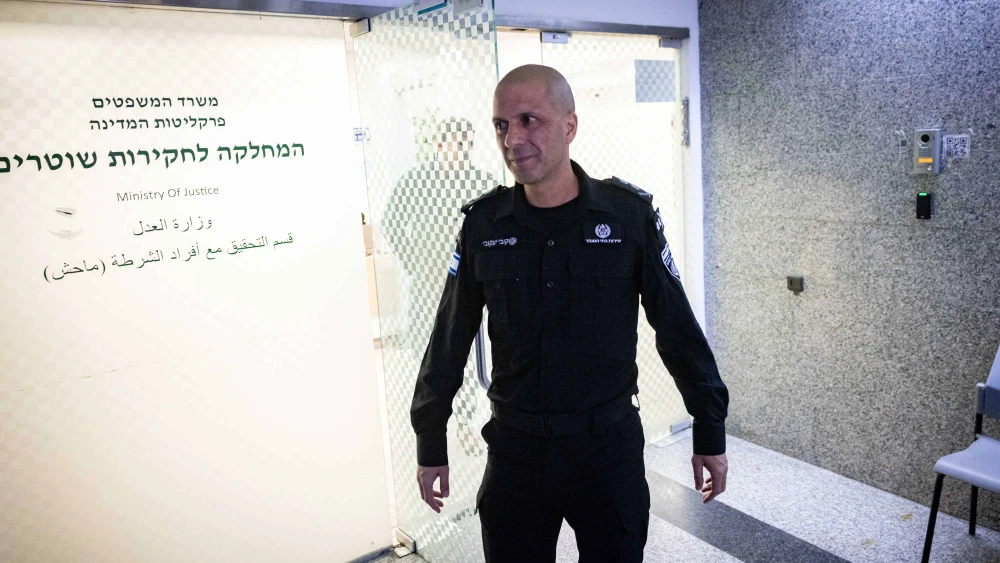
Israel Prison Service (IPS) Chief Commissioner Kobi Yaakobi warned Tuesday that his detention facilities are “on the brink of an incident” as Palestinian terrorists grow increasingly desperate over the prospect of a hostage-release deal.
“If there is a feeling that the ‘war of resistance’ is at low intensity—I don’t know what will develop in the north or south—but inside the prisons, I can say with certainty that we are on the brink of an incident,” said Yaakobi, speaking to the Knesset National Security Committee.
The senior terrorists still imprisoned in Israel have “demonstrated operational capabilities,” Yaakobi said, adding that with each round of prisoner releases under the U.S.-brokered truce, “the hope they had has turned into despair.”
The IPS’s head of security and operations, Avichai Ben-Hamo, told lawmakers there has also been a rise in the number of prison blueprints found in the cells of Arab terrorists. He noted that such blueprints often indicate the locations of locks, guard posts and other details used in escape planning.
Yaakobi also outlined the current “incarceration situation,” noting that Israeli prisons hold 22,573 inmates, including 9,230 terrorist detainees. He said the inmate population has risen by roughly 2,300 since the Hamas-led massacre on Oct. 7, 2023.
Last month, the IPS shared photos of improvised weapons produced by terrorists of Hamas’s Nukhba Force—which led the Oct. 7 cross-border attacks—who remain incarcerated in Israeli prisons.
The images provided to Israel National News showed homemade knives, sharpened spikes, screws, metal springs and even safety pins and ropes, which investigators said were designated to stab or strangle guards and soldiers in moments of distraction, according to the report.