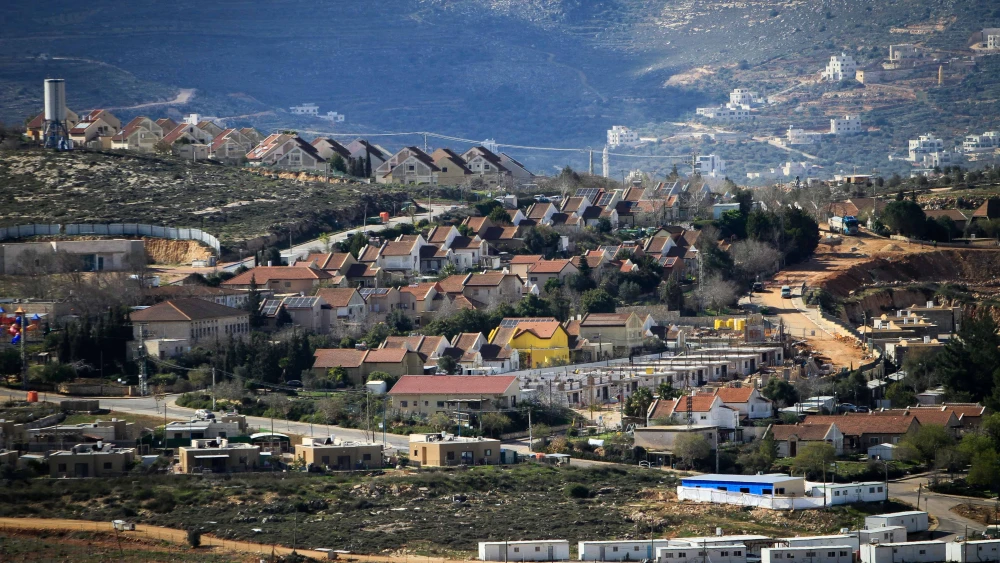
The Binyamin Regional Council in Samaria on Tuesday announced the “historic” official legalization of six former outposts by the government.
Ahiya, Harasha, Migron, Nofei Prat, Adei Ad and Shvut Rachel have been “fully regularized and recognized as official towns” by Israel’s Interior Ministry, the council, which administers communities in southern Samaria, said in a Hebrew-language statement.
“Following years of struggle, effort and challenges, these towns are now formally recognized, with ‘settlement symbols’ and full recognition by the State of Israel,” it said. “This is a significant achievement, especially for the young settlement, which has maintained faith and determination over the years, despite harsh weather conditions and many obstacles.”
Binyamin Regional Council leader Israel Ganz thanked Israeli Prime Minister Benjamin Netanyahu and Israeli Finance Minister Bezalel Smotrich, who also oversees civilian issues in Judea and Samaria as part of his secondary role as a minister in the Defense Ministry.
“We continue building and settling with full strength!” Ganz concluded.
Ahiya, Adei Ad, Nofei Prat received Israeli Cabinet approval in May, while Harasha, Migron and Shvut Rachel are neighborhoods of existing communities that were split off by a March 22 Cabinet decision.
All six are established towns, some dating to the early 90s, with hundreds of residents, and have received retroactive authorization.
On Nov. 10, Israel Defense Forces Central Command head Maj. Gen. Avi Bluth signed an order setting “jurisdiction zones” for the communities, which formally demarcates their municipal boundaries, which was an official step closer towards the full legalization of these villages.
Now, the Interior Ministry has issued official “settlement symbols,” turning them into legal communities for all intents and purposes.
Israeli Prime Minister Benjamin Netanyahu has led an unprecedented drive to expand control of Judea and Samaria, approving some 50,000 housing units and over 50 new Jewish communities since late 2022.
As of Jan. 1, 529,704 Jews lived in the Judea and Samaria territories, amounting to approximately 5.28% of the Jewish state’s population.
Nearly 70% of Israelis want Jerusalem to extend full legal sovereignty over the disputed territory, according to a poll conducted on Jan. 29.