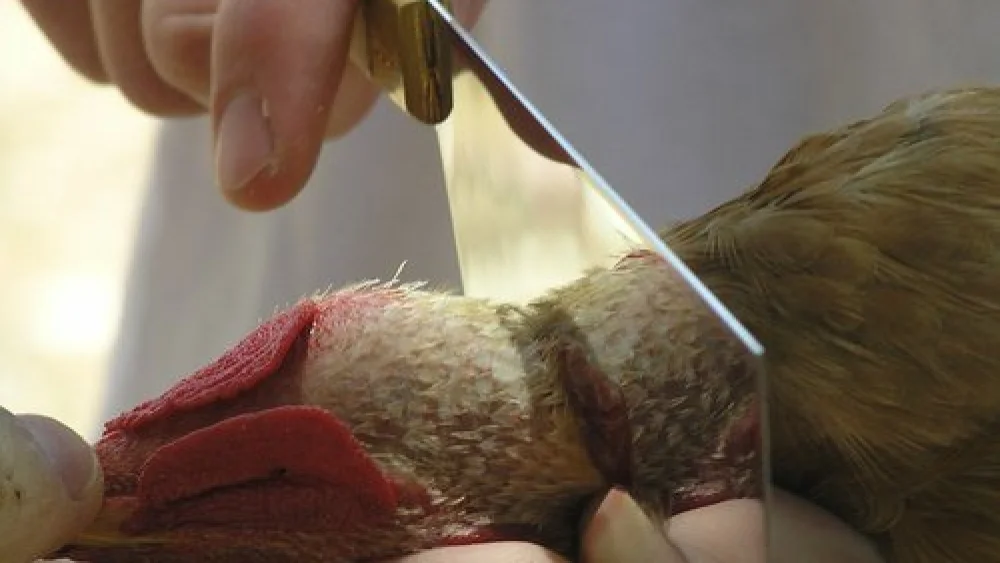
Belgium’s Constitutional Court heard a lawsuit against laws passed by two of the country’s largest regional governments, banning kosher and halal slaughter.
It was brought by the Belgian Federation of Jewish Organizations (CCOJB), the representative body of Belgian Jews, with support from the legal think tank the Lawfare Project.
The lawsuit says that the ban in Wallonia and Flanders violates religious freedoms guaranteed in the European Union’s Charter of Fundamental Rights. The European Court of Human Rights has previously labeled shechita, or kosher ritual slaughter, as “an essential aspect of practice of the Jewish religion.”
“Belgian Jews regard this as an assault on their religious freedom,” said Lawfare Project executive director Brooke Goldstein. “Belgium’s courts will recognize the ban for what it is—discrimination and hostility against minority faith communities.”
The Flanders ban took effect on Jan. 1, while the Wallonia one will take effect in September.
Sweden, Norway, Iceland, Denmark and Slovenia all ban religious slaughter without pre-stunning.
Excluding poultry, Lichtenstein and Switzerland also require pre-stunning.
Poland proposed legislation earlier this year banning kosher slaughter until it was removed from the parliamentary agenda.