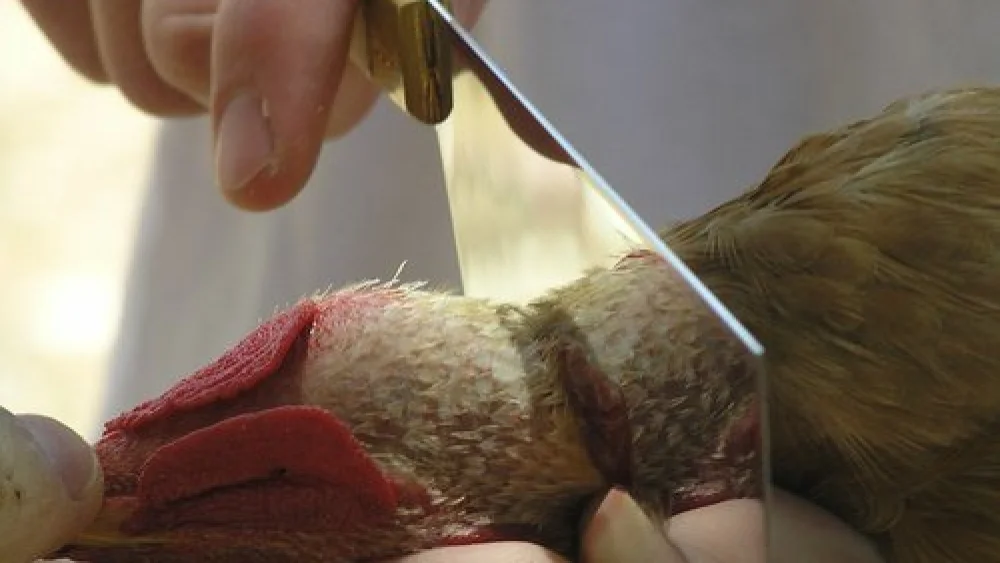
A ban on kosher slaughter in Belgium’s Flanders region will take effect on Tuesday after a law prohibiting religious animal slaughter was passed last year in the local parliament.
“That provinces within Belgium—the law-making capital of Europe—have passed this type of anti-religious measure is an affront to the European values we all hold so dear,” said Pinchas Goldschmidt, president of the Conference of European Rabbis and Moscow’s chief rabbi.
“Time and again, the Jewish community is told by senior European Union officials that there is no Europe without the Jews, [but] these bans undermine those statements and put Jewish life at risk,” he continued. “We urge E.U. leaders to address this directly to the governments of member states.”
“Words are weak when actions hurt,” added Goldschmidt. “We will continue to make those points to officials when we bring together hundreds of rabbis for our biennial conference in Belgium this spring.”
Jewish law mandates that an animal be healthy and not injured before kosher ritual slaughter, or shechita, and that rendering it immobile (or pre-stunning it) is prohibited; hence, the animal cannot be used.
Additionally, slaughter in accordance with Islamic law will be banned under the new law.
The Wallonia region in southern Belgium passed similar legislation in May 2017 that will take effect in September 2019.
Sweden, Norway, Iceland, Denmark and Slovenia all ban religious slaughter without pre-stunning.
Excluding poultry, Lichtenstein and Switzerland also require pre-stunning.
Poland proposed legislation earlier this year banning kosher slaughter until it was removed from the parliamentary agenda.