


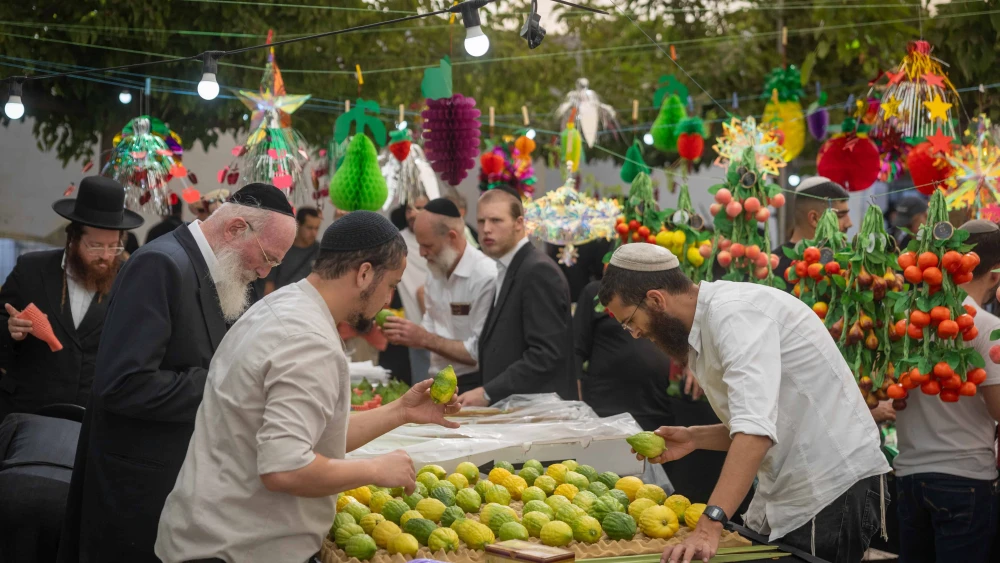
Jerusalem Mayor Moshe Lion said on Sunday that the capital city was completing preparations for Sukkot, the weeklong Jewish pilgrimage festival that begins Monday at sundown and runs through Oct. 13.
“There’s something very special happening here. From the beginning of [the Hebrew month of] Elul until after Sukkot, Jerusalem is dressed in celebration,” Lion said in a Hebrew-language interview with Israel National News.
Hundreds of thousands of Israeli Jews and tourists alike traveled to the capital for Selichot penitential prayers during the past month, Lion stated, calling the atmosphere “incredible, joyful and uplifting.”
“Come to Jerusalem and feel the love for Israel’s capital,” the mayor urged. “Enjoy every moment.” He advised visitors to park outside the city and use public transport or walk, as there is “no need to drive. Today, public transportation is efficient.”
The Jerusalem mayor said the most moving moments of the year in the city are the three pilgrimage festivals—Passover, Shavuot and Sukkot—when all males were commanded in the Bible to appear before God at the Temple.
“Visitors are amazed by Jerusalem’s beauty and the renewal taking place here. The entire city is filled with joy. Just walking around is emotional,” said Lion.
Sukkot, also called the Feast of Booths or Tabernacles, is a week-long holiday that commemorates the Israelites’ wanderings in the desert.
In 2025, the festival commences at sunset on Oct. 6 and ends Oct. 13.
As part of the celebrations, Jews eat in booths (Sukkot) and carry out the ritual of Leviticus 23:40—a biblical commandment that involves waving a bundle of four plants (an etrog, or citron fruit; lulav, frond from a date palm; hadas, myrtle bough; and aravah, willow branch).
Sukkot is immediately followed by the Shemini Atzeret/Simchat Torah festival, which in 2023 saw thousands of Hamas terrorists invade Israel, killing 1,200 people, primarily Jews, while taking 251 captives to Gaza.


