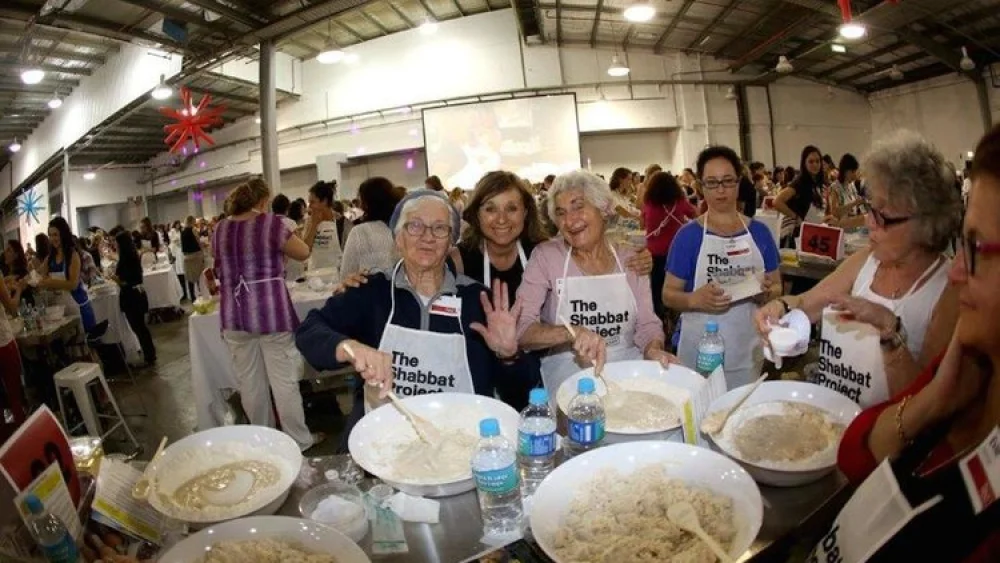
After nearly two years of being apart, participants of the international Shabbat Project in more than 1,500 cities and 109 countries worldwide will return to the annual initiative’s in-person Shabbat experiences from Oct. 22-23.
Following last year’s pivot to home-based Shabbat experiences and challah bakes via Zoom necessitated by the coronavirus pandemic, this year people are embracing the in-person Shabbat experience with renewed intensity.
“After all the upheaval, there’s a newfound sense of relief, joy and optimism. This year’s Shabbat Project is a dramatic expression of this reawakening,” says South African Chief Rabbi Dr. Warren Goldstein, the founder of the Shabbat Project. “There’s a real thirst for the gift of Shabbat right now and also an urge to share this gift with others. After 18 months of isolation, as the world begins to return to a semblance of normalcy, we want to reach out to the people around us, reconnect with the people we love. Shabbat is the perfect opportunity for doing so.”
Now in its eighth year, he says the Shabbat Project is reaching new locales and offering new opportunities.
Among new initiatives, a student from Cornell University is leading a campaign urging fellow students to switch off their phones for Shabbat. The international youth movement EnerJew is coordinating the “Gift Shabbat” campaign, which will see Jewish teenagers in 20 cities in the former Soviet Union baking challah and delivering it along with greeting cards and candles to older community members. Organizers of a challah bake in Lisbon, Portugal, are using the proceeds to distribute Shabbat meals to Jewish families in need.
In Israel, women in Kochav Yair have organized a street Kiddush for people of all levels of observance to get to know each other better. In Karnei Shomron, members of the religious Bnei Akiva and secular Tzofim youth groups have joined forces to arrange a Shabbat gala dinner for soldiers from the local battalion. And a group of Israel-based influencers on Instagram from diverse backgrounds and varying levels of observance are publishing posts in support of this week’s Shabbat Project.
Meanwhile, a woman in Park Potomac, Md., is going door to door in her neighborhood, inviting anyone with a mezuzah for Shabbat meals. And in Nizhny Novgorod, Russia, four families new to the Shabbat experience are hosting Shabbat dinner and inviting neighbors, and have received a special Shabbat kit to assist them with the preparations.
Also new is the “Shabbox,” a gift box with downloadable resources to help young Jewish families experience the joy of Shabbat. It includes educational resources and activities, family recipes and menus, personalized “blessing cards that parents and children create together,” interactive Torah-portion cards and games to play around the dining table.
Goldstein maintains that the values associated with Shabbat are more compelling than ever.
“We have lived through times of chaos and confusion,” he says. “Shabbat can restore the balance to our lives. In a world turned upside-down, it can keep us the right way up.”