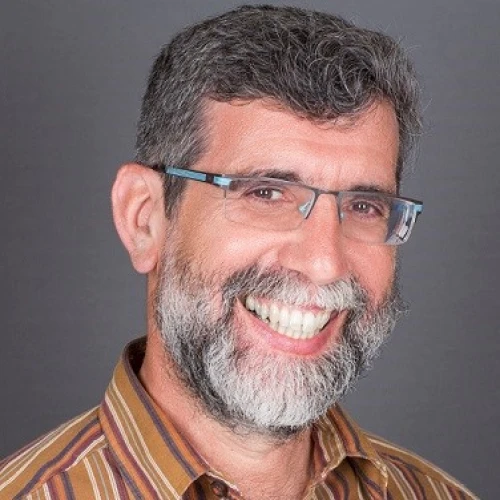
In this episode of “Our Middle East,” Jerusalem Center for Public Affairs president Dan Diker and Deputy Mayor of Jerusalem Fleur Hassan-Nahoum discuss the importance of quiet normalization with Saudi Arabia.
Hassan-Nahoum emphasizes the importance of welcoming Muslim tourists from the region to Israel and for government immigration agencies to foster this instead of discouraging it by enacting safe, but respectful and efficient policies, at the airport and in visa services to facilitate this development.
‘Let the market do its work’
Hassan-Nahoum says, “I honestly think that our government officials and representatives are talking too much about normalization with Saudi. In the Arab world, it’s all about the image, it’s about how to do it respectfully. And I think we need to do it at their pace; it is happening very slowly. We’re seeing a lot of under-the-radar normalization, and we have to facilitate it and get out of the way. Let the market do its work.”
A challenge in building these bridges is the different governance and cultural standards in the Arab world. Gulf states have been confused by Israeli political instability in multiple elections and recent demonstrations. “Arab leaders very much respect strength. Who do we talk to? Why hasn’t the government got a strategy? From their perspective, they don’t understand civil society and why there’s not one point person in the Israeli government to deal with,” says Hassan-Nahoum, referencing the implementation of the Abraham Accords. Nevertheless, she adds, there is still constant progress, with billions in trade between Israel and the Gulf: $3 billion at the end of this year, compared to the United Kingdom, with a $5 billion to $7 billion trade relationship.
Business is the answer
Hassan Nahoum says that “the business community is actually the real envoy, the real mediator here. They want to see the fruits, and they’re not going to come through a ‘kumbaya’ event. The needle is going to be moved by doing business and creating regional solutions for regional challenges.” Arab women have told her, “Why haven’t we done this sooner?” saying that although the Arab world is perceived as paternalistic, it is actually very maternalistic. She notes the growing rights and leadership roles for women in KSA, which she sees as revolutionary.
Diker points out that these developments reflect the vision of Saudi leader Crown Prince Mohammed bin Salman, who sees his country as the startup nation of the Arab world, including as an exporter of clean energy, defense systems and other innovative technologies: “He looks at Israel with quiet appreciation. Israel is a quiet partner for normalization together with KSA in bringing the region to a new place.”
--
“Our Middle East: An Insider’s View” airs live on JNS TV Youtube Channel, Facebook and Twitter at 1:30 PM EST/8:30 PM IST. You can also listen to the audio version here. A Jerusalem Center for Public Affairs podcast produced by JNS.
You can catch the audio version on Spotify, Apple Podcasts, Google Podcasts or wherever you listen to your podcasts.
Dan Diker is the president of the Jerusalem Center for Public Affairs, a foreign policy expert and the former Secretary General of the World Jewish Congress.
Khaled Abu Toameh is an award-winning Arab-Israeli journalist and TV producer. He covers Palestinian affairs for The Jerusalem Post.