Newsletter
Newsletter Support JNS

Knesset approves billions in extra defense spending for ‘classified objectives’

In July, the government approved a NIS 58 billion ($18.6 billion) defense budget for 2022 – seven billion shekels more than the 2021 budget.

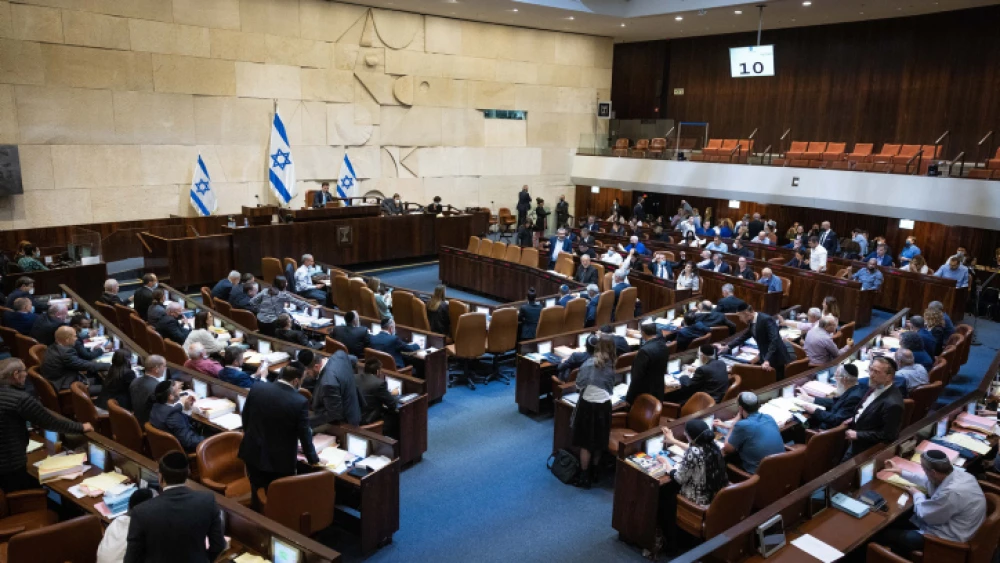
General view of the assembly hall during a vote on the 2022 state budget in the Israeli Knesset in Jerusalem, Nov. 4, 2021. Photo by Yonatan Sindel/Flash90.

The Knesset Finance Committee approved a NIS 1.5 billion ($481 million) budget addition to the 2021 defense budget on Monday, after approving an additional NIS 7.4 billion (2.37 billion) on Thursday, according to Calcalist.

The near NIS 9 billion ($2.89 billion) cash injection have been categorized as going towards classified objectives, the report said, adding that “details about the transfers will be given only to the Joint Defense Budget Committee.”

Knesset Members who asked why the additional funds were not included in the state budget approved on Nov. 4 were told that the decision was only taken in recent weeks, according to the report.

In July, the government approved a NIS 58 billion ($18.6 billion) defense budget for 2022 – seven billion shekels more than the 2021 budget.

At that time, the Defense Ministry requested a nine billion shekel increase, including three billion to cover the costs of May’s Operation Guardian of the Walls against Hamas.

The new Israeli defense budget will enable Israel to develop new tools, operational plans and technologies to take on “all threats we face,” Defense Minister Benny Gantz said, days before it was passed in November.

Companies using artificial intelligence for longer were more likely to report significant gains in worker productivity.
Theophilos III presents the U.S. president with a decoration tied to the Church of the Holy Sepulchre.
One of the wanted Palestinians was an operative in the Jenin terrorist network that was dismantled by the Israeli military in 2025.
“There’s no reason that the process can’t be dramatically accelerated,” Dan Schnur, a political science lecturer, told JNS.
Katie Wilson, who promised when she was running for mayor to turn off cameras, said that she made the decision after an intelligence briefing from local and federal law enforcement.
“It is troubling that a stadium supported by taxpayer dollars would openly subsidize an event led by an artist known for pushing this dangerous, hateful rhetoric, especially with Florida having one of the largest Jewish populations in our country,” Sen. Rick Scott stated.