


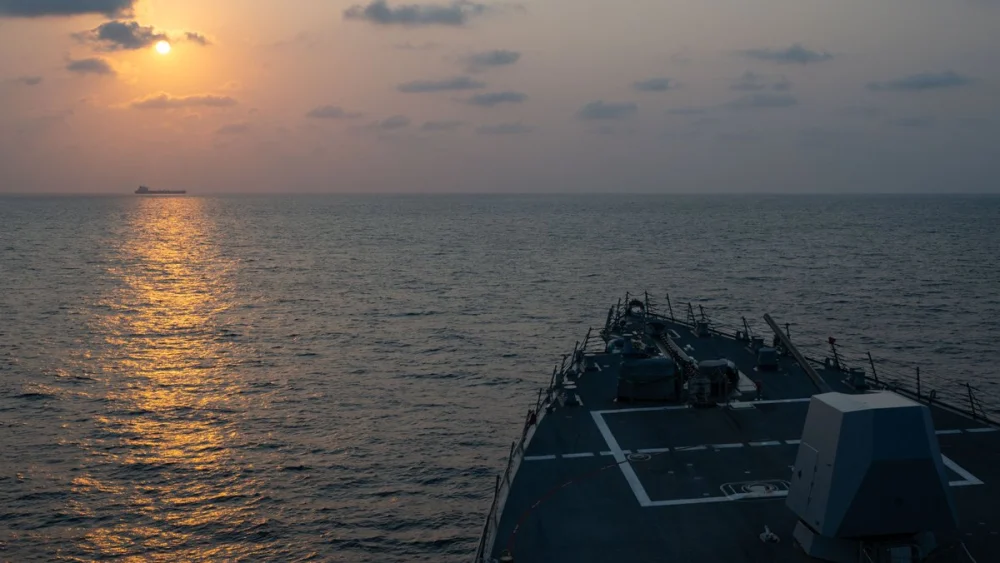
Despite claims by the Islamic Revolutionary Guard Corps to the contrary, the Islamic Republic does not control the Strait of Hormuz, U.S. Central Command said on Wednesday.
“The international waterway remains open for transit regardless of IRGC threats and attacks,” CENTCOM wrote on X.
“Commercial vessels continue to use the strait with U.S. military support. Since early May, American forces have helped more than 900 ships transit the strait,” it added.
🚫CLAIM: Today, Iran’s Islamic Revolutionary Guard Corps (IRGC) Navy claimed that it controls exit and entry to the Strait of Hormuz, suggesting that international mariners can only use routes the IRGC prefers. This is FALSE.
— U.S. Central Command (@CENTCOM) July 22, 2026
✅FACT: Iran does not control the Strait of Hormuz.… pic.twitter.com/CK7wZnpumH
On Thursday morning, the IRGC said it had prevented three oil tankers from transiting the Strait of Hormuz, stressing that the choke point is under its control, AFP reported.
The Iranian force—designated by the U.S. and a slew of other countries as a terrorist organization—said via Iranian state media that ships may pass through the waterway only in routes authorized by Tehran.



