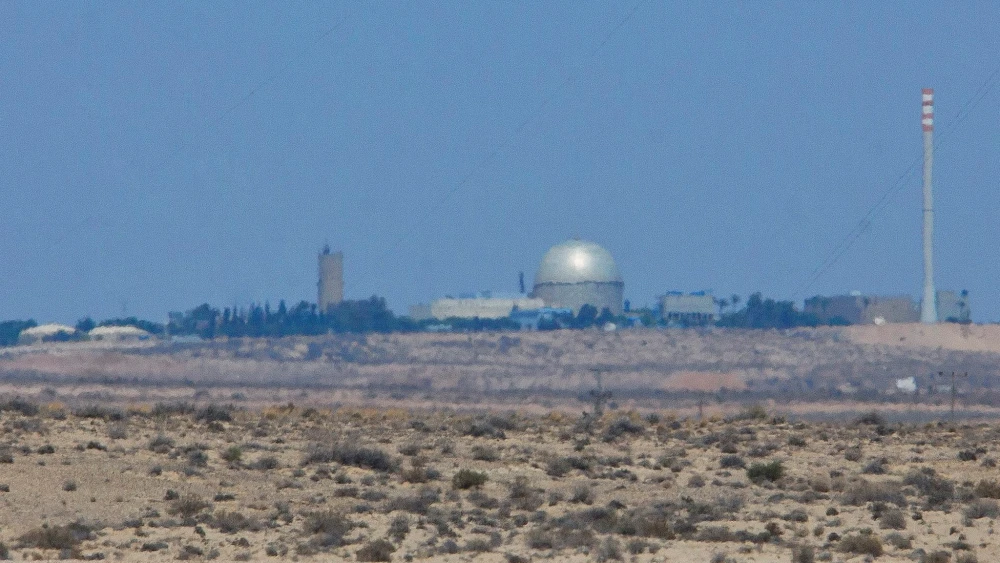
Israel’s Knesset overwhelmingly rejected a bill that would place Israel’s alleged nuclear facility in Dimona under international supervision.
Only members of the Arab-dominated Joint List voted for the bill, which was proposed by party member, MK Jamal Zahalka, and failed by a vote of 73-8.
According to Energy Minister Yuval Steinitz, Zahalka attempted to push through the legislation by calling the alleged reactor old and outdated, and arguing that its potential vulnerability to earthquakes meant that it should receive international oversight.
Steinitz argued that the plant has been upgraded several times since the 1990s, and called the bill “a joke.”
The presence of a nuclear reactor or a nuclear arsenal in Israel has never been officially confirmed or denied. Israel is not a member of international nonproliferation treaties.
In 1986, Dimona technician Mordechai Vanunu was arrested and jailed for leaking information about the facility to a reporter at the United Kingdom’s Sunday Times.
Analysts used information from the interview to surmise that Israel possesses as many as 200 atomic warheads.
Israel, which has been vehemently opposed to the development of nuclear weapons by Iraq, Iran and Syria, has been linked to numerous attacks on operations associated with atomic development in those countries.