Newsletter
Newsletter Support JNS

Likud expressing concern over turnout as Israeli elections wind down

“I’m hoping that people get out to there and vote, the numbers are not looking in our favor,” said Rachel Broyde, the head of Anglo campaign for the Likud Party.

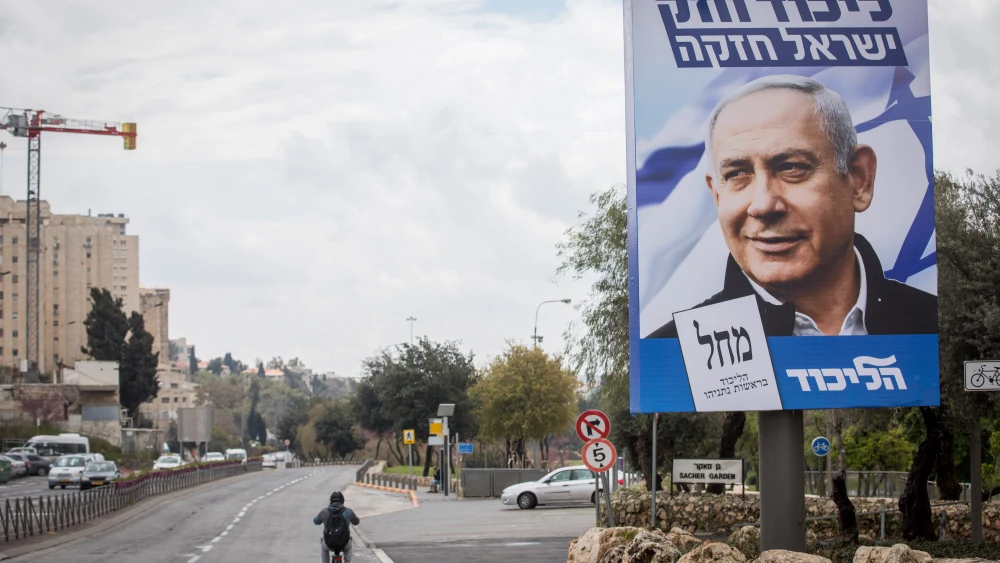
View of a giant election campaign poster in Jerusalem showing Israeli Prime Minister Benjamin Netanyahu, head of the Likud Party, March 31, 2019. Credit: Yonatan Sindel/Flash90.

With about an hour left until the polls close in the Israeli elections on Tuesday, Likud is expressing concern over voter turnout.

“I’m hoping that people get out to there and vote, the numbers are not looking in our favor,” Rachel Broyde, the head of Anglo campaign for Likud, told JNS. “It is that last-minute push, getting store owners who stayed open and pushing people debating to vote, to vote Likud.”

“Voter turnout is low everywhere, which historically has harmed Likud,” she continued. “And in areas that tend to be more pro-Likud the voter turnout is low.”

Reports of low voter turnout appear to be a political ploy by the Likud, Blue and White, United Torah Judaism and New Right parties.

“We have to save the right. There’s only a few more hours. Go out and vote, otherwise we get a leftist government,” tweeted Israeli Prime Minister Benjamin Netanyahu of Likud.

“Our numbers are good, but not good enough,” said Blue and White leader Benny Gantz. “We have to work harder.”

Nevertheless, Likud Knesset member Amir Ohana said that the party was able to close the gap towards the end of the election day.

“Three hours ago things were not going so well for us. I think in the last few hour we were able to close the gap.”

Regarding forming a coalition were Netanyahu to win, Broyde expressed optimism.

“I hope that Likud is able form a government that really represents the Israeli people’s interest,” she said. I hope we are the largest party because we will be able to accomplish a lot more. And I hope we can form a right-wing coalition.”

JNS Washington, D.C., correspondent Jackson Richman contributed to this story.

Josh Hasten is a Middle East correspondent for JNS. He is co-host of the JNS podcast “Jerusalem Minute,” as well as the host of the JNS podcast “Judeacation.” He also hosts the weekly radio program “Israel Uncensored” on “The Land of Israel Radio Network.” An award-winning freelance journalist, he writes regularly for JNS and other publications. He is also a sought-after guest for television and radio interviews on current events in Israel, having appeared on CNN, BBC, Sky News, Fox, APTV, WABC, ILTV, i24News, and many others.
Kenneth Marcus, founder and chairman of the Brandeis Center, told JNS that “we understand that those who characterize us that way, rather than as the civil rights organization we are, generally aim to marginalize us or undermine our efforts.”
Michael Specht, Ramapo Town Council supervisor, called the incident “very disturbing.”
The head of the Iranian parliament spoke after U.S. President Donald Trump warned he will destroy the Islamic Republic’s energy sites if it doesn’t open the Strait of Hormuz within 48 hours.
The latest attacks “show us what a cruel regime it is and what kind of danger it is,” the Israeli president said.
Hundreds of phone calls are being made by Israel’s foreign intelligence agency, along with targeted assassinations of top regime leaders.