Maryland is joining a list of states examining its relationship with the ice-cream maker Ben & Jerry’s, as well as its parent company, Unilever, after the company announced last month that it will no longer sell its products in what the company deemed “Occupied Palestinian Territory,” which includes the West Bank and parts of Jerusalem.
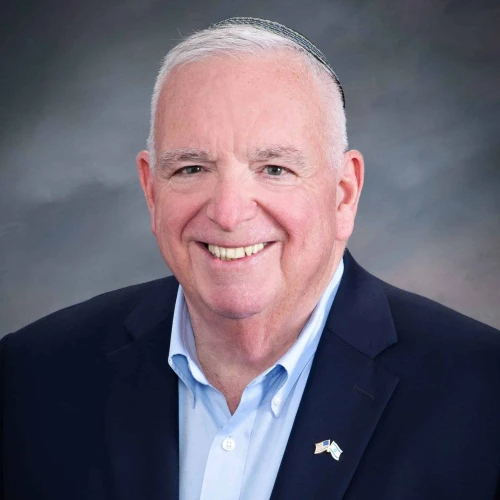
Maryland Secretary of State John C. Wobensmith wrote in a letter on Monday that the state will abide by Gov. Larry Hogan’s 2017 anti-BDS executive order and review the state’s contracts with Ben & Jerry’s and Unilever.
“ … In October of 2017, Governor Hogan reaffirmed the State’s commitment through the issue of Executive Order 01.01.2017.25, which ‘prohibits all executive branch agencies controlled by the governor from entering into a procurement contract with a business entity unless it certifies that it will, for the duration of its contractual obligations, refrain from [a] boycott of Israel,’ ” stated Wobensmith’s letter. “The state will review state contracts to determine whether Ben & Jerry’s and its parent company, Unilever, have an existing contract with the state of Maryland and the state will respond accordingly.”
Wobensmith’s letter was addressed to Baltimore Jewish Council executive director Howard Libit and Jewish Community Relations Council of Greater Washington executive director Ron Halber, who on July 23 wrote a joint letter to Hogan citing the executive order in light of Ben & Jerry’s actions, saying they believe it to be BDS.
In his letter, Wobensmith cites various levels of cooperation between Maryland and Israel, including Israel’s Negev Desert region becoming Maryland’s 19th “sister state” in 2016 to further promote partnership between the two locations.
“Please continue to be assured that Maryland is committed to diversity and inclusion, and ardently opposes any form of discrimination based on religion, national origin, place of residence or ethnicity—including boycotts of people or entities because of their Israeli national origin, or residence or incorporation in Israel and its territories,” he wrote. “I know you are aware that as part of our ongoing efforts to ensure all Marylanders feel welcome in our communities, our state has had a longstanding and broad policy to refrain from contracting with business entities that unlawfully discriminate in the solicitation, election, hiring or commercial treatment of vendors, supplies subcontractors or commercial customers.”