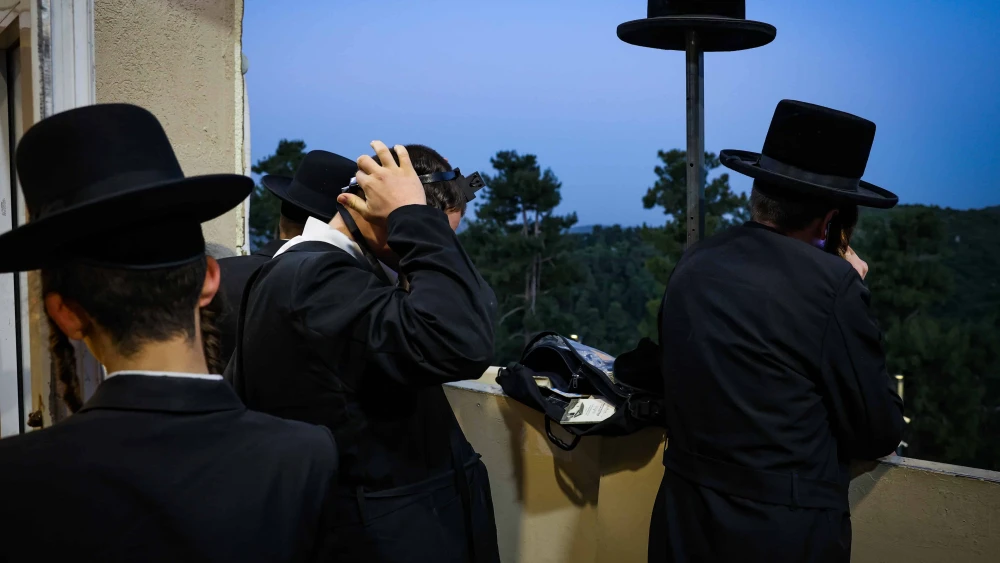
The Israeli government last week presented the framework for the annual Meron pilgrimage set to take place in the Upper Galilee on the night of May 17.
The traditional pilgrimage to the gravesite of second-century Rabbi Shimon Bar Yochai on Mount Meron during Lag B’Omer celebrations was heavily restricted last year when Israel was engaged in armed conflict with Lebanon’s Hezbollah.
The new framework draws from a state inquiry into the 2021 stampede, in which 45 people were killed and another 150 were injured in a disastrous crush at the festivities.
There is an additional security challenge this year due to the celebration of the festivities on a Saturday night, which reduces the hours that observant Jews can hike up the mountain from about 28 hours to 16.
The 2021 catastrophe occurred on a Saturday night as well.
This time, the government plans this time to double the size of the celebration area on top of the mountain; place ultra-Orthodox stewards at the gravesite; prepare an additional exit route from the site; hold around 10 events simultaneously to reduce crowding; hold lighting ceremonies and events also in the morning hours; increase public transportation before and after the celebration; and expand emergency access routes.
The 2025 framework was formulated based on the recommendations of the State Commission of Inquiry into the Mount Meron Disaster, and all facilities will undergo strict engineering and safety approval, the government said.
Meanwhile, a 19-year-old ultra-Orthodox resident of Jerusalem was indicted recently on suspicion of causing damage to safety infrastructure on Mount Meron ahead of the pilgrimage, Israel National News reported.
The defendant is accused of a series of vandalism acts intended to impair the functioning of safety and rescue systems, according to the indictment.
The suspect allegedly sprayed hate graffiti on several structures en route to Mount Meron and caused damage to control-and-monitoring equipment at the Meron site valued at tens of thousands of shekels.
Following complaints filed to the police, investigators found the identity of the perpetrator and arrested him on April 30 while hiding in a warehouse in Safed.