
An old psychotherapy joke says that therapists are excellent at guiding others toward change, as long as the therapist doesn’t have to change. The joke endures because it reflects a larger truth: People instinctively want to preserve their own sense of stability and control, even while expecting others to change. Societies often behave no differently.
Change introduces uncertainty. Uncertainty threatens identity, legitimacy and cohesion, whether within individuals or societies. As a result, people and institutions often resist ideas that disturb established scripts, even when those ideas contain defensible truths.
In closed or semi-closed societies, authoritarian governments regulate information, justifying such control as enhancing social stability and protecting the public from dangerous, destabilizing influences. Internet access is restricted or monitored, independent journalism suppressed, dissent discouraged or criminalized. The preservation of social and political homeostasis is the primary organizing principle.
All societies develop cultural frameworks that reinforce certain beliefs while marginalizing others. A critical difference between open and closed societies is often phrased as “distress tolerance” in therapy.
Open societies have the plasticity to endure conflicting or dissenting ideas, including those that might create emotional distress at the individual level. Closed societies have less capacity to tolerate conflicting ideas because such ideas threaten the status quo. And that may be the distinction between the micro and macro: Individual anxieties can be emotionally disruptive, even when irrational. National anxieties may directly threaten the power structure.
Our global community overflows with examples—from bulwarks like China and Russia to regional powers such as Iran, Turkmenistan, Cuba and Venezuela. All have in common the need to control information, limiting people’s right to learn, debate or dissent from the government’s narrative.
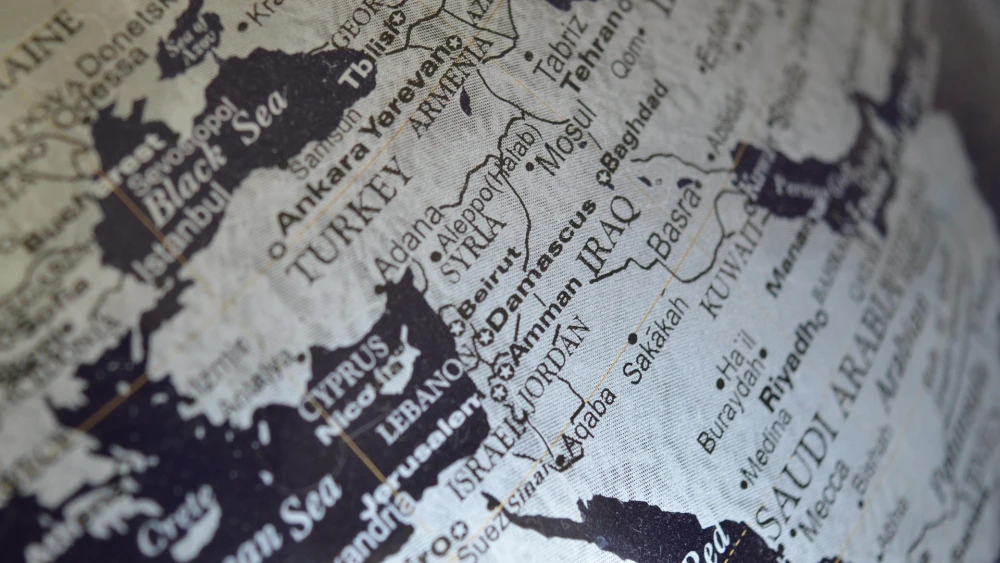
Throughout much of the Middle East, a recurring theme is the danger Israel’s existence poses, often linked to questioning the legitimacy of a Jewish homeland. This message is hard to challenge in such environments. States with explicit or dominant religious identities rarely face the same sustained challenge to the legitimacy of their national existence.
Few regions fuse religion, historical memory, territorial identity and political legitimacy as intensely. Jerusalem alone carries profound symbolic significance for Jews, Christians and Muslims, while the territorial consequences of conflict, such as the Six-Day War in 1967, remain politically and emotionally unresolved generations later.
These issues have become institutionally embedded through education, media, religious interpretation, political rhetoric and even international organizations. They are uniquely resistant to revision even when contradictory realities emerge. Over time, such beliefs become less opinions than inherited social assumptions.
Israel, of course, attracts a level of symbolic and political attention disproportionate to its geographic and demographic scale. Yet objection to it has not remained static; the language through which that objection is expressed has evolved alongside changing historical and moral frameworks. Military defeat, population displacement, allegations of imperialism, colonialism and apartheid now accompany charges of genocide. Each claim refines the lens through which the conflict is understood.
As such narratives become institutionalized, challenges to them become increasingly difficult to articulate. Efforts to objectively understand Israel’s dilemma in formulating a response following Oct. 7, 2023, for example, may be perceived as a threat to the established moral framework cultivated over the course of decades. Those beliefs include antisemitic themes, conspiratorial claims, dehumanizing imagery, historical distortions, and at times, eliminationist rhetoric.
As long as Israel’s existence is perceived to be a threat, the culture must give heed to that danger. That explains why in many traditional and collectivist societies, including in parts of the Mideast, concepts of communal honor, humiliation, dignity and historical grievance can carry disproportionate political and cultural weight, despite countering realities. Thus, even moderates rarely comment; their silence becomes just one more mechanism by which the dominant narrative is preserved.
Durable cultural change often requires mechanisms that allow societies to question deeply embedded beliefs without experiencing the process as humiliation or existential surrender. Just as intrapersonal change demands difficult emotional and cognitive work, cultural revision requires leadership willing to risk destabilizing the status quo.
History suggests that societies rarely abandon foundational beliefs voluntarily; whether governments ultimately entrench old myths or gradually revise them may depend on whether reality itself becomes too costly to ignore.
Ironically, the systems most capable of rapidly reshaping public belief may also fear such change the most. Once populations begin questioning one protected truth, they may begin rethinking others.