Middle East

White House senior adviser Jared Kushner reportedly told a group of ambassadors that the highly anticipated Mideast peace plan will be released after Israel forms a new government and after the Islamic holiday of Ramadan.
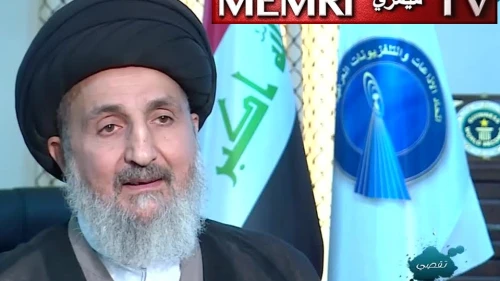
Iraqi TV report: “Jews are behind Iraqi NGOs; they promote homosexuality and encourage men to style their beards like Theodor Herzl, the founder of Zionism.”

Waad Allah Brigades, a Bahraini Shi’ite militia, posted a video on social media threatening an Israeli delegation that was set to attend a business conference in Manama, Bahrain.

Omani Foreign Minister Yusuf bin Alawi bin Abdullah said that Arab countries should take into consideration that Israel’s fear for its survival in the Middle East is part of the reason that it received political, economic and military support from the international community.
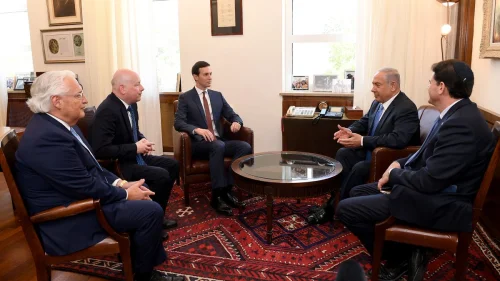
Sources told ABC News that just four administration members have seen the entire plan, which U.S. officials told the outlet has yet to be shared with allies, including Israel.
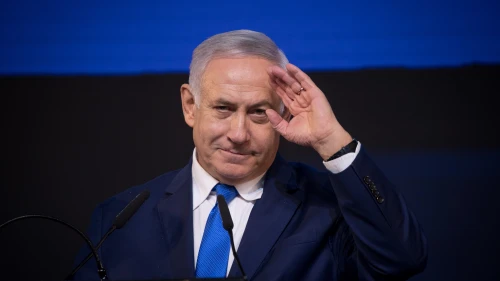
The questions now focus on whether Israeli Prime Minister Benjamin Netanyahu will follow through on his campaign pledge to annex parts of Judea and Samaria, as well as what his election win means for U.S. President Donald Trump’s much-anticipated “deal of the century” to solve the Israeli-Palestinian conflict.

King Abdullah might be expected to help resolve the Palestinian problem in ways that could change his country’s character and demography, such as naturalizing refugees, forming a confederacy with the Palestinian Authority or becoming an alternative homeland for the Palestinian people.
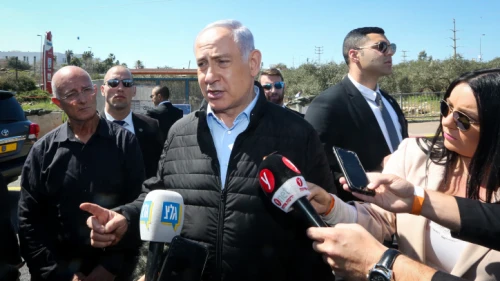
In an interview with Israel’s Channel 12 TV news, the Israeli premier said he would not dismantle a single Jewish settlement, and that he would annex parts of Judea and Samaria if he is re-elected on April 9.
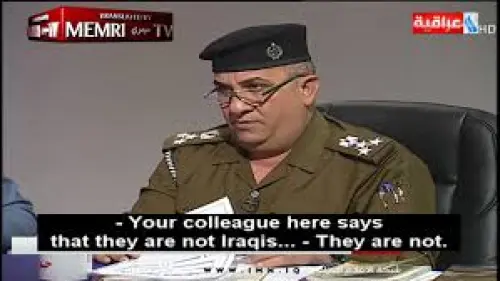
Gen. Fadhi Alwan Kazem, head of the Citizenship Department in Iraq’s Ministry of Interior, said in a March 17 debate about citizenship for persecuted minorities that aired on Al-Iraqiya TV that Jews are a special case with “political aspects,” and should not have a right to return or to Iraqi citizenship if they had been kicked out in the past.
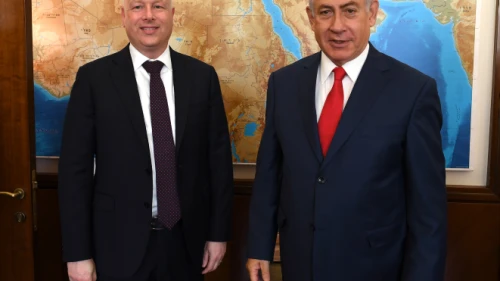
“One thing that is not acceptable to the Trump administration is to compromise Israel’s security in any manner whatsoever,” said U.S. special envoy to the Middle East Jason Greenblatt.

“I’m optimistic that what we’re doing will give us a better likelihood that we’ll achieve outcomes that would be better for the people of Israel and the Palestinian people,” said U.S. Secretary of State Mike Pompeo.

Polls conducted worldwide on behalf of the Foreign Ministry indicate more than 40 percent of Iraqis, Emiratis and Moroccans favor ties between their countries and Israel • Foreign Ministry official: Citizens are more realistic about Iran than their governments are.