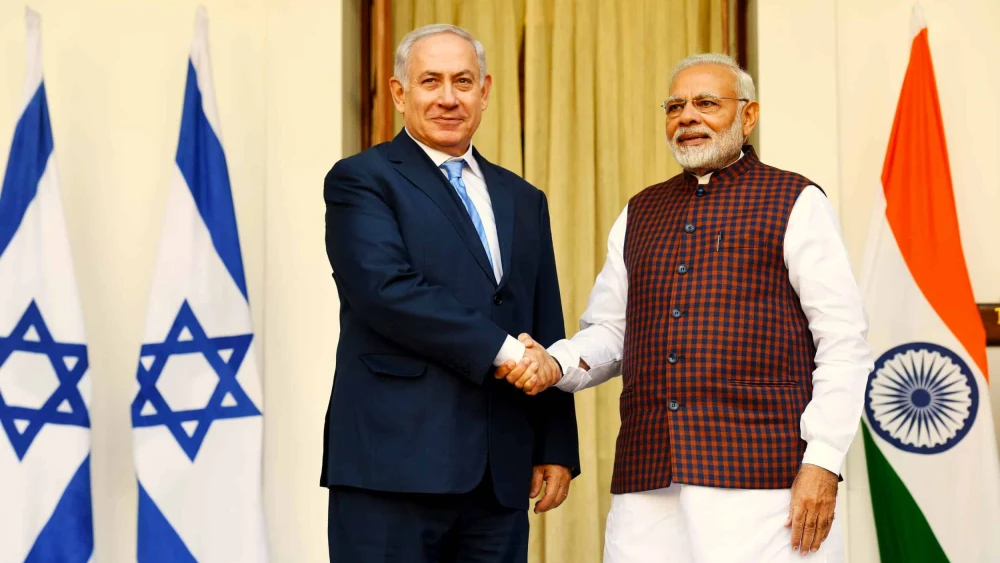
Israeli Prime Minister Benjamin Netanyahu and Indian Prime Minister Narendra Modi exchanged New Year greetings and discussed deepening bilateral cooperation during a telephone call Wednesday, according to a statement from Modi’s office.
The leaders identified shared priorities for strengthening the India-Israel strategic partnership, guided by democratic values and mutual trust, and reiterated a zero-tolerance approach toward terrorism in all its forms.
Glad to speak with my friend, Prime Minister Benjamin Netanyahu and convey New Year greetings to him and the people of Israel. We discussed ways to further strengthen the India-Israel Strategic Partnership in the year ahead.
— Narendra Modi (@narendramodi) January 7, 2026
We also exchanged views on the regional situation and…
Netanyahu briefed Modi on the implementation of U.S. President Donald Trump’s 20-point peace plan for Gaza, while Modi reaffirmed India’s support for efforts toward a just and durable peace in the region.
The Israeli premier said the leaders had a “fruitful conversation focused on strengthening our two countries’ national security,” discussed “how we can unleash the boundless potential of this partnership for the benefit of our peoples,” and expressed hope for an in-person meeting with Modi soon, according to his office.
We discussed the strength of India-Israel relations and how we can unleash the boundless potential of this partnership for the benefit of our peoples.
— Prime Minister of Israel (@IsraeliPM) January 7, 2026
I look forward to meeting Prime Minister Modi in the near future to continue these discussions in person.
🇮🇱🇮🇳
The leaders also discussed global issues of mutual interest and agreed to remain in touch.