Newsletter
Newsletter Support JNS

AI eye scan can detects anemia, according to Israeli study

The study achieved 82.8% accuracy using AI analysis of eye blood vessels, offering a potential alternative to blood tests.

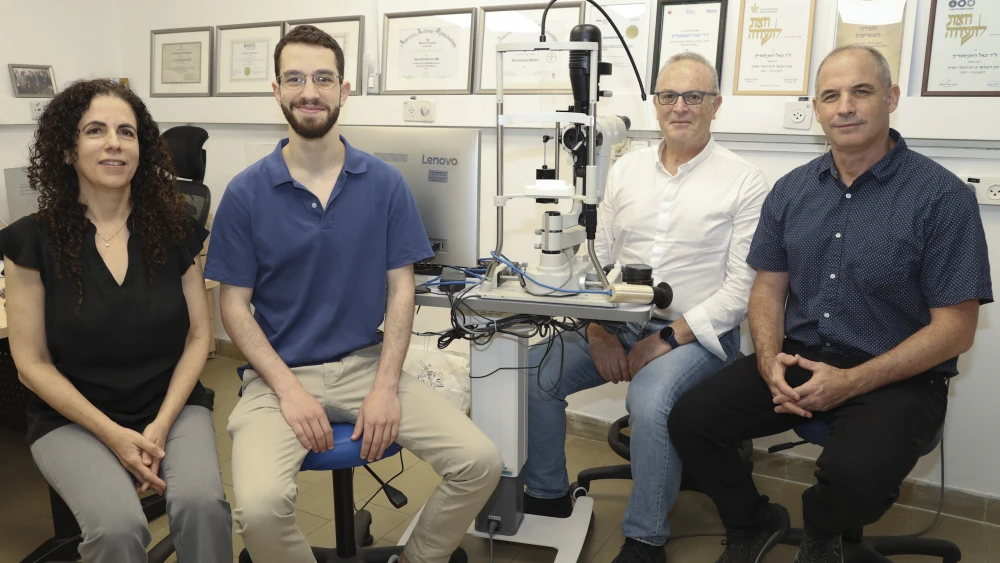
From left: Dr. Ifat Sher-Rosenthal, Tamir Denis, professor Ygal Rotenstreich and professor Haim Suchowski. Credit: Courtesy of the Sheba Medical Center Photo Department.

Researchers at Tel Aviv University and Sheba Medical Center have developed an artificial intelligence system that can detect anemia and estimate key blood markers using a brief video scan of blood vessels in the eye, the university spokesperson’s office said on Thursday.

The proof-of-concept study, published in npj Digital Medicine, analyzed 224 participants and found the system identified anemia with 82.8% accuracy while showing strong correlation with laboratory measurements of hemoglobin and red blood cell counts. The technology converts high-magnification video of the eye’s conjunctiva into data on blood flow, which is then analyzed by AI.

Researchers said the method could eventually enable faster, noninvasive screening, particularly in areas with limited access to medical care, though larger studies are needed before clinical use.

The research was supported in part by Israel’s Innovation, Science and Technology Ministry.

See more from JNS Staff
Hamas said it is willing to move forward with second stage of the U.S.-brokered framework, calling on Washington to exert pressure on Jerusalem.
“We can and know how to stand our ground—even against our best friends when necessary,” said Prime Minister Benjamin Netanyahu.
A U.S. official said the blockade of Iranian ports would be lifted if Tehran and Muscat finalize an arrangement.
The Tel Aviv-based drug maker is facing an antitrust lawsuit, together with several other pharmaceutical companies.