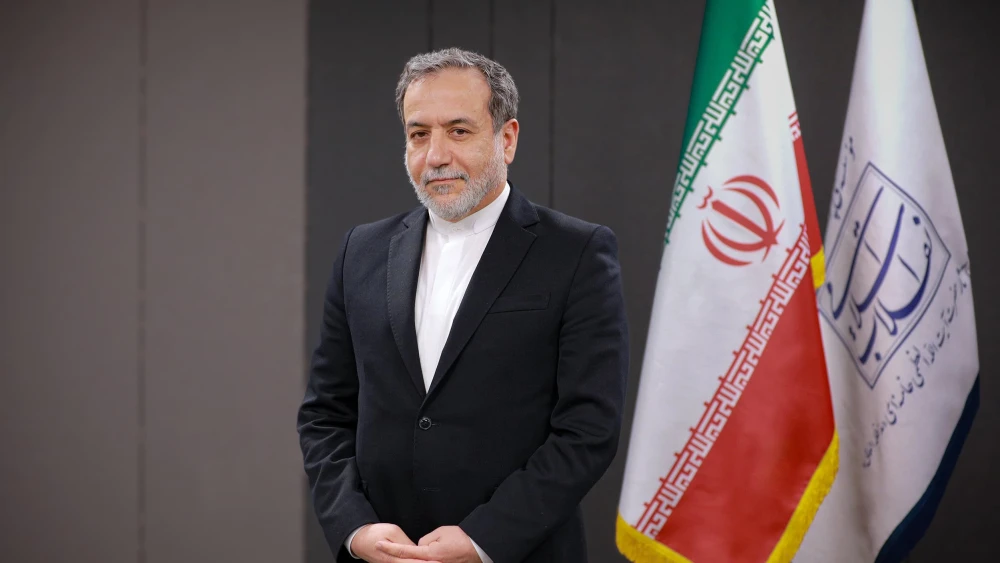
Iranian Foreign Minister Abbas Araghchi said he has not met the Islamic Republic’s supreme leader Mojtaba Khamenei, describing contact with the Islamic Republic’s new leader as limited to a small circle of officials.
“I don’t think many people have, aside from a very small number,” he said during an interview with Iranian journalist Javad Mogooyi.
Araghchi also said he had never communicated directly with Khamenei.
“Only indirectly, from what I’ve heard from others,” he said. “Personally, I’ve never interacted with him. I’ve seen him from a distance a few times at public gatherings, but we’ve never had a conversation.”
The foreign minister said Khamenei’s appointment as supreme leader was intended to signal continuity in Iran’s policies following the death of his father, Ayatollah Ali Khamenei, who was killed in U.S.-Israeli strikes on Feb. 28.
Mojtaba Khamenei’s appointment is “a very important message to the world that there would be no change in the regime’s policies and ideals,” Araghchi said.
According to the Middle East Forum, Araghchi said that “the regime would collapse if all members of the Supreme National Security Council are hit, which is why they never met at once during the war.”
He added that Iran had long planned to close the Strait of Hormuz if the United States targeted the supreme leader.
“From the beginning, it had been agreed that, if the supreme leader had been a target, the strait would close,” Araghchi said.