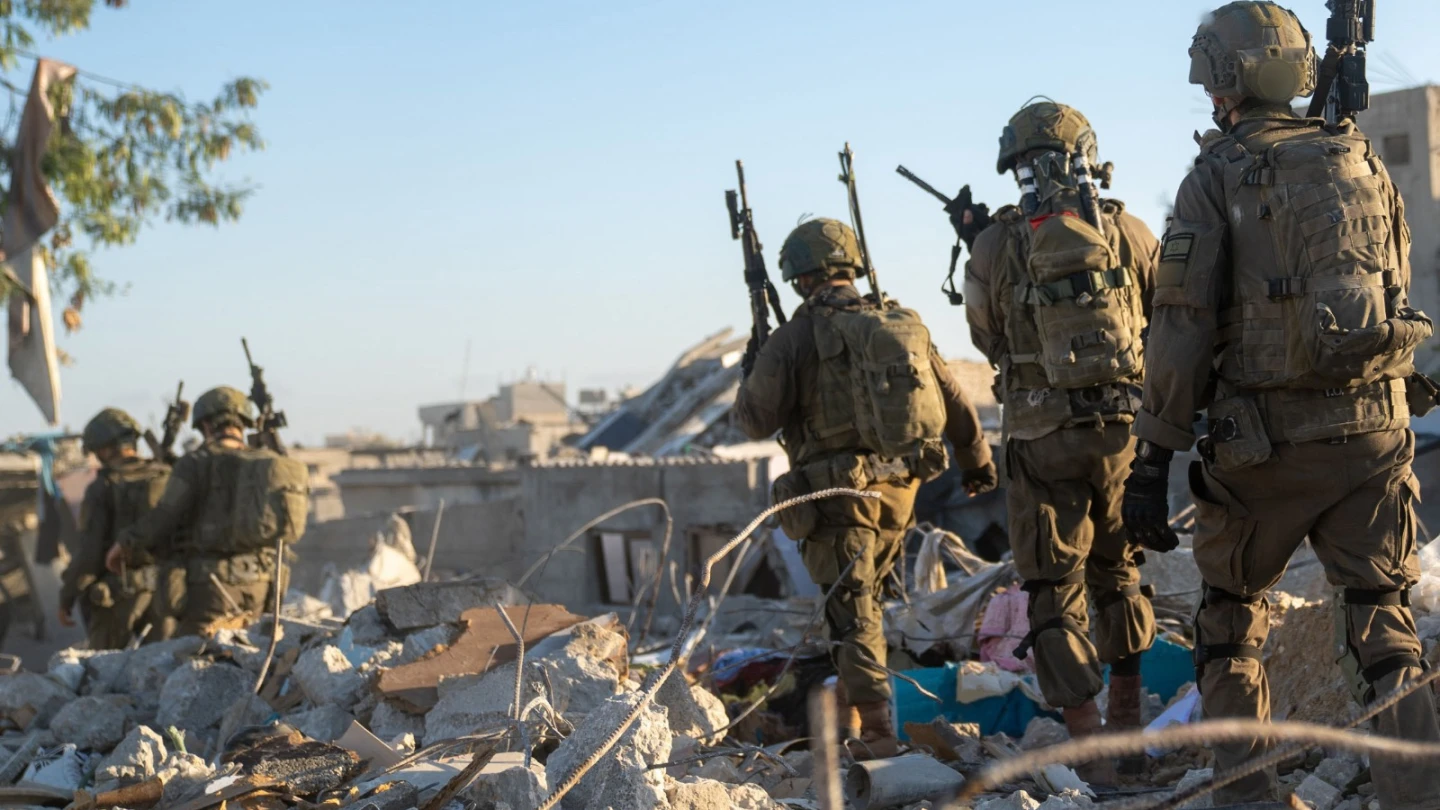

Israel is facing a critical shortage of soldiers. This is a reality that everyone in the country is feeling.
The military reports a deficit of about 12,000 troops in its regular forces alone. Meanwhile, reservists who used to serve a few weeks a year are now spending 80 to 100 days a year in uniform. Many combat reservists, especially tank crews, infantrymen and border defense forces, have logged over six months of active duty within a single 12-month period.
In the middle of this crisis is Israel’s Haredi community, which numbers around 1.5 million people. Because this community has a high fertility rate averaging 6.5 births per woman, the population is extremely young: Roughly 57% of the Haredi population is under the age of 20. While roughly 70% of other Jewish Israelis enlist, at most 10% of draft-eligible Haredi men do. That is a major reason the debate over the status of the Haredi community grows more intense every year.
The primary source of contention between the most anti-draft Haredi groups and mainstream society lies in their differing perspectives on societal norms. The Haredim see the secular world as a fast track to abandoning Jewish law. To them, protecting Torah study isn’t just a lifestyle choice. It is the spiritual shield that kept the Jewish people alive over millennia of exile.
However, nobody is asking the Haredim to abandon Torah study. In fact, for more than 70 years, there has been a highly successful model showing that Torah study and military service are not mutually exclusive: The Religious Zionist hesder yeshivahs have proven that young men can deeply study the Talmud and still be elite combat soldiers.
The system is simple: Religious Zionist youth spend about three and a half years studying in yeshivah, paired with a year and a half of active service alongside their classmates. They do this in units specifically designed to support their religious lifestyle. No one accuses these graduates of abandoning their faith. In fact, many rabbis argue that serving makes them even more focused and committed when they return to the study hall.
Even within the Haredi world, albeit on a much lesser scale, Chabad has shown that a compromise is possible. For years, Chabad yeshivah students had an informal agreement with the military that let them postpone their service until they finished their studies and got married. Hundreds of men served under this model.
Unsurprisingly, of all Haredi groups, Chabad is least opposed to military service and its members enter the workforce at significantly higher rates. This proves a basic point: When a community views the outside world as compatible with faith, they are far more willing to help defend the larger society.
If Haredi men enlisted at the same rate as the rest of the country, it would completely change the game. The Israel Defense Forces would gain 12,000 to 15,000 recruits every year. That single change would erase the army’s manpower shortage overnight. It would prevent the military from having to extend mandatory service to three full years, and it would finally give the exhausted families of reserve soldiers their normal lives back.
This does not require the Haredi community to abandon who they are. No one is asking 18-year-old scholars to trade their holy books for rifles. The hesder and Chabad models offer a clear way forward; they show that dedicated Torah scholars can combine their spiritual devotion with military service.
Indeed, the IDF is already setting up the infrastructure to make this happen. The newly formed Hashmonaim Brigade is a combat unit built from the ground up so Haredi men can fight without compromising their religious standards. The blueprint is ready. What is missing is the political and community leadership to walk through the door.
The Haredi community’s concerns deserve to be taken seriously, not brushed aside. But the needs of the state regarding our security are no less valid. The real choice is between scaling a solution we know works or continuing to argue that it is impossible.
Moderate Haredi politicians who might privately favor a compromise like enlisting those who aren’t actually studying are politically paralyzed. If a Haredi politician agrees to any compromise, they risk being branded as a “traitor” by more extremist factions and losing their political base.
Ultimately, the Haredi draft is not just a debate about military logistics. It is a high-stakes political poker game in which the stakes are the survival of the Israeli government and the economic future of the Haredi community.
What Haredi leaders are overlooking is the basic social contract between Israeli citizens and the state, along with the country’s economic and security future. If those foundations crumble, it will ultimately lead to the Haredi community’s own downfall. This is a reality they urgently need to take seriously.