


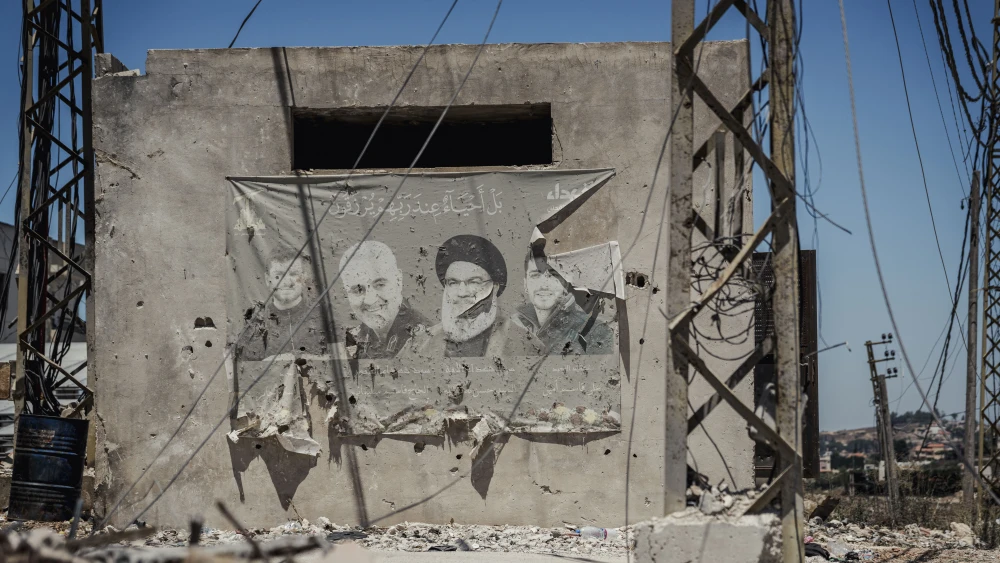
Israel’s Foreign Ministry on Sunday marked two years since the targeted killing of Hezbollah leader Hassan Nasrallah, calling the Sept. 27, 2024, airstrike in Beirut a “major blow” to the terrorist group and a turning point in efforts to counter Iran’s regional strategy.
“A weakened and disarmed Hezbollah means an opportunity for a sovereign Lebanon and for a new chapter of hope between Lebanon and Israel,” the ministry said.
Earlier on Sunday, Iranian propaganda outlet Press TV published footage of Nasrallah that it claimed had not previously been aired.
The footage purportedly showed the Hezbollah leader being driven through Dahiyeh, the Iranian-backed terrorist organization’s stronghold in southern Beirut.
Two years ago today, the elimination of Hassan Nasrallah dealt a major blow to Hezbollah and marked a turning point in the struggle against the Iranian regime’s expansionist strategy in the Middle East.
— Israel Foreign Ministry (@IsraelMFA) September 27, 2026
A weakened and disarmed Hezbollah means an opportunity for a sovereign…
On Sept. 27, 2024, the Israeli Air Force dropped at least a dozen 2,000-pound bunker-buster bombs on Nasrallah’s bunker in Dahiyeh. Two unnamed Israeli officials told The New York Times at the time that more than 80 bombs were dropped over the span of several minutes during the strike, but did not confirm the type of munitions used.
A week later, an IAF strike on a bunker in the Beirut suburbs killed top Hezbollah terrorist Hashem Safieddine—a maternal cousin of Nasrallah, the head of Hezbollah’s Executive Council and a leading candidate to succeed the terror chief.
Nasrallah had fallen into depression in the wake of the July 30, 2024, targeted killing of Hezbollah commander Fuad Shukr and the so-called Operation Grim Beeper that took thousands of Hezbollah fighters out of action in two days in September, Jawad Nasrallah, the second-oldest son of the Shi’ite terror master, revealed last year.
The heavy blows that the Jewish state inflicted on Hezbollah evoked “difficult feelings” for Nasrallah personally and harmed the morale of the group’s fighters, said Jawad.



