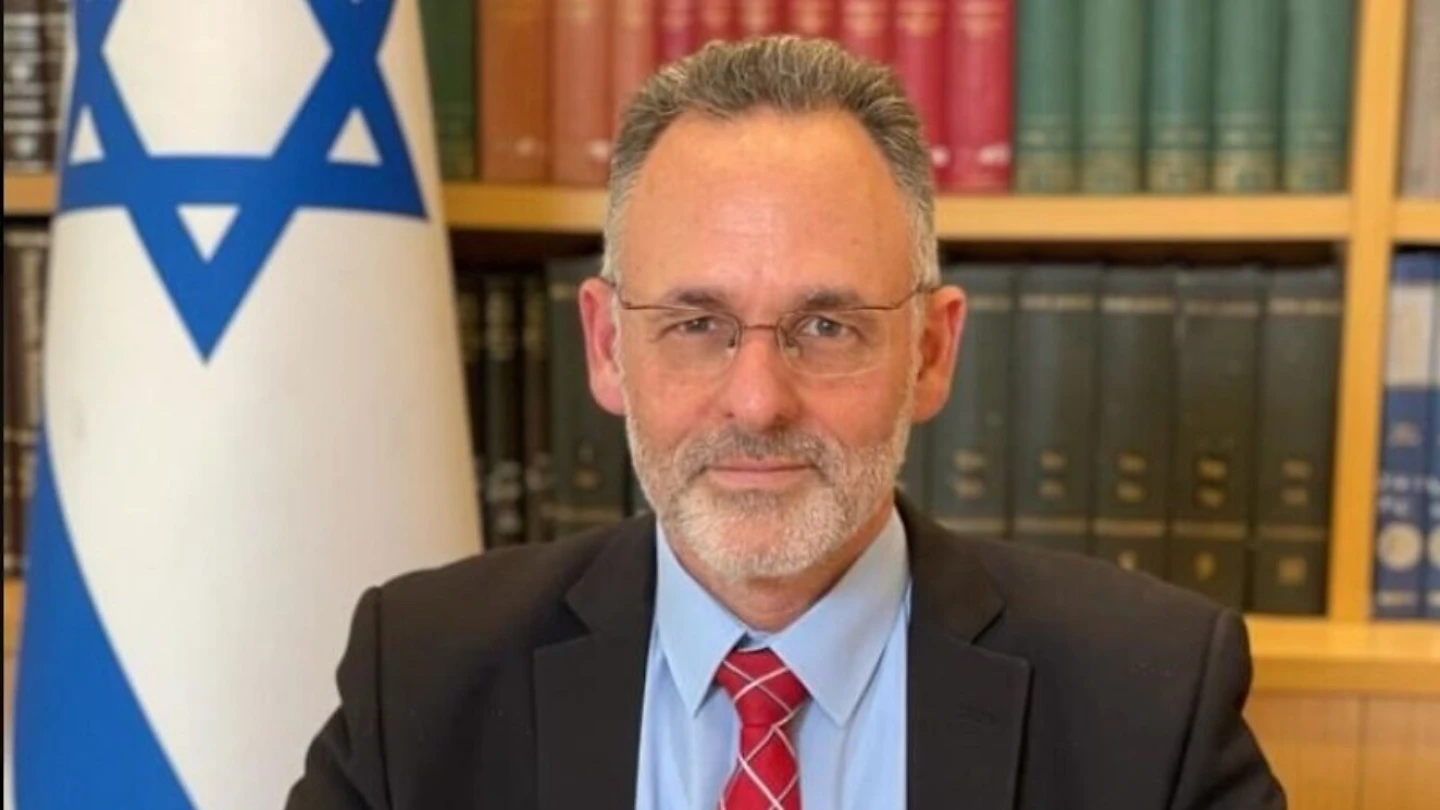
A kidney transplant at Clalit-Beilinson Hospital in Petach Tikvah brought an extraordinary full-circle moment when an altruistic donor and his recipient discovered they had first been connected by a deadly terrorist attack more than two decades earlier.
Yonatan Rom, who survived the 2002 terrorist attack on the Otzem Pre-Military Preparatory School on the outskirts of Atzmona, aka Bnei Atzmon, a moshav in Gush Katif, the southern Gaza Strip, donated a kidney through Israel’s paired kidney exchange program after deciding to become an anonymous altruistic donor.
Although Rom was not a direct match for the woman originally selected to receive his kidney, he chose to continue with the donation, agreeing to donate to a stranger.
Shortly before last week’s transplant, Rom met the recipient for the first time and learned he was Reuven Tam, the brother of Eyal Tam, the commander of Atzmona’s emergency response squad whose actions during the attack saved Rom’s life.
The March 2002 attack, during the height of the Second Intifada, began when a Hamas terrorist infiltrated the pre-military academy in the Gush Katif community of Atzmona. Five students were killed and 23 others wounded before Eyal Tam fatally shot the attacker, preventing an even greater massacre.
“I want to thank Yonatan for giving me a new chance at life,” Reuven Tam said after the transplant. “We hope to remain friends for the rest of our lives.”
Rom said he only discovered the connection during his first meeting with the recipient.
“None of this was planned,” he said. “Reuven told me that he was Eyal’s brother. Since we had both lived in the same community, I began talking about what we experienced during the attack.
“It was the deadliest terrorist attack in Gush Katif. Eyal stopped the terrorist and ended the massacre. I arrived at the scene in my car, the terrorist opened fire on us, and only minutes later Eyal arrived and neutralized him.”
Rom also thanked the medical staff at Clalit-Beilinson Hospital and the Matnat Chaim kidney donation organization for making the transplant possible.
Dr. Eviatar Nesher, director of the Transplant Department at Clalit-Beilinson Hospital, said altruistic kidney donors “truly embody the meaning of altruism” by choosing to save the life of someone they have never met.
“About half of all kidney transplants performed in Israel take place at Beilinson Hospital, and every donation has its own moving story,” he said. “But the story of Reuven and Yonatan is exceptionally rare. It is an almost unbelievable full circle.”
Anat Briger, the hospital’s transplant coordinator, said the coincidence stunned everyone involved.
“During their first meeting, after they realized their connection began 24 years ago, Yonatan looked at Reuven and said, ‘Your brother saved my life 24 years ago, and today I am saving yours with my kidney,’” Briger said.
“We perform many kidney transplants, and Yonatan could have been matched with many other recipients. What are the chances that, out of all the donors and recipients, these two people would be brought together?”
Israel’s paired kidney exchange program allows willing donors who are not compatible with their intended recipients to donate to another patient while enabling their original recipient to receive a compatible kidney from a different donor, expanding the number of life-saving transplants.