


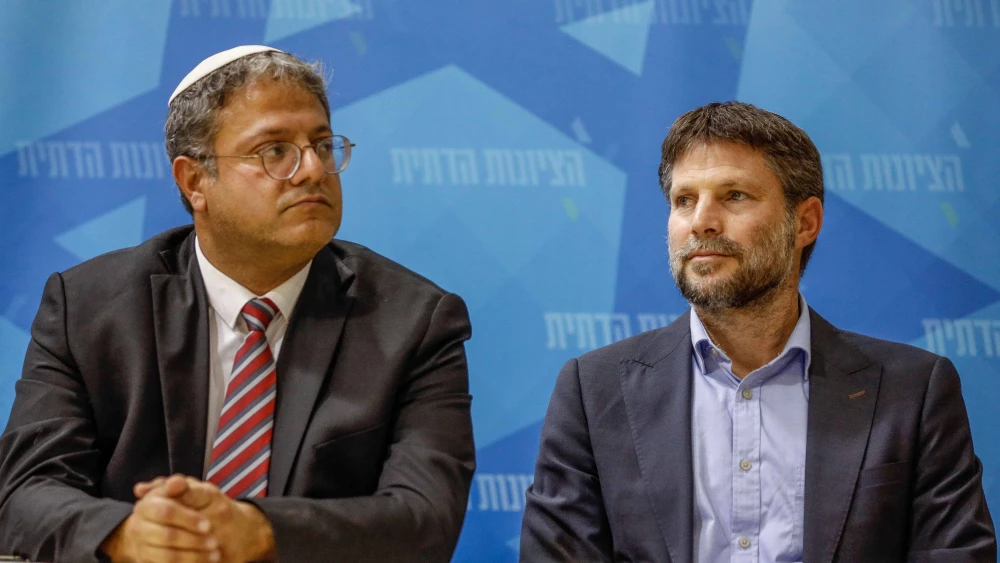
Polls tend to show the Religious Zionism Party, a key part of Israeli Prime Minister Benjamin Netanyahu’s coalition, passing the electoral threshold, but the numbers appear to be too close for comfort for the Israeli premier.
Netanyahu is urging the party, which Finance Minister Bezalel Smotrich leads, to merge with the Otzma Yehudit Party (“Jewish Power”) to ensure that it receives sufficient votes without wasting right-wing votes that the prime minister needs to be reelected.
The threshold, now 3.25%, is the minimum share of votes required to gain representation in the Knesset. If a party doesn’t pass that percentage, its votes aren’t counted.
Netanyahu has offered Smotrich and National Security Minister Itamar Ben-Gvir, chairman of Otzma Yehudit, to reserve spots for a candidate from each party on his Likud Party list to entice them, Israel’s Channel 12 reported on Wednesday.
In the 2022 elections, Smotrich and Ben-Gvir agreed to run their parties together on a joint list at Netanyahu’s urging, which successfully garnered 14 total Knesset seats for the two parties. They split into constituent factions immediately after the elections, each with seven seats.
But the two parties aren’t interested in running jointly this time around, according to Channel 12 reporting. Smotrich doesn’t want to play second fiddle, and Ben-Gvir is convinced that he can win 8-10 seats on his own, as reflected in most polls, the channel reported. Running with Smotrich, Ben-Gvir would likely have to settle for fewer seats.
Arab parties are reportedly facing difficulties when it comes to a pre-election merger.
The Hadash Party announced on Wednesday that talks between the four Arab parties reached an impasse after a meeting in Sakhnin between party heads and the Arab Municipalities Forum. Party sources blamed Ra’am Party head Mansour Abbas for the collapse of talks and said that he wasn’t serious about participating in a joint list.



