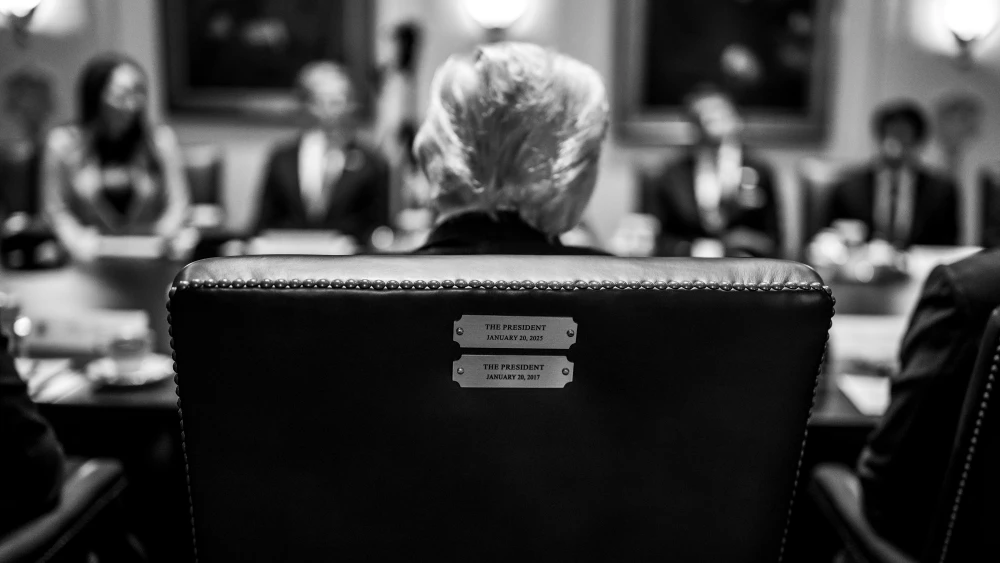
U.S. President Donald Trump said on Monday evening that he spoke with Israeli Prime Minister Benjamin Netanyahu on Monday, “asking him not to go into a major raid of Beirut, Lebanon.”
“He turned his troops around. Thank you Bibi,” the president said. “I also had a conversation with representatives of the leaders of Hezbollah, and they agreed to stop shooting at Israel and its soldiers. Likewise, Israel agreed to stop shooting at them.”
“Let’s see how long that lasts,” Trump stated. “Hopefully it will be for eternity.”
Several hours prior, Netanyahu stated that he told Trump “that if Hezbollah does not stop firing at our cities and citizens, Israel will strike terrorist targets in Beirut.”
“This position of ours remain unchanged,” Netanyahu’s office said in its English translation of his Hebrew remarks. “Concurrently, the IDF will continue to operate as planned in southern Lebanon.”
Trump stated a few hours before Netanyahu’s statement that he and Netanyahu had “a very productive call” and that there “will be no troops going to Beirut and any troops that are on their way have already been turned back.”
“Likewise, through highly placed representatives, I had a very good call with Hezbollah, and they agreed that all shooting will stop,” Trump said. “That Israel will not attack them, and they will not attack Israel.”
Trump also said in the afternoon that “talks are continuing, at a rapid pace, with the Islamic Republic of Iran.”
Trump’s announcement came after Iranian officials said Tehran had suspended negotiations with Washington until a full ceasefire is reached in Lebanon.
The remarks followed a day of heightened tensions after Israeli strikes targeted Hezbollah positions in Beirut’s southern suburbs and Hezbollah launched attacks into northern Israel.
Earlier on Monday, Israel’s Home Front Command issued precautionary directives for communities along the Lebanese border after identifying launches from Lebanon toward the confrontation line.