A gathering of Jews and Hindus in Chicago over the weekend to mark Chanukah and Diwali made an impression on M. Anand Prakash, Indian consul general in Chicago,
“This symbolizes the kind of unity and currency between both countries,” Prakash, who assumed his position in September, told JNS.
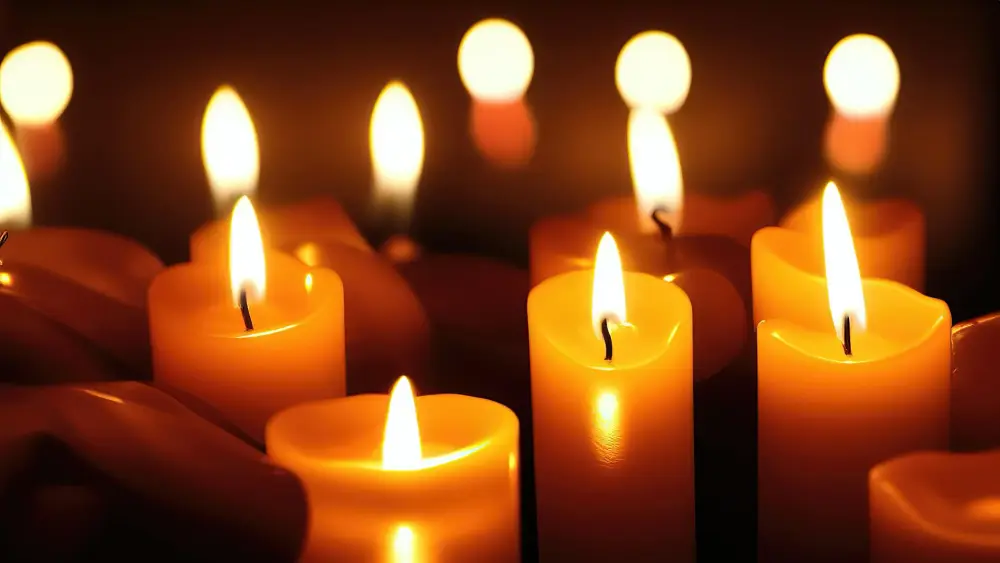
Some 200 people attended the celebration of light in the Northfield suburb on Sunday, which fell between Diwali, which was held earlier this month, and Chanukah, an eight-day holiday that begins this year on Dec. 4 and night. Both religious holidays are described as light festivals.
Jews and Hindus have much in common, according to Annie Warshaw, director of community and government relations at the Jewish United Fund in Chicago.
“We have sacred language. We have similar family values,” she told JNS. “We have this tradition where we’re celebrating light in what can be an oftentimes dark world, and so it’s really important for both the Hindu and Jewish community to recognize the humanity in one another.”
The event was held at Temple Jeremiah, a more than 65-year-old Reform congregation that welcomed guests with signs stating “shalom India, namaste Israel,” using Hebrew and Sanskrit greetings. The JUF, the Jewish Community Relations Council of Chicago and the nonprofit Global Indian Diaspora Foundation were among the event hosts.
Debra Newman Kamin, rabbi of Am Yisrael Conservative Congregation, a nearby synagogue, told attendees that “both of our holidays remind us of the reality that darkness is part of the human experience, but we are not powerless in the face of darkness.”
The gathering included Diwali- and Chanukah-themed arts and crafts and an improv activity for children, traditional musical and dance performances, speeches from communal leaders and ceremonies lighting a menorah and diya, a Diwali oil lamp.
Local artists sold Indian jewelry and paintings, and the synagogue walls were lined with tables with traditional Jewish and Indian foods.
“This was specifically targeted towards families, because it is so important that the healing that we all need starts at home, and that little kids are provided the tools and language so that they can build real relationships across differences,” Warshaw, of the JUF, told JNS.
Lavanya Lall, who is Hindu, and her husband attended the event, because Jews have married into their family. “We just wanted to learn a little bit more about the culture,” she told JNS.
Alan Bukingolts, who is Jewish and lives in Lakeview, told JNS at the event that he believes “in collaboration across cultures and faiths.”
“The best way to learn is hearing from people that maybe aren’t like you or come from the same place as you,” he said. “It’s important to listen, ask good questions and be open-minded.”
Community leaders said that the light-themed unity gathering came in dark times for both Jews and Hindus.
Of 70 religion-based hate crimes in Illinois in the last year, 40, or 57%, have targeted Jews and three, or 4%, have targeted Hindus, according to FBI data. Five hate crimes have targeted Asians, according to the bureau.
In Chicago, 21 of 27 religion-based hate crimes this year, or 78%, have targeted Jews and 7 hate crimes have targeted Asians, according to the Chicago Police Department.
Last month, law enforcement stopped a planned mass shooting at a Hindu temple in Aurora, in the Chicago area.
Rakesh Malhotra, founder and president of the Global Indian Diaspora Foundation, which co-hosted the event, told JNS that hate is often due to lack of knowledge.
“We wanted this ignorance to become awareness,” he told JNS.
“When Jewish neighbors face antisemitism, we must stand beside them,” Malhotra told attendees. “When a Hindu temple or any place of worship faces hatred, we must stand together.”
Malhotra told JNS that the event was one of several Hindu-Jewish events that his organization has helped organize.
“Solidarity should not be a one-day affair. It should be 365 days,” he said. “We should be able to say right is right without any politically correct thing.”
“There is nothing called politically correct. It is a moral clarity,” he said. “There is no space for hate, and we are addressing the hate through love.”
Chicago Hindu community leader Santosh Kumar, founder of Metropolitan Asian Family Services, told JNS that Hinduism “is for all.”
““It does not discriminate on the basis of caste, creed or religion,” she said.
Newman Kamin, the Conservative rabbi, told JNS both Jews and Hindus see themselves as minorities in a larger population.
“That hopefully should be a source of our interest and strength in one another, that we’re interested to learn about one another,” she told JNS. “There also, unfortunately, now is this camaraderie because our communities are targeted.”