


The inspectors general of the U.S. Department of Defense, State Department and USAID released their first report to Congress on “Operation Epic Fury,” revealing “strategic inventory shortfalls” in U.S. munitions.
The report, released on Monday, offers some of the most detailed information available about the scale of U.S. operations and the damage Iran has inflicted on U.S. facilities around the region.
The Pentagon “estimated the cost of ‘Operation Epic Fury’ to be $33.4 billion as of June 29,” the report stated. “The estimate includes $7.4 billion of cumulative obligations (incremental costs) for ‘Operation Epic Fury,’ $22.3 billion for expended munitions and $3.7 billion in equipment losses, but does not include costs for infrastructure repairs.”
Those infrastructure repairs include extensive damage to U.S. diplomatic facilities around the region, the extent of which has not been previously reported.
“U.S. diplomatic facilities in four countries suffered physical damage from Iranian strikes, with an estimated total cost of about $184 million,” the report stated. “In addition, State reported an estimated $24.5 million per month in construction project delays due to ordered departures and travel restrictions in Baghdad, Jerusalem, Tel Aviv, Cairo, Amman, Kuwait City and Muscat.”
The most extensive damage, totaling more than $157 million, was caused by more than 600 attacks on U.S. facilities in Iraq, which particularly damaged the new U.S. consulate in Erbil.
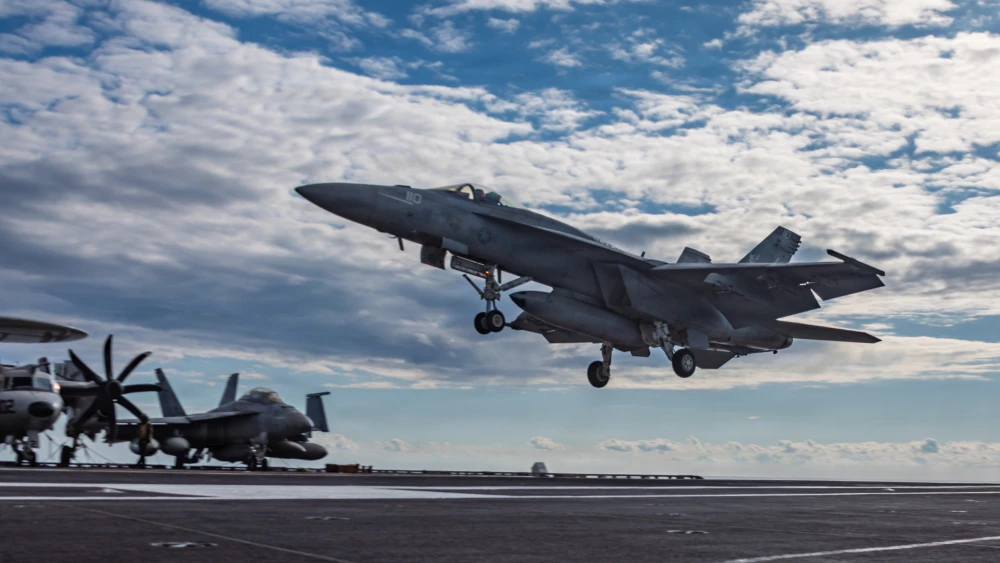
The report also gives an itemized list of aircraft damaged or destroyed since the start of major combat operations against Iran in February, including four F-15s, an F-35, 12 KC-135 refueling tankers, six helicopters, and “as many as 30” MQ-9 Reaper drones.
Between Feb. 28 and June 30, the period that the department defines as “combat operations” for “Operation Epic Fury,” 14 U.S. service members were killed and 417 wounded. Another four service members died during subsequent “overseas operations” in Iraq and Jordan.
The largest monetary cost of the war to date has been from the expenditure of munitions, which, according to the report, “illustrate the magnitude and complexity of the target set posed by Iran.”
“Iran has the largest armed forces in the region and spent decades of intense focus developing and expanding its own domestic defense industry,” the report stated. “Iran has also focused heavily on passive defense measures to protect its military capabilities, including extensive underground facilities, dispersal of munitions inventories, concealment and deception to mask equipment and mobile launch platforms.”
Democrats in Congress have raised concerns about the number of offensive and defensive munitions expended against Iran. The report says that U.S. and partner forces in the region intercepted more than 7,500 Iranian ballistic missile and drone attacks, not including attacks against Israel.
U.S. Central Command informed the inspectors general in August that it “conducted approximately 36,000 combat sorties and more than 1,800 fire missions” against Iran.
U.S. President Donald Trump has previously dismissed concerns about the stockpile of munitions. He has stated that “the United States has massive amounts of ‘munitions,’ especially of certain types,” and accused those anonymously releasing information to the media of making “treasonous statements” and claimed that they will be “hunted down.”
The inspector general report appeared to confirm the constraints on U.S. critical munitions stockpiles.
“The Office of the Under Secretary for Acquisition and Sustainment said that the munitions expenditure in ‘Operation Epic Fury’ has resulted in strategic inventory shortfalls and revealed industrial base bottlenecks for munitions resupply,” the report stated.
It added that the Pentagon “is working to streamline procurement processes and production lead times, and to stockpile critical materials, components and selected munitions to respond rapidly to a contingency.”
A separate report from the Congressional Budget Office, released on Tuesday, estimated that it would take at least five years to replenish U.S. stocks of missile interceptors.
“The shortfall would become especially problematic if a conflict arose with an opponent whose arsenal included large numbers of ballistic and cruise missiles,” the office stated. “The People’s Republic of China maintains such an arsenal, which would probably play a major role in a military conflict involving Taiwan.”



