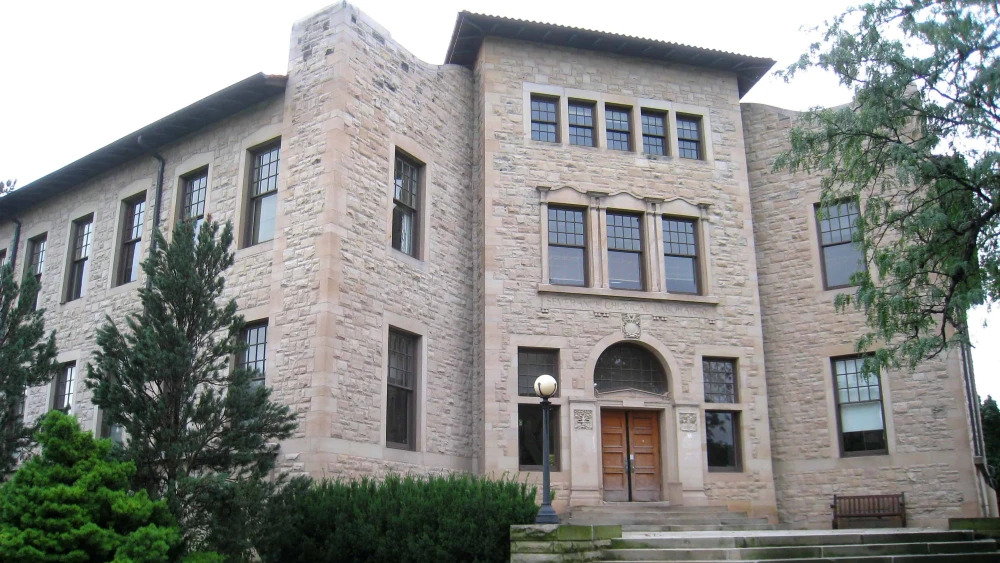

On Sept. 10, the day before the 25th anniversary of the Sept. 11 attacks, I went to an open house at Oberlin College’s Allen Memorial Art Museum. I have a personal connection to the Allen. After 9/11, I worked there as a provenance researcher, tracing the histories of works that might have been looted by the Nazis, and I have loved its extraordinary collection ever since. Perhaps that is why one of its current exhibitions, “The Land Is a Being Who Remembers Everything,” bothered me as much as it did.
A section of the exhibit called “Repairing the Wounds” presented works exploring, in the museum’s words, “the connection between the identity of the United States and state-sanctioned violence.” The captions returned repeatedly to racial hierarchy, systemic oppression, discrimination, exclusion and unequal power.
Taken together, they painted a remarkably bleak picture of the country.
At times the political interpretation overwhelmed the art. Rather than letting a work speak for itself, the captions seemed determined to tell me what I was supposed to see. They left little room for beauty and ambiguity, even though competing interpretations are part of what makes art interesting. For me, at least, the exhibition produced almost the opposite of what was presumably intended. Instead of making me question what I was looking at, the exhibition divided the world too neatly into the marginalized and their oppressors.
Two years ago, I saw one of the Allen’s education curators wearing a T-shirt on campus declaring that museums are not neutral. I thought of it as I walked through the galleries. If museums are not neutral, then choices about what to include matter.
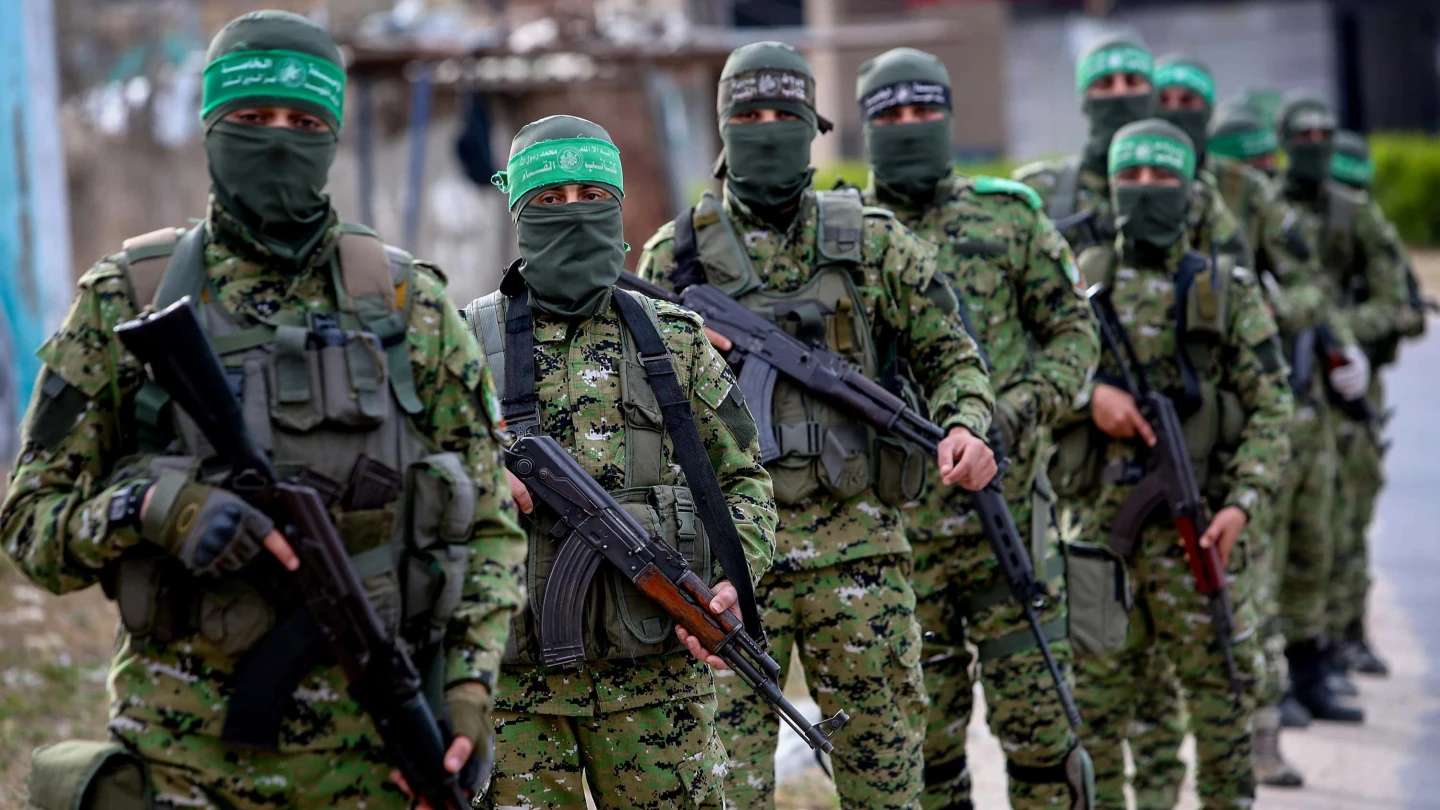
The men who carried out 9/11 were Islamist extremists. Their ideology mattered.
So where were the Jews?
Here was an exhibition devoted to prejudice, exclusion and state power in American history—and Jews were nowhere in it.
American Jews have known quotas, exclusion, conspiracy theories, religious hatred and violence. In December 1862, U.S. Gen. Ulysses S. Grant issued an order expelling “the Jews, as a class” from the military department under his command. President Abraham Lincoln directed that the order be rescinded soon afterward.
Eight decades later, as European Jewry faced annihilation, American immigration restrictions and widespread antisemitism helped shut the door on Jewish refugees. None of this found a place in an exhibition about American marginalization and state violence, not even alongside the wartime internment of Japanese Americans, which did.
The omission was hard to separate from the moment, especially in an exhibition whose very title is about land and memory. Antisemitism has become increasingly visible in American life, and nowhere more than on college campuses.
At Oberlin, Zionism has all but vanished from respectable campus discourse. Support for Israel is treated not as a legitimate political position but as something that requires explanation. Even Holocaust remembrance, when it happens, can seem curiously detached from Israel and the history that made Jewish self-determination matter to so many Jews. I have written before about the disappearance of Zionism from Oberlin’s public sphere.

I thought about that again when I attended Oberlin’s commencement last spring. Its newest class trustee, Juwayria Zahurullah, crossed the stage with a large unfurled Palestinian flag while a smiling President Carmen Twillie Ambar handed Zahurullah a diploma. The cheers were loud.
Oberlin’s biography of Zahurullah, posted on the college’s website, lists her as chair of both Students for a Free Palestine (the Oberlin branch of Students for Justice in Palestine) and the Muslim Students Association from September 2023 through May 2026. It also notes that in April 2024 and again in April 2025, Zahurullah worked with other students on proposals calling for the trustees to divest from weapons manufacturers. On Sept. 11, the Oberlin Review ran a profile of her on her recent election to the college’s Board of Trustees.
My point is what Oberlin, as an institution, seems willing to embrace. Watching the graduation ceremony, I wondered what would have happened had another student walked across that stage with an equally large Israeli flag. I think we know that the reception would have been decidedly different. Palestinian nationalism has a highly visible place in the school’s political life. Zionism increasingly has none.
Zionism has all but vanished from respectable campus discourse.
And then there was the anniversary itself. On the eve of Sept. 11, I had wondered whether Oberlin College, where I have lived for many years, would mark 25 years since the attacks. In the past, the date has gone by with little notice. Would there be an official statement, as with other major national and international events? A commemoration? A lecture or a discussion? I could find none.
The Review did publish an essay, “Remembering the Towers,” on Sept. 11. It mentioned “the crimes of al-Qaeda” in passing and said nothing about the ideology that drove 19 men to hijack four airplanes and incinerate nearly 3,000 people.
That struck me as odd because Oberlin is hardly a place that shies away from ideology. Faculty and students devote enormous energy to examining the ideas and power structures behind historical events—in lectures, teach-ins, exhibitions, student organizations and editorials. But when the subject is Islamist extremism, the examination stops.
I was reminded of a March 12 teach-in on Iran organized by the Oberlin campus chapter of the Young Democratic Socialists of America. I didn’t attend but read the Oberlin Review account afterward. Israel and American “imperialism” took up much of the discussion. There was strikingly little about the nature of the Iranian regime itself; nothing about the terrorist proxies it arms and funds or about Oct. 7; and nothing about the regime’s longstanding demonization of the United States.
The men who carried out 9/11 were Islamist extremists. Their ideology mattered. It should be possible to say so without turning it into an accusation against Muslims generally. We talk about white supremacy without assuming that we mean all white people. Why should talking about Islamist extremism be any different?
Obviously, a museum exhibition, a commencement ceremony and a newspaper article are not the same thing. But after living in Oberlin for so many years, I have become increasingly struck by what gets scrutinized and what does not. Some subjects are examined endlessly. Others barely come up.
The curator’s T-shirt said museums are not neutral. Fair enough. If that is true, then what a museum leaves out matters, too. I believe the same is true of a college.
At Oberlin, omission is also political.