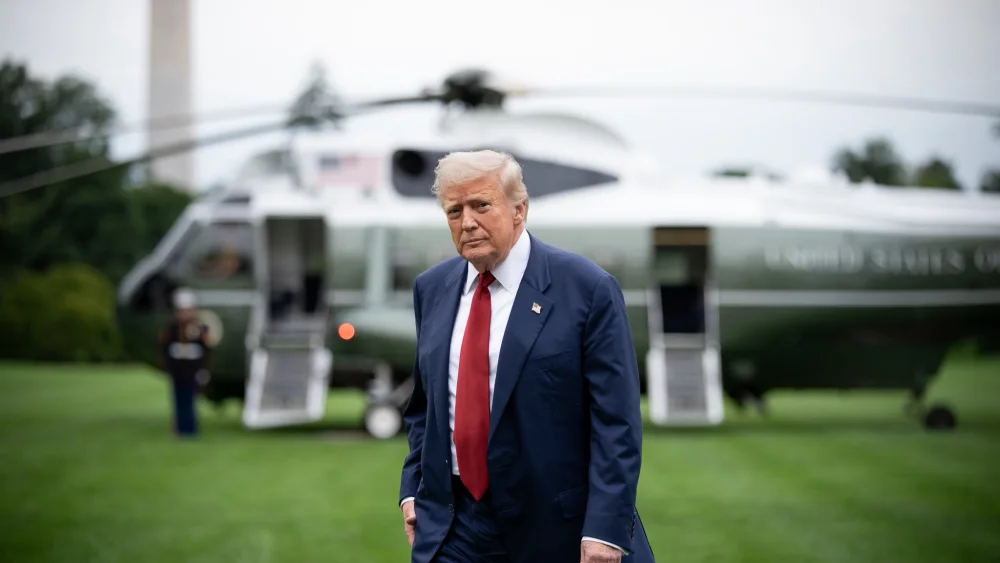
U.S. President Donald Trump on Monday said commercial vessels were starting to move out of the Strait of Hormuz as part of his peace deal with Iran.
“Ships are starting to move, many loaded up with oil, out of the Strait of Hormuz. They are going along the southern ‘highway,’ which is totally safe, secure, and pristine,” the president wrote in a post on his Truth Social platform.
“There are other areas of travel, also!” he added.
Trump on Sunday ordered the “toll free opening” of the Strait of Hormuz, as well as the “immediate removal” of the U.S. blockade of Iranian ports following the completion of his framework deal with Tehran.
“Ships of the world, start your engines,” he stated. “Let the oil flow.”
In a subsequent post, Trump said that “this great deal will bring peace and security to the whole region.
“Many presidents have tried to make peace with Iran, and all have failed before me,” he said. “The leaders of the region have, for the first time, found a president who can help them achieve real peace. With the opening of the strait upon the signing of the deal on Friday, for purposes of mine removal, oil will flow on both ends again for the region and the world.”
Iranian Deputy Foreign Minister Kazem Gharibabadi confirmed in a televised interview that the memorandum of understanding with Washington had been finalized and would be signed on Friday in Switzerland, saying Tehran had “incorporated all our important positions into the draft,” according to the Tasnim News Agency, a semi-official outlet associated with the Islamic Revolutionary Guard Corps.
He said the U.S. naval blockade would be lifted starting on Monday night and that the agreement provides for the “immediate and permanent end of the war and military operations on various fronts, including Lebanon,” adding that a 60‑day follow‑on negotiation period would cover sanctions relief, Iran’s nuclear program and a reconstruction mechanism.