Israel is known worldwide for medical innovation. It has a world-class, digitized healthcare system and leads the way in emergency medicine. Yet beneath this high-tech success lies a stubborn, decades-old public health failure that the country cannot seem to shake.
The latest data show an entrenched smoking crisis that is rapidly capturing a vulnerable new generation of kids.
The true scale of the problem came to light last week when the Minister of Health’s Report on Smoking in Israel was officially submitted to the Knesset. The findings offer a harsh reality check for a society already dealing with immense existential and psychological strain over the last three years.
According to the report, over 23 percent of adult Israelis—nearly one in four—smoke. That figure has barely budged in over a decade despite endless public health campaigns. To understand the human cost, tobacco-related illnesses claim an estimated 12,386 Israeli lives every single year—or 33 people each day. That outpaces almost every other preventable cause of death in the country.
It is a bizarre contradiction at the heart of Israeli culture. This is a society that fiercely protects its people and mourns every fallen soldier as its own child. Yet it somehow tolerates a massive, entirely preventable loss of life year after year.
The vaping epidemic
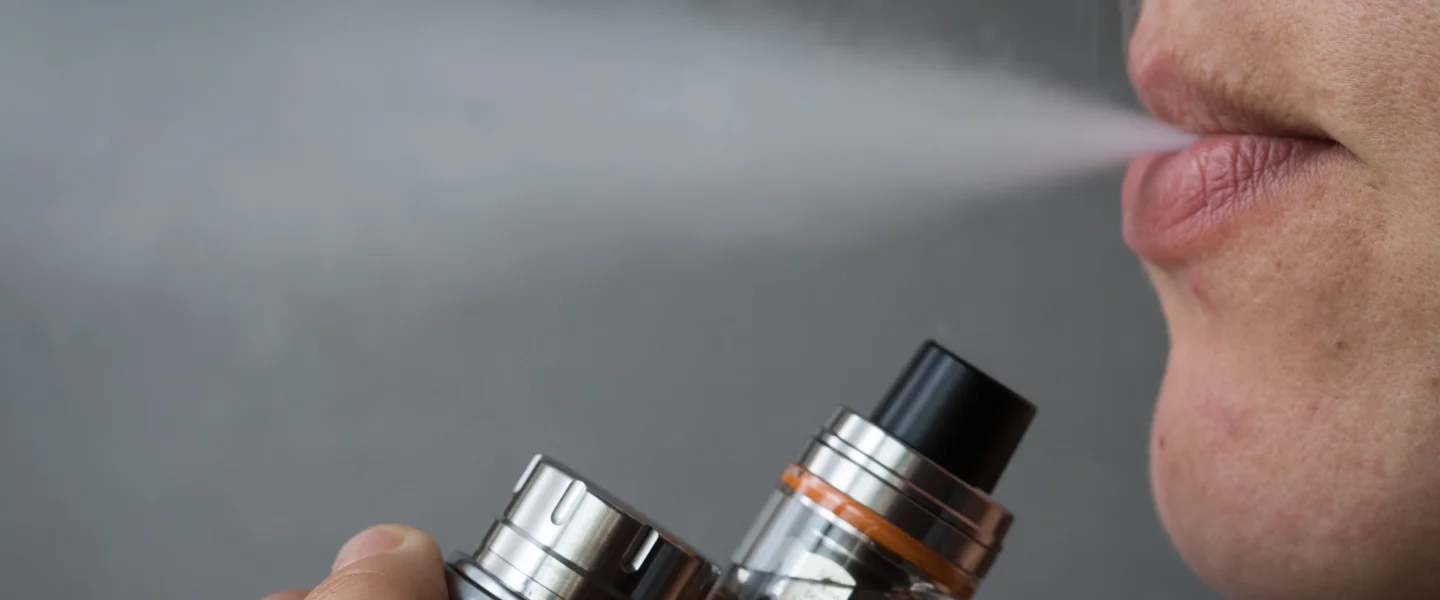
The most dangerous front in Israel’s tobacco battle is no longer traditional cigarettes. Instead, it is the largely unregulated rise of electronic cigarettes (e-cigarettes) among teenagers and middle schoolers.
Flavored vapes are brightly colored, look like tech gadgets, and sit on the counter of almost any neighborhood kiosk. They have completely warped the landscape of addiction, undoing decades of anti-smoking education.
The new metrics from the Ministry of Health show a historic and alarming shift in how kids behave. For the first time, the percentage of elementary-school-age students who have tried e-cigarettes is higher than those who have tried regular cigarettes. An entire generation is getting hooked on nicotine through high-potency synthetic vapes before they ever even think about lighting a match.
The statistics show how quickly casual experimentation turns into an actual chemical dependency. Around 20 percent of Israeli students report trying an electronic cigarette, compared to 19 percent who tried regular cigarettes. Even worse, about 17 percent of elementary-school-age children reported vaping at least once in the past month.
This means it is a consistent habit for nearly a fifth of these young kids, not just a one-time trial. Furthermore, the crisis is growing horizontally across different cultural communities. Between 2023 and 2025, vape experimentation surged among both Jewish and Arab boys, as well as among Arab girls. The epidemic does not care about religious or socioeconomic borders.
“Repeatedly, the data proves it: Israel is in the midst of a nicotine epidemic among children and youth,” Shira Kislev, CEO of Smoke Free Israel (The National Initiative to Eradicate Smoking), told JNS. “Electronic cigarettes have become the primary gateway to addiction. The age of initial exposure continues to drop, and meanwhile, a new generation of young people is being dragged into an addiction that will accompany many of them for the rest of their lives.”
Health officials point out that the trauma of recent regional conflicts exacerbates the situation significantly. Constant rocket sirens, displacement, and pervasive anxiety drive teens toward nicotine and other addictive substances.
The step from middle school vaping to heavy smoking on military bases is a seamless, socially accepted pipeline.
Laws without enforcement
The tragedy here is not a lack of strong laws. On paper, Israel actually has some of the strictest anti-smoking legislation in the democratic world. The state banned tobacco ads, outlawed smoking in public indoor spaces, and forced all companies to use uniform, unattractive dark-brown packaging to destroy brand appeal.
There is also an upcoming August 2026 deadline requiring graphic warning labels on all tobacco and vape products to meet strict global transparency standards.
But public health advocates argue that these laws are meaningless without real enforcement on the ground. Walk into almost any Israeli supermarket, convenience store, or gas station, and you will see vapes displayed right at eye level, often right next to candy and chocolate bars. This is a direct violation of current marketing laws.
Disposable vapes with flavors such as bubblegum are sold to minors without anyone checking IDs. Meanwhile, black markets thrive on apps like Telegram and Instagram, where age verification is completely missing.
“The central challenge today is not just new legislation, but enforcement and supervision,” Kislev explained to JNS. “Although the law prohibits the advertising and marketing of smoking products, exposure to these products at points of sale is still widespread. At the same time, supervision over the supply chain of tobacco and nicotine products does not provide an adequate response to the changing and expanding market of electronic cigarettes.”
The need for real action
The Ministry of Health does not deny the ugly facts in this report, but critics say its actual response lacks teeth because of political shifts and missing budgets. Health Minister Haim Katz stated that smoking remains a major risk factor for public health, adding that the data requires the state to act decisively to protect children while tightening prevention and enforcement.
Yet as the Knesset reviews these findings, anti-smoking groups agree that the Ministry of Health cannot win this fight alone. To stop this epidemic, the government must treat tobacco enforcement as a major national priority. It requires coordination between the Ministry of Education, local city inspectors, and tax authorities, rather than treating it like a minor bureaucratic issue.
Kislev insists the state must stop just writing reports and start taking aggressive action. “The time has come to move from words to actions,” she said. “We must limit the availability of smoking products, ban flavors that are effectively designed to attract young people, strengthen enforcement and market supervision, and invest significantly in prevention.”
The financial stakes are massive for a country facing major economic stress. Because Israel funds healthcare through universal health funds, the cost of treating over 12,000 terminal tobacco patients every year falls squarely on the taxpayer. That drains a tight wartime budget that should be going toward defense and rehabilitation.
“When smoking claims more than 12,000 victims a year in Israel, this is not just a health issue,” Kislev concluded. “It is a policy failure that demands immediate rectification.”
Health advocates are waiting to see whether the August 2026 visual warnings and new parliamentary debates change anything. But for a country fighting for its survival, advocates argue that protecting the health of Israel’s kids from this internal threat is just as critical.