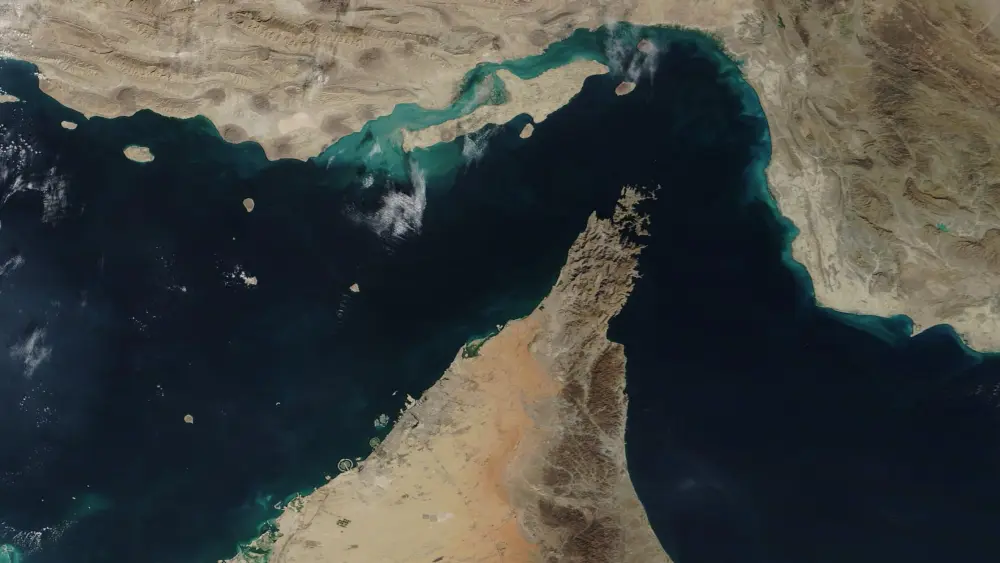
The Trump administration imposed sanctions on Wednesday on Iran’s newly created Persian Gulf Strait Authority, accusing it of helping the Islamic Revolutionary Guard Corps extort commercial shipping through the Strait of Hormuz.
Iran announced the formation of the authority on May 5, claiming oversight of the strategic waterway through which roughly 20% of the world’s oil and liquefied natural gas shipments transit to global markets.
The move comes amid heightened tensions following the onset of “Operation Epic Fury,” the joint U.S.-Israeli military operation targeting the IRGC, which began in late February. Tehran subsequently disrupted traffic through the strait, contributing to sharp increases in global energy and shipping prices. The United States later launched a naval effort to protect commercial transit through the waterway.
Around 140 countries have backed a United Nations Security Council resolution noting the strait is considered an international waterway and demanding Iran open it back up for free and safe passage.
The U.S. Treasury Department stated that the authority sought to impose “illegitimate tolls” on vessels and force ships to follow Iranian directives in exchange for safe passage, with proceeds benefiting the IRGC.
“The Iranian military’s latest attempt to extort global maritime trade is proof that Economic Fury has left the regime desperate for cash,” Scott Bessent, the U.S. treasury secretary, stated.
Treasury warned that shipping companies, financial institutions and other entities cooperating with the authority—including through toll payments, cryptocurrency transfers or in-kind arrangements—could face U.S. sanctions.
“Under President Trump’s leadership, we will remain relentless in our pursuit to constrict the network of vessels, intermediaries, and buyers through which Iran exports both its oil and malevolence,” Bessent stated.
The sanctions are part of the administration’s broader “Economic Fury” campaign, which Treasury says has impacted Iran’s ability to access tens of billions of dollars in revenue through crackdowns on cryptocurrency, shadow banking and oil networks, as well as sanctions-evasion networks.