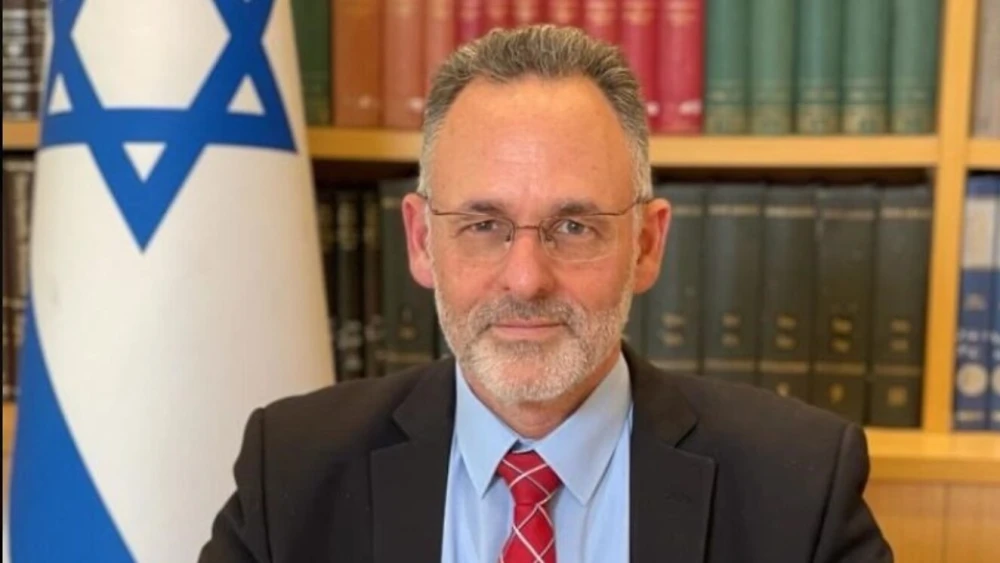
Canada’s coordinated action against what it calls Israeli “settlements” and the country’s support for a two-state solution could embolden anti-Israel groups and threaten the safety of Canadian Jews, according to Iddo Moed, the Israeli ambassador to Canada.
“I’m concerned about the safety of the Jewish community,” he told JNS. “Not just Israelis but the entire Jewish community in Canada.”
Moed, who has served in the post for just over three years, spoke to JNS shortly after Canadian Prime Minister Mark Carney, British Prime Minister Andy Burnham and French President Emmanuel Macron said jointly that their governments would ban imports from Israeli communities in Judea and Samaria and impose targeted measures against what they called Israeli “settlements,” and those who facilitate or profit from them.
“Settlements are illegal under international law,” the trio stated. “The time has come to take further action to uphold our commitment to protect the two-state solution our interests and to stand up for our values before it is too late.”
Also on Tuesday, the Toronto mayor and police chief said that there will more police officers patrolling during the High Holidays and through the three-year anniversary of the Oct. 7, attacks. There will also be a strategic post on the street corner where anti-Israel protesters stage demonstrations near the Jewish community, they said.
Moed told JNS that anti-Israel groups have already said on social media that the government’s announcement about Judea and Samaria goods is a victory.
“When they are celebrating, normally they would go and intimidate more,” he said. “They feel more emboldened to intimidate the Jewish community. This is what antisemitism looks like.”
If people fail to understand the connection between anti-Israel and antisemitic comments and actions, “that’s very concerning,” he told JNS. “We have seen over the past three years how quickly people take criticism against Israel to attack and intimidate the Jewish community of Canada.”
“Such decisions by the government definitely give more room for those to act, and I don’t hear anything from the government trying to create proportion or to balance things out internally,” he said.
Moed told JNS that Israeli officials “want to share our knowledge, our approach, our principles and of course technologies and collaboration, anything that can be helpful” with Canada from a security perspective.
“Indigenous people have about 20 words for ‘snow.’ In Hebrew, we have only one word, but I think we have a lot of words for security,” Moed said. “More than people have here in Canada.”
“It’s hard to get people to understand what we are talking about,” he told JNS. “When something walks like a duck and quacks like a duck, we say that’s a very dangerous duck. You have to be ready to take action.”
He is particularly frustrated that the new announcement might disrupt efforts “to create further collaboration between Israel and Canada on innovation and entrepreneurship, on technology.”
The envoy rejected the Canadian government’s statement that the measures would lead to a two-state solution. Recognizing a Palestinian state before negotiating its security arrangements would encourage Hamas and other anti-Israel terror groups, he said.
The new announcement may also be a foreign effort to interfere in Israeli elections, slated for Oct. 27, according to Moed.
“As an Israeli citizen, the timing of this statement really bothers me,” he told JNS. “It’s a direct infringement and it has a direct impact on Israeli elections. It further degrades the trust that used to be between Canada and Israel.”