


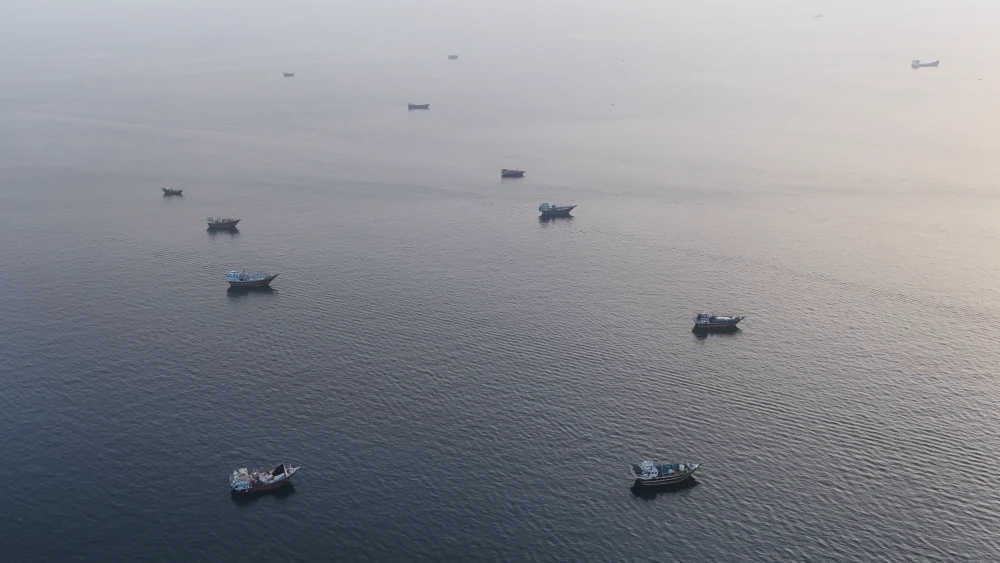
Iran’s Islamic Revolutionary Guard Corps fired at least two missiles at commercial vessels transiting the Strait of Hormuz early on Tuesday, two senior U.S. officials told Axios.
Both ships suffered significant damage, but no casualties were reported, one of the cited officials said.
U.K. Maritime Trade Operations (UKMTO) confirmed one of the incidents, saying a tanker “reported being hit by an unknown projectile on the port side causing a fire, whilst traveling southbound.”
“No casualties or environmental impact reported. Authorities are investigating,” the maritime body stated. “Vessels are advised to transit with caution and report any suspicious activity to UKMTO.”
The reported attacks came after a week-long deal between Iran and the United States, under which Tehran had agreed to temporarily halt attacks in and around the strategic shipping lane, expired.
Iranian Foreign Minister Abbas Araghchi said on Tuesday that Tehran would not begin negotiations on a final agreement with the U.S. “if threats continue.”
“Millions of proud Iranians rallied in unity to honor Grand Ayatollah [Ali] Khamenei and his legacy. Neither them nor our brave Armed Forces are moved by any threats,” Araghchi, a member of Iran’s negotiating team, wrote on X, sharing pictures of the slain supreme leader’s funeral.
“Para[graph] 13 of the MoU is clear: negotiations on final deal will not commence if threats continue,” he tweeted. “Honor your signature.”
Iran and the United States last week held indirect technical talks on implementing their June 17 Memorandum of Understanding, after a first round of negotiations was held in Switzerland on June 20.
Sources familiar with the talks told Reuters they focused on maritime traffic through the Strait of Hormuz and unfreezing Iranian funds.
U.S. President Donald Trump said on July 1 that the technical talks were going “very good.” Tehran has “come a long way” in implementing the MoU and was “getting along very well” with the United States, he told reporters at Joint Base Andrews in Maryland.
“We hit them very hard last week,” Trump said when asked about reports he had considered resuming all-out war with Iran. He added, “I think they’re fine.”


