Newsletter
Newsletter Support JNS

One in five people naturalized in Germany is Syrian

Migrants from the Levantine country led the citizenship list for the fifth year in a row.

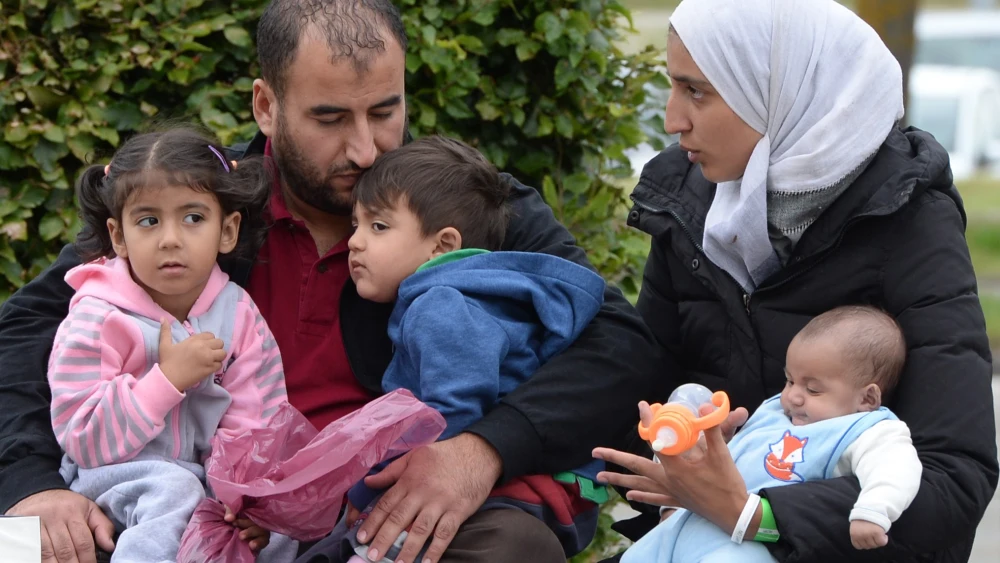
A refugee family from Syria waits in front of a exhibition hall at the Munich fairground that serves as makeshift shelter for migrants after they arrived in Germany, Sept. 07, 2015. Photo by Christof Stache/AFP via Getty Images.

Germany granted citizenship to a record 332,500 people last year, with Syrians making up the ‌largest group for the fifth year in a row, according to data released last week by the German Federal Statistics Office.

One in five people naturalized in Germany in 2025 was Syrian.

Syrians continue to top the list of new German citizens even as the number of Syrians who gained citizenship dropped by over 20% last year compared to 2024.

The second and third largest groups to be naturalized were Turks (10%, or 34,100 people) and Russians (6%, or 19,700 people).

The number of people who were naturalized in 2025 through laws that restore citizenship to individuals, and their descendants, who were stripped of it by Nazi Germany rose by more than 60% to 12,000.

About 1.3 million Syrians live in Germany, including some 250,000 who have received citizenship.

The population of Germany is nearly 84 million, making it the most populous country in the European Union.

Germany was a favorite destination for Syrians who fled their country during the nearly 14-year-long civil war, which began in March 2011 and ended with the fall of the Assad regime in December 2024.

Earlier this year, German Chancellor Friedrich Merz raised the prospect of many of the Syrians returning to their homeland over the next few years, and he is seeking to advance deportations.

See more from JNS Staff
“At a time when some would isolate Israeli academia, UCLA has chosen collaboration,” Eveline Shekhman of the American Jewish Medical Association told JNS.
“The juxtaposition of us being at the United Nations, and all those people walking out while literally their employees helped to perpetuate Oct. 7 was put in a certain frame,” Rabbi Steven Burg of Aish told JNS.
“I want you to listen to my words carefully: One day, and it may not be far away, the Iranian people will be free. Their murderous regime will be toppled by its lies, by its corruption, by its cruelty,” the Israeli prime minister said.
Jason Brodsky, of United Against Nuclear Iran, told JNS that the address carried messages to “the international community, antisemites abroad, state threats against Israel and most especially the Iranian people.”