
Among the many things U.S. Vice President JD Vance said while displaying his evident antipathy was the notion that it would be in Israel’s interest to accept Donald Trump’s wishes or risk losing its only remaining friend. The remark was strikingly harsh, ignoring the fact that support for Israel stretches from India to Greece and deep into Eastern Europe.
Vance also fails to understand that, for Israel, the stakes involve far more than security. They involve national identity, moral clarity, loyalty to its citizens and its image before a world that expects it to remain bold in the face of encirclement—technologically advanced, courageous and democratic.
Israel is a small country determined to defend its values and its citizens with all its strength, even in the face of American pressure.
Among his many misguided statements, Vance did say one thing that was true: Israel would make peace with Lebanon tomorrow if Hezbollah were disarmed or disappeared. Lebanon, however, is a victim of both Hezbollah and the United States, which appears willing to offer it as a bargaining chip to Iran in exchange for a ceasefire that Israel can never accept as part of the American agreement.
Friday was a day of heartbreak for Israel after four soldiers were killed overnight in one of Hezbollah’s continuing attacks and violations of the ceasefire. Israel responded, and its forces continue dismantling the vast military infrastructure Hezbollah built in southern Lebanon to attack the Jewish state—an infrastructure riddled with tunnels, stocked with weapons purchased with Iranian money and prepared for an Oct. 7-style invasion.
Israel has stated that, for now, it cannot withdraw from the 10-kilometer security zone where its forces remain deployed. It cannot abandon the hundreds of thousands of residents of northern Israel who have spent night after night under bombardment and who have lost their homes, schools and livelihoods.
Israeli Prime Minister Benjamin Netanyahu and Defense Minister Israel Katz have reiterated that Israel’s right to self-defense remains non-negotiable. At the same time, Israel is seeking to preserve its vital relationship with the United States and respect Washington’s efforts to maintain a truce. Israel has made clear, however, that it will continue to defend itself against attacks and threats from Hezbollah.
A force fundamentally opposed to peace—radical Islamist Iran—continues to pull the strings and has shown little willingness to abandon its hostility toward the “Great Satan” and the “Little Satan,” or to genuinely dismantle its nuclear ambitions.
Iran has sought to deepen the rift between the United States and Israel, but the fundamental strategic partnership between Jerusalem and Washington remains intact.
As German Chancellor Friedrich Merz recently observed, Israel is doing “the dirty work” for the broader Western world. The Jewish state continues to stand at the forefront of the struggle against radical Islamist aggression and Iranian expansionism.
What some perceive as Israel’s loneliness is, in fact, a source of strength. Israel has become the champion of moral clarity, democratic values and the willingness to confront threats that others prefer to ignore. Its soldiers continue to bear a burden that extends far beyond Israel’s borders.
It is a difficult burden. Yet there is Israel—its young men and women on the battlefield, the ingenuity behind some of the world’s most advanced defensive systems and, according to reports, the generosity to treat even wounded Hezbollah fighters in one of its hospitals.
Through Hezbollah, drones, rockets and missiles, Iran employs a strategy of blackmail and murderous antisemitism. Its slaughter of innocent civilians leaves much of the world indifferent.
Most strikingly, the proposed agreement says nothing about the Islamic regime’s appalling human-rights record. There is no mention of the tens of thousands killed by the regime over the years, no commitment to protect dissidents, no concern for persecuted women or for gay people targeted by the authorities.
Israel today stands in a far stronger position than it did before the war with Iran and the battles on multiple fronts. It has demonstrated resilience, military prowess and national unity under extraordinary pressure.
Far from being weakened, Israel has become an even more valuable ally to the democratic world—a leading partner in the fight against terrorism, a technological powerhouse and a source of innovation in fields ranging from defense and cybersecurity to agriculture, medicine and the arts.
Strategically, it is in a stronger position on every front, having rolled back Iranian influence, degraded its enemies’ capabilities and reaffirmed its central role in the defense of Western values.
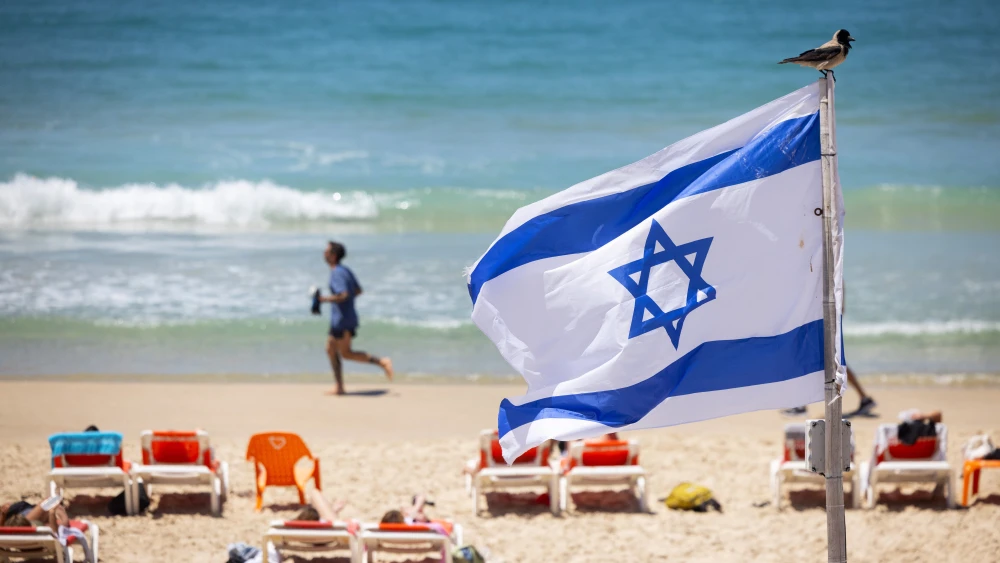
Alone perhaps, but still holding the flag aloft and standing tall as both a fighter and a champion of human rights.