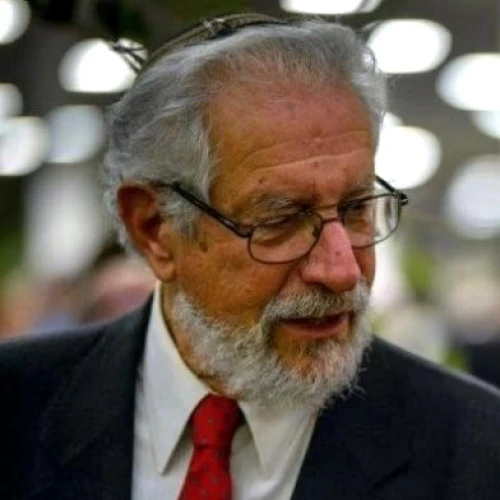

British Foreign Secretary Edward Miliband threw a tantrum in parliament, railing against “settler terrorism” as well as peaceful communities of Jews living in parts of their homeland because of their alleged threat to a two-state solution. The economic effects of the sanctions he announced will inevitably extend beyond the settlements, and harm Israelis and Palestinians alike.
His performance raised several questions. Why is a British Jew adopting the language and policy prescriptions of antisemites? Why does Miliband believe that Britain still has the standing to dictate outcomes in a region where its policies produced a record of broken promises and disastrous miscalculations? What two-state solution does he imagine sanctions will preserve?
And why is he punishing Israel while imposing no comparable consequences on the Palestinian Authority for rejecting negotiations, glorifying terrorists and indoctrinating generations of Palestinians against peace?
Most troubling, why would the Jewish son of Holocaust survivors lend Britain’s authority to a campaign that legitimizes the objectives of the Boycott, Divestment and Sanctions movement, and is enthusiastically applauded by people whose hostility extends far beyond Israel’s policies?
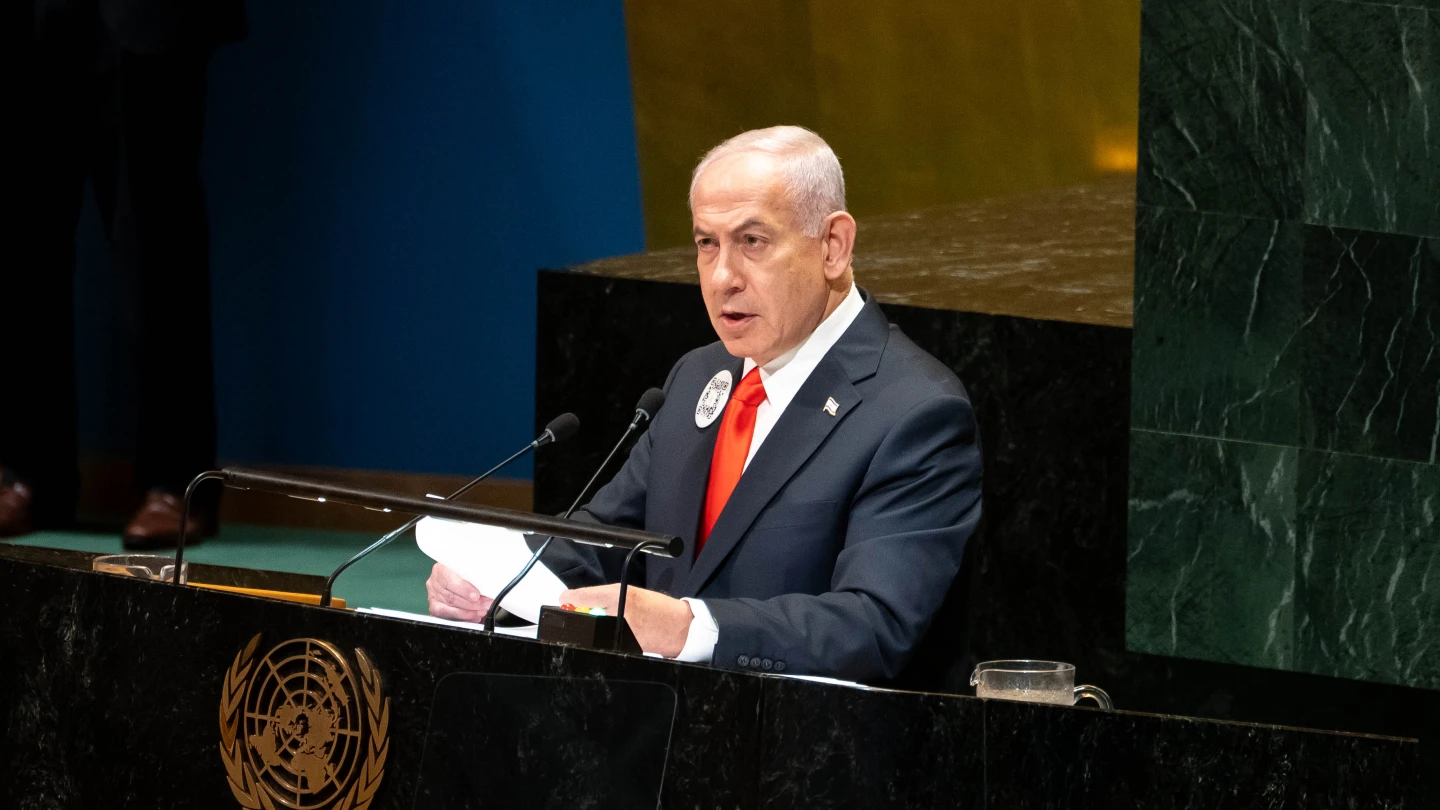
From the United States, Miliband appears to be catering to a Labour Party base that has become increasingly hostile toward Israel and its government, led by Prime Minister Benjamin Netanyahu. He must also reckon with growing Muslim constituencies in urban centers, especially in London, and with anti-Israel demonstrators who have filled Britain’s streets, while many British Jews have felt increasingly threatened and abandoned.
Miliband likely thinks British policy is relevant because the English still haven’t gotten over the fact that their days of being an empire are long over. They haven’t been a factor in the Middle East since leaving Palestine with their tails between their legs in 1948.
The foreign minister seems to need a history lesson, too, starting with the Balfour Declaration, in which the British promised in 1917 support for the establishment of a national home for the Jewish people in Palestine. It took only four years for Britain’s first betrayal of the Jews when, “with the stroke of a pen,” Winston Churchill severed three-fourths of the Jewish homeland to create Transjordan. And it was not given to the Palestinians, who comprised the majority of the population, but to the Hashemites, a clan expelled from Hejaz (now Saudi Arabia).
The British were given an international mandate to rule Palestine and almost immediately betrayed the Jews again by attempting to appease the restive Arab population by accepting their demands to limit Jewish immigration. In a lesson they have not learned to this day, the British found the Arabs could not be pacified. Violence, largely instigated by the Mufti of Jerusalem, escalated as the Arabs fought to drive out both the British and the Jews.
The consequences became catastrophic when Britain closed Palestine’s doors to desperate European Jews on the eve of the Holocaust.
Calling for two states isn’t a policy; it’s a slogan.
In 1937, a commission investigating the violence, led by Lord Peel, proposed a two-state solution, arguing that the obvious way to solve a dispute between peoples over one land was to divide it between them. Peel did not recommend an even division; 75% of Palestine was to be an Arab state. In the first of many proofs that the dispute was not really about land, the Arabs rejected the plan.
Just two years later, the British government decided the Peel plan was no longer feasible and determined that a unitary state should be created in Palestine with an Arab majority and a limit to Jewish immigration and land acquisition. The Arabs rejected the plan because it did not end immigration altogether, gave Jews a role in governing the state and did not promise immediate independence.
By 1947, exhausted by attacks from both Arabs and Jews, and unable to reconcile their competing national aspirations, Britain surrendered the problem to the United Nations. The world body returned to a version of the Peel Plan, partitioning the land into Jewish and Arab states. This time the division was more favorable to the Jews, but the Arabs rejected it because they were unwilling to accept the idea of a Jewish state anywhere.
And this has remained the root of the problem ever since.
The 1948 War of Independence resulted in Jordan occupying the “West Bank.” Only Britain, Pakistan and Iraq recognized the Jordanian takeover of land the United Nations had allotted to the Arab state. For 19 years, the Palestinians were quiescent; there were no uprisings or demands for statehood. No U.N. resolutions or discussions addressed a two-state solution. Egypt simultaneously occupied the Gaza Strip, which became a launching pad for terror attacks on Israel and, like Jordan, was never contemplated for Palestinian independence.
The Israeli victory in 1967, and subsequent capture of the West Bank and Gaza, dramatically changed the geography and the politics. The Palestinians woke up to the idea of self-determination in the areas now controlled by Israel.
What, precisely, is his plan?
By then, British influence in the region had largely evaporated. The United States became the principal outside mediator and spent decades futilely seeking a two-state agreement. Successive administrations repeatedly treated partition as though it were a new idea, overlooking the lesson Britain should have learned in 1937: Borders cannot resolve a conflict when one party refuses to accept the other’s national legitimacy.
Miliband condemns settlements, but what precisely is his plan?
Does he imagine that 500,000 Jews in Judea and Samaria—not to mention the 350,000 in eastern Jerusalem—are going to pack up and leave to accommodate his desire to appease the Palestinians and his Muslim constituents?
Does he expect Israel to withdraw without enforceable security guarantees after Oct. 7 demonstrated the potentially catastrophic consequences of relinquishing territory to an enemy committed to its destruction?
Does he distinguish between isolated settlements and Jewish communities near the 1949 armistice line that every serious negotiating proposal has assumed would remain part of Israel through mutually agreed land swaps?
One of those settlements, which the Palestinians agreed would be annexed to Israel as part of a deal, is Ma’ale Adumim. The E1 project that has his knickers in a twist connects that city of 40,000 to Israel’s capital less than 8 miles away and, despite claims to the contrary, does not foreclose the possibility of creating a Palestinian state.
Calling for two states isn’t a policy; it’s a slogan. Like the Americans and others who keep pushing this failed idea, Miliband has no answer for how he’d overcome Palestinian rejectionism, disarm Hamas, prevent another Oct. 7 or convince Israelis that a Palestinian state wouldn’t just become another launchpad for terrorism.
Meanwhile, where are Britain’s sanctions on the Palestinian Authority for refusing direct negotiations? Where are the penalties for rejecting repeated proposals for statehood, inciting violence, rewarding terrorists and their families, and teaching children that Israel will one day disappear? Why is only one party expected to pay a price for obstructing the two-state solution Miliband claims to champion?
Like previous sanctions by Western governments, and boycotts manufactured by the Arab League and pro-Palestinian activists in the West, England’s will have no impact on Israeli policy and, if anything, harm the Palestinians they are meant to help. Miliband also sacrificed the British role in the reconstruction of Gaza.
As a Leeds United supporter, Miliband should understand the consequences of putting the ball into his own net. By punishing Israel, rewarding Palestinian obstructionism and repeating the mistakes of British policy without learning from them, he has scored an own goal for Britain.